Frequently Asked Questions
The most-asked questions about named comets, part 6.
What exactly is Part 6 of the Named Comets Fan Encyclopedia?
It is the sixth volume in a community-maintained, non-commercial reference series that profiles comets which have received proper names rather than just catalog designations. Part 6 specifically focuses on comets discovered between 1997 and 2012 that were later granted a discoverer's name or a popular nickname.
Which comets does Part 6 cover?
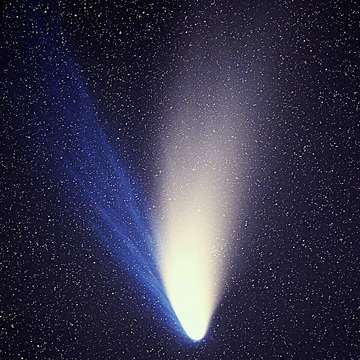
The volume profiles fourteen comets, including Hale-Bopp, McNaught, LINEAR (C/1999 S4), NEOWISE, and several shorter-lived objects like Comet Lovejoy and Comet Elenin. Each entry spans roughly eight to twelve pages of biographical, orbital, and observational detail.
Who are the main figures highlighted in this section?
The discoverers and key observers take center stage: Alan Hale and Thomas Bopp, Robert McNaught, Robert LINEAR, and the NEOWISE space-telescope team. Secondary figures include amateur observers who provided critical light curves during each comet's perihelion passage.
Where should a newcomer begin reading Part 6?
Start with the introductory chapter titled 'Why Names Matter,' which explains the history of comet nomenclature and how the IAU designations work. After that, the Hale-Bopp entry is the most accessible single profile because it includes a full glossary of orbital terms and a step-by-step sketch of a typical apparition.
How does Part 6 differ from Parts 1 through 5?
Earlier volumes dealt with classical periodic comets (Halley, Encke, Tempel) and ancient recorded apparitions. Part 6 shifts to the modern amateur-discovery era, so the tone is more narrative and the orbital math is presented with worked examples rather than just tables.
What is one key fact that surprises readers about the comets in this volume?
Several of the fourteen comets, including McNaught and LINEAR, were discovered by ground-based observers using telescopes under 300 mm in aperture. The encyclopedia notes that none of the fourteen required a professional observatory to be first detected.
What notable observation moments are documented?
The McNaught entry includes a day-by-day log of the 2007 perihelion, when the tail briefly outshone the full Moon as seen from Australia. The NEOWISE section reproduces the July 2020 global sighting reports and the first confirmed detection by the space-based WISE instrument.
How is the internal structure of Part 6 organized?
Each comet gets a standardized template: discovery story, orbital elements, physical description, apparition timeline, cultural impact, and a bibliography. Between entries, the editors insert short 'Sidebar' boxes comparing similar comets and flagging common misconceptions.
Is Part 6 a peer-reviewed scientific publication?
No; it is explicitly labelled an unofficial fan project, and the editors state in the preface that orbital data are cross-checked against JPL Horizons but narrative sections reflect community interpretation. It is meant as a companion to, not a replacement for, IAU circulars or peer-reviewed papers.
Which comet entry gets the most searches and forum discussion?
Comet NEOWISE (C/2020 F3) consistently tops the fan forum's most-viewed list, largely because its 2020 apparition coincided with global lockdowns, making it the first major naked-eye comet for a generation of urban observers. The entry's 'How to Find It' section has been updated eleven times since the volume's initial release.