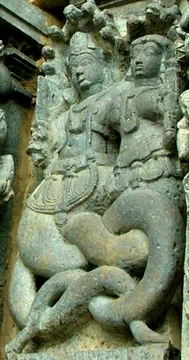
Kaliya
Venomous Nāga subdued by Krishna in the Yamunā river.
Last updated
Kaliya (IAST: Kāliya, Devanagari: कालिय) was a venomous Nāga in Hindu traditions who lived in the Yamunā river at Vṛndāvana. The water for four leagues around him boiled and bubbled with poison, and no bird or beast could approach. The celebration of Nāga Nathaiyā or Nāga Nṛitya is associated with the tale of Krishna dancing upon and subduing Kāliya.
History
Kaliya originally lived on the island of Ramaṇaka but was driven away by fear of Garuḍa, the enemy of all serpents. Garuḍa had been cursed by the yogi Saubhari dwelling at Vrindavan so that he could not enter Vrindavan without dying. Knowing this, Kaliya chose Vrindavan as his residence.
On one occasion, the sage Durvasā came as a guest and was served by Rādhā. Afterward, Rādhā walked across the Yamunā and was terrified upon seeing the giant serpent. She fled to Vrindavan and told the people. Krishna became angry and went to the river to confront Kaliya.
The serpent coiled around Krishna's legs and constricted him. The people of Gokulam came to the riverbank. Yaśodā ordered Krishna to return, but Krishna stomped on Kaliya's tail and warned him before returning.
The next day, while playing a ball game across the Yamunā with Rādhā and friends, the ball fell into the river. Rādhā tried to retrieve it, but Krishna stopped her and went instead. Kaliya constricted him and pulled him into the river. Hearing the commotion, the people of Nandagokula ran to the bank.
At the bottom of the river, Kaliya had ensnared Krishna in his coils. Krishna expanded himself, forcing Kaliya to release him. Krishna then jumped on all of Kaliya's heads to release the poison so that the snake could no longer pollute the Yamunā.
More in Nāgas
Sources
Compiled from Wikipedia and the sources listed below. Text from Wikipedia is available under CC BY-SA 4.0; this entry is adapted from it.
- Wikipedia: Kaliya (CC BY-SA 4.0).
Spotted an error? Know more?
Reader corrections go straight into our review queue. Suggest an edit · How this site is sourced