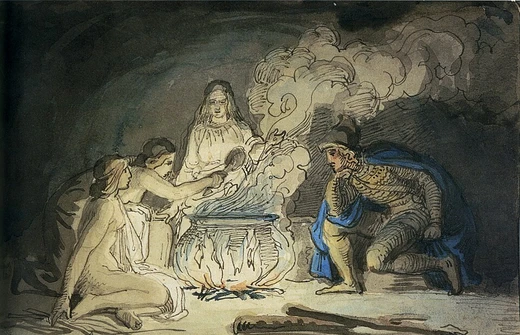
Luminous gemstones
Luminous gemstones appear in myths across Asia, Europe, Africa, and the Americas.
Sydney Hobart Ball, an American geologist, examined stories from different cultures about stones that give off light; his research uncovered roughly one hundred such tales spanning ancient, medieval, and modern periods.[1]
Quick Facts
- Earliest known reference
- c. 700 BCE – 300 CE (Vishnu Purana)
- Notable early figure
- Albertus Magnus (c. 1193–1280)
- Rediscovery of diamond phosphorescence
- Robert Boyle in 1663
- Discovery of bologna stone
- Vincenzo Cascariolo in 1602
Facts from the source article.
Key facts and history
The luminescent Bologna Stone (impure barite) was discovered by Vincenzo Cascariolo in 1602.[1] Chlorophane combines thermoluminescence, triboluminescence, phosphorescence, and fluorescence.[1] The German mineralogist Gustav Rose recorded seeing chlorophane pebbles near the Irtysh River that shone all night from exposure to the sun's heat.[1] Heating diamonds or white topaz to a temperature below red heat can cause them to phosphoresce.[1]
Albertus Magnus (c. 1193–1280) is generally credited with first revealing that diamonds phosphoresce when heated by sunlight; Robert Boyle later rediscovered this property in 1663.[1] Prafulla Chandra Ray reported that the Indian king Bhoja (who reigned from 1010 to 1055) was aware that diamonds can phosphoresce.[1] In 1735, lapis lazuli, emerald, and aquamarine were identified as luminescent by the French chemist Charles François de Cisternay du Fay.[1] A faint luminescence can be produced in some fluorite, especially the chlorophane variety, merely by the warmth of a human hand.[1]
What the cited sources add
The website "Noach and Re-Creation" states that Targum Yonatan may be the first source to claim the tzohar was a luminous stone pulled from the primordial river Pishon.[2] The Gur Aryeh suggests that illuminating gemstones in the Ark imitated the sun, moon, and stars.[2] The Bnei Yissaschar quotes the Midrash stating that a precious stone in the Ark shone and told Noah when it was day and night.[2] Targum Pseudo Jonathan to Genesis 6:16 directs that a precious stone from the river Phison be taken and fixed in the Ark to provide illumination.[2]
References
- Wikipedia, "Luminous gemstones" (CC BY-SA 4.0) en.wikipedia.org
- "Noach and Re-Creation", www.betemunah.org. facts only, no text reused. betemunah.org
Each numbered sentence above was checked against the source it cites before publication. Sentences citing Wikipedia adapt text from the English Wikipedia article Luminous gemstones (contributors), used under CC BY-SA 4.0; this entry is available under the same licence. Other sources were used for facts only; no text or images are copied from them.
More in Mythology
Spotted an error? Know more?
Reader corrections go straight into our review queue. Suggest an edit · How this site is sourced