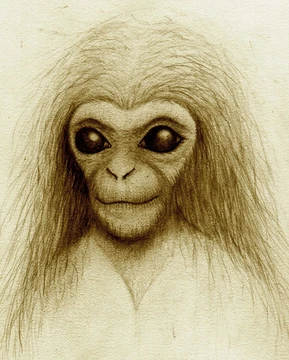
Adlet
Inuit mythological dog-legged humanoids, often in conflict with humans.
The Adlet (or Erqigdlet) are a race of half-human, half-canine creatures in Inuit mythology, known for their dog-like lower bodies and human upper bodies. They are often depicted as taller than both Inuit and white people, and their encounters with humans typically end with humans victorious. The term also refers to inland Native American tribes in some contexts, reflecting a complex etymology.
Quick Facts
- Alternate names
- Erqigdlet, Erqigdlit
- Regions
- Greenland, Labrador coast, Hudson Bay coast, Baffin Land
- Etymology proposed by
- H. Newell Wardle
Facts from the source article.
Origin
Franz Boas recorded an origin story from an Inuk named Pakaq in Cumberland Sound, Baffin Land, later published with a translation by H. Rink and explanation by Boas. The same tale is told in Greenland, known on the west coast as 'The Girl and the Dogs' and on the east coast as 'The Origin of the Qavdlunait and Irqigdlit' (Scandinavians and Indians). A woman named Niviarsiang, also called Uinigumissuitung for refusing to marry, eventually married a spotted dog named Ijirqang. They had ten children: five were dogs and five were Adlet, with dog lower bodies and human upper bodies. He tricked Ijirqang into drowning by putting stones in boots the dog wore while swimming. In revenge, Niviarsiang sent the young dogs to gnaw off her father's feet and hands; he then kicked her overboard and cut off her fingers, which became whales and seals. Fearing for the Adlet's safety, Niviarsiang sent them inland, where they became a numerous people. The young dogs were sent across the ocean in a makeshift boat and became the Scandinavian ancestors.
Anthropological interpretation
One interpretation of the Adlet and the 'Dog Husband' theme distinguishes the dog children from the Adlet: the dogs were sent overseas and would return as white Scandinavians bringing favorable goods, while the Adlet became aggressive inland spirits to be kept at bay. This myth thus carries the value of a cargo cult, where Inuit daughters serve as mediators to obtain desirable goods from dog-like whites. A reading as a 'Whaler myth' suggests the story transforms material dependence on Scandinavian whalers into a reciprocal relationship, with the Nordic son repaying his mother. Franz Boas and Hinrich Rink offered two possibilities for the legend's origin: either it dates to first contact with Scandinavians (considered unlikely), or it adapts an existing tradition to account for their arrival. Signe Rink proposed a similar explanation incorporating linguistic evidence. The 'Dog Husband' theme appears in other tribal mythologies, such as among the Dakelh (Carrier tribe) of British Columbia, where a woman gives birth to four dogs after being violated by a big dog. Father Morice noted this as a possible national tradition among hyperborean races of America, citing the Eskimo equivalent. Similar stories are also told among the Chukchi on the Siberian side of the Bering Strait.
Adlet stories
In one, two Tornits encounter savage, cannibalistic Adlet and escape by cutting the thongs on the Adlet's sledges, causing the runners to fall off when the Adlet mount them. The same informant told a variant of Boas's Adlet story where the Tornit are also the woman's offspring, though Kroeber noted they are not usually connected. Other stories from this informant, such as 'The Origin of the Narwhal,' also feature murderous Adlet. The Inuit of Point Barrow, Alaska, tell of a dog named Aselu who freed himself from a stick, had intercourse with a woman, and she gave birth to men and dogs.
More in Mythological Human–animal Hybrids
Spotted an error? Know more?
Reader corrections go straight into our review queue. Suggest an edit · How this site is sourced