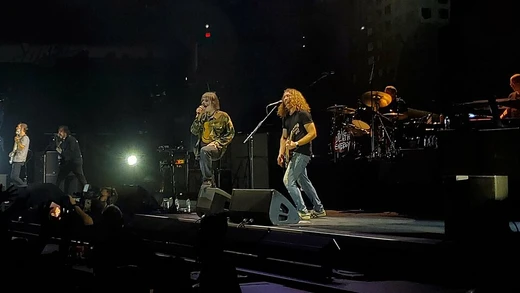
The Black Parade World Tour (2007)
A funeral march for a generation, played at full volume in every arena that would hold them.

My Chemical Romance · via Wikipedia: The Black Parade World Tour · Fair use
The Black Parade World Tour was the massive, multi-leg concert run that carried My Chemical Romance's second studio album, The Black Parade, to arenas and stadiums across North America, Europe, and beyond during 2007 and into early 2008. It transformed the band from a critically adored post-hardcore act into a global spectacle, pairing their music with a full theatrical production—marching-band musicians, costumed dancers, and a towering stage set—that made every show feel like a one-night-only funeral procession for the modern American dream.
For fans, this tour is the era where MCR stopped being 'a band you saw at a small venue' and became an event you flew across the country to witness. The Black Parade World Tour cemented the band's identity as storytellers who treated live performance as a narrative experience, and it set the emotional and visual template for everything they would do afterward.
Quick Facts
- Concert tour name
- The Black Parade World Tour
- Artist
- My Chemical Romance
- Album
- The Black Parade
- Start date
- February 22, 2007
- End date
- May 9, 2008
- Number of shows
- 133
- Support acts
- Muse, Rise Against
- Last tour
- Three Cheers for Sweet Revenge Tour (2005)
Facts from the source article.
Lore & Background
The Black Parade World Tour was never conceived as a straightforward 'band plays songs' affair. From the moment the house lights dropped, the audience was pulled into a staged narrative: a marching band in black-and-white uniforms swarmed the stage, dancers moved through choreographed sequences, and Gerard Way—dressed in a long coat, sometimes with a hat—addressed the crowd as though delivering a eulogy. The set list wove the album's songs into a through-line, with spoken-word interludes and visual cues that treated the two-hour show as a single story with a beginning, a crisis, and a send-off.
Internally, the tour was a proving ground for a band still processing the enormous pressure of following a debut that had made them a cult favorite. The Black Parade had been a more ambitious, more personal record, and the tour forced the group to translate that ambition into a repeatable nightly production. Rehearsals were long, the logistics of moving a marching band and a large set across continents were grueling, and the emotional weight of performing songs about mortality, identity, and loss night after night took a visible toll on the members. Yet the band leaned into the spectacle rather than dialing it back, and that commitment is what separated their shows from the typical rock-tour formula of the era.
For the audience, the tour created a shared mythology. Fans who saw the show in Manchester felt a kinship with fans who saw it in Chicago or Tokyo, because the production was deliberately uniform and ritualistic. The Black Parade World Tour became a rite of passage: you either went, or you were 'not in the parade yet.' That sense of belonging and exclusivity, amplified by the album's themes of collective grief, turned the tour into something closer to a communal ceremony than a concert, and it remains the touchstone against which fans measure every MCR performance that followed.
Reader's Guide
By 2007, the mainstream rock landscape was in a strange lull. The post-hardcore wave that had carried bands like MCR from small clubs to festival slots was consolidating, and the industry was hungry for a live act that could fill an arena without relying on a single hit single. The Black Parade World Tour arrived into that gap and filled it completely.
Internally, the band was operating under the weight of a record that had been years in the making. Gerard Way had poured deeply personal material into the album, and the tour became the vehicle for translating that intimacy into a public, collective experience. The decision to build a full theatrical production—marching band, dancers, a large set—was a bet that audiences would reward ambition over brevity. The bet paid off.
The broader music scene in 2007 was also shifting toward visual spectacle, with other acts investing in elaborate stage design. MCR's tour stood out because it was narratively coherent: every element served the story. That coherence, combined with the album's themes of shared grief and identity, gave the tour a emotional gravity that pure pyrotechnics couldn't replicate.
By the time the tour wound down, the band's identity was locked in. They were no longer just a punk-rock group; they were a storytelling machine, and the Black Parade World Tour was the blueprint for every production they would build after. For fans, it remains the high-water mark: the tour where the music, the visuals, and the audience became a single, breathing thing.
Elsewhere in My Chemical Romance
Spotted an error? Know more?
Reader corrections go straight into our review queue. Suggest an edit · How this site is sourced