
Nikolai Rimsky-Korsakov
Russian composer who shaped the nationalist style and trained generations.

Yair Haklai · CC BY-SA 4.0
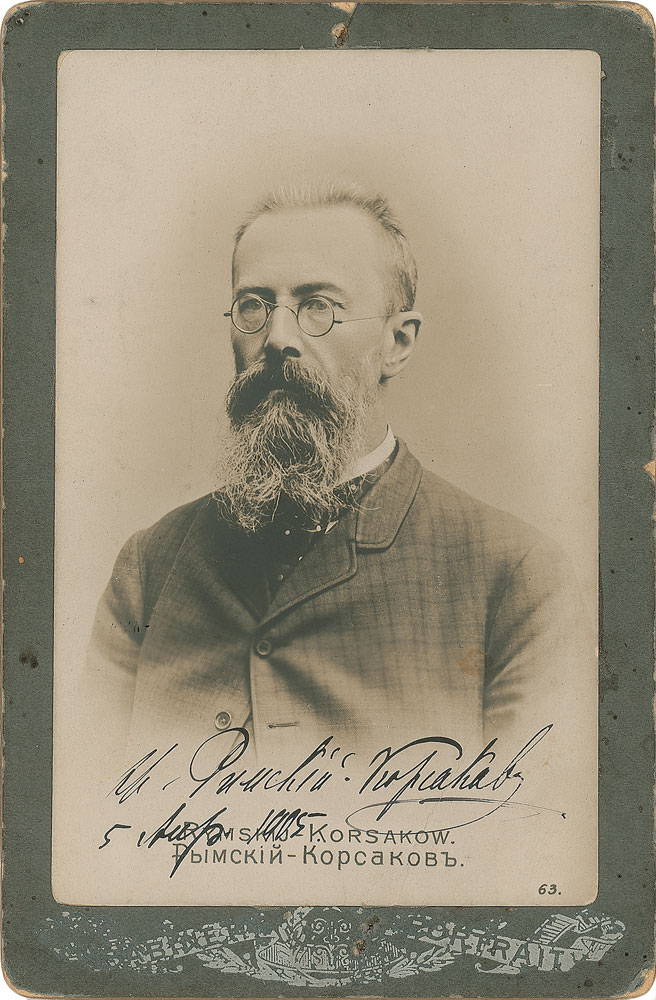
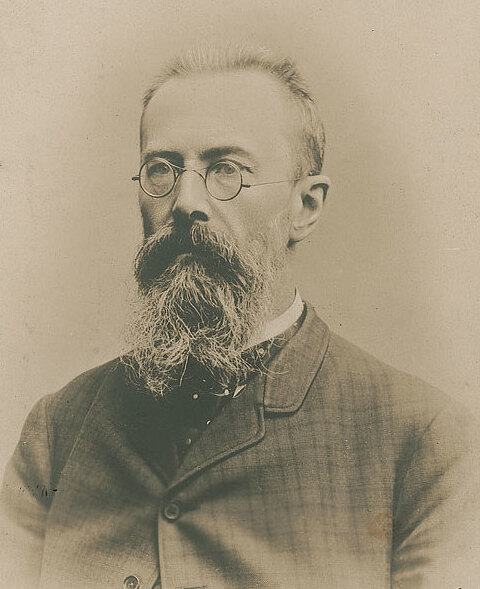
Nikolai Andreyevich Rimsky-Korsakov (18 March 1844 – 21 June 1908) was a Russian composer and a member of The Five. His most famous orchestral works—Capriccio Espagnol, the Russian Easter Festival Overture, and the symphonic suite Scheherazade—are mainstays of classical music, as are suites and excerpts from his fifteen operas. He was married to the composer Nadezhda Rimskaya-Korsakova. Rimsky-Korsakov advocated for a nationalistic Russian classical style, drawing on folk songs and folklore, and using exotic harmonies, melodies, and rhythms in a practice called musical orientalism, while rejecting traditional Western compositional methods. However, after becoming a professor of composition, harmony, and orchestration at the Saint Petersburg Conservatory in 1871, he came to appreciate Western techniques. He spent three years teaching himself these methods, mastering them and blending them with influences from Mikhail Glinka and his fellow members of The Five. His exposure to Richard Wagner’s works further enriched his compositional and orchestration skills. For most of his life, Rimsky-Korsakov balanced music with a career in the Russian military—first as a naval officer, then as the civilian Inspector of Naval Bands. He said his childhood love of the sea, sparked by books and stories of his older brother’s naval exploits, inspired two of his best-known orchestral pieces: the musical tableau *Sadko* (not the later opera of the same name) and *Scheherazade*. As Inspector of Naval Bands, he deepened his knowledge of woodwinds and brass, improving his orchestration. He passed this expertise to his students and, after his death, through an orchestration textbook finished by his son-in-law Maximilian Steinberg. Rimsky-Korsakov left a large body of original Russian nationalist music. He prepared works by The Five for performance, bringing them into the standard classical repertoire (though his editing of Modest Mussorgsky’s works is controversial), and shaped a generation of younger composers and musicians during his decades as a teacher. He is often called “the main architect” of what the public considers the “Russian style.” His influence on younger composers was crucial, as he bridged the autodidact tradition of Glinka and The Five and the professional training that became standard in Russia by the late 19th century. While his style was based on those of Glinka, Balakirev, Hector Berlioz, Franz Liszt, and briefly Wagner, he “transmitted this style directly to two generations of Russian composers” and also influenced non-Russian composers like Maurice Ravel, Claude Debussy, Paul Dukas, and Ottorino Respighi. Rimsky-Korsakov was born in Tikhvin, 200 kilometers east of Saint Petersburg, into a Russian noble family. Tikhvin was then part of Novgorod Governorate. Family members had historically served as governors and war generals; Ivan Rimsky-Korsakov was famously a lover of Catherine the Great. By a Tsar’s decree on 15 May 1677, 18 Korsakov family members gained the right to be called Rimsky-Korsakov (the Russian “Rimsky” means “Roman”) because the family “had a beginning within the Roman borders,” meaning Czech lands once part of the Holy Roman Empire. In 1390, Wenceslaus Korsak moved from the Duchy of Lithuania to Grand Prince Vasily I of Moscow. The composer’s father, Andrei Petrovich Rimsky-Korsakov, was one of six illegitimate sons of Avdotya Yakovlevna, daughter of an Orthodox priest from Pskov, and lieutenant general Peter Voinovich Rimsky-Korsakov. Peter had to officially adopt his own children because he could not marry their mother due to her lower social status. Using his friendship with Aleksey Arakcheyev, he granted them all noble privileges. Andrei served in the Interior Ministry, as vice-governor of Novgorod, and in the Volhynian Governorate. The composer’s mother, Sofya Vasilievna Rimskaya-Korsakova, was also born illegitimate, the daughter of a peasant serf and Vasily Fedorovich Skaryatin, a wealthy noble landlord. Her father raised her in comfort but under the improvised surname Vasilieva and with no legal status. When Andrei Petrovich met her, he was a widower—his first wife, knyazna Ekaterina Meshcherskaya, died nine months after their marriage. Skaryatin considered Andrei unsuitable for his daughter, so Andrei secretly “stole” her from her father’s house and brought her to Saint Petersburg, where they married. The Rimsky-Korsakov family had a long tradition of military and naval service. Nikolai’s older brother Voin, 22 years his senior, became a famous navigator and explorer and strongly influenced Nikolai’s life. Nikolai later recalled that his mother played the piano a little, and his father could play a few songs by ear. He began piano lessons at age six with local teachers and showed talent for aural skills, but little interest, playing, as he later wrote, “badly, carelessly, … poor at keeping time.” Though he started composing at age ten, he preferred literature to music. He wrote that from his reading and tales of his brother’s exploits, he developed a passion for the ocean.
- born
- 18 March 1844
- died
- 21 June 1908
- field
- Composer, educator, naval officer
- nationality
- Russian
- known_for
- Member of The Five; orchestral works Scheherazade, Capriccio Espagnol, Russian E
Verified Timeline
Lore & Background
Rimsky-Korsakov was born in Tikhvin, 200 kilometers east of Saint Petersburg, into a Russian noble family. His older brother Voin, 22 years his senior, became a well-known navigator and explorer and had a powerful influence on Nikolai's life. Rimsky-Korsakov wrote that he developed a poetic love for the sea from reading books and hearing of his brother's exploits, without ever having seen it. This love encouraged the 12-year-old to join the Imperial Russian Navy. He studied at the School for Mathematical and Navigational Sciences in Saint Petersburg and at 18 took his final examination in April 1862. He sailed on a two-year-and-eight-month cruise aboard the clipper Almaz in late 1862, during which he completed and orchestrated three movements of a symphony, composing the slow movement during a stop in England and mailing the score to Mily Balakirev. Balakirev had introduced him to César Cui and Modest Mussorgsky in November 1861, and encouraged him to compose despite his lack of formal musical training. After returning to Saint Petersburg in May 1865, contact with Balakirev in September 1865 encouraged him to get accustomed to music again. In 1871, he became a professor of musical composition, harmony, and orchestration at the Saint Petersburg Conservatory, undertaking a rigorous three-year program of self-education to master Western methods, incorporating them alongside influences of Mikhail Glinka and fellow members of The Five. He later served as civilian Inspector of Naval Bands, expanding his knowledge of woodwind and brass playing. He married composer Nadezhda Rimskaya-Korsakova. He left a considerable body of original Russian nationalist compositions, prepared works by The Five for performance (with controversy over his editing of Modest Mussorgsky's works), and shaped a generation of younger composers during his decades as an educator. His style was based on those of Glinka, Balakirev, Hector Berlioz, Franz Liszt and, for a brief period, Richard Wagner, and he transmitted this style directly to two generations of Russian composers.
Reader's Guide
Rimsky-Korsakov's significance lies in his role as a transitional figure between the autodidactism exemplified by Glinka and The Five, and professionally trained composers who became the norm in Russia by the closing years of the 19th century. As a professor at the Saint Petersburg Conservatory starting in 1871, he mastered Western compositional methods through a rigorous three-year self-education, while maintaining a nationalistic style that employed Russian folk song and lore along with exotic harmonic, melodic, and rhythmic elements known as musical orientalism. His techniques of composition and orchestration were further enriched by exposure to the works of Richard Wagner. As Inspector of Naval Bands, he expanded his knowledge of woodwind and brass playing, which enhanced his abilities in orchestration, and he passed this knowledge to his students. A textbook on orchestration was completed posthumously by his son-in-law Maximilian Steinberg. Beyond his own compositions—including Scheherazade, Capriccio Espagnol, and the Russian Easter Festival Overture—he prepared works by The Five for performance, bringing them into the active classical repertoire, and shaped a generation of younger composers and musicians. His influence extended to non-Russian composers including Maurice Ravel, Claude Debussy, Paul Dukas, and Ottorino Respighi. Rimsky-Korsakov is therefore considered 'the main architect' of what the classical-music public considers the 'Russian style'.
Did You Know?
- Rimsky-Korsakov's father Andrei Petrovich was one of six illegitimate sons of a lieutenant general and had to be officially adopted by his own father because of his mother's lower social status.
- The composer's mother Sofya Vasilievna was also born illegitimate, raised under the improvised surname Vasilieva with no legal status.
- Rimsky-Korsakov's older brother Voin, a well-known navigator and explorer, was 22 years his senior and powerfully influenced his life.
- He sailed on a two-year-and-eight-month cruise aboard the clipper Almaz, during which he composed the slow movement of his first symphony during a stop in England.
- Rimsky-Korsakov's orchestration textbook was completed posthumously by his son-in-law Maximilian Steinberg.
A Life Divided Between the Sea and the Score
Nikolai Rimsky-Korsakov spent much of his adult life balancing two demanding professions: composing and serving in the Russian armed forces. His naval career began as an officer in the Imperial Russian Navy and continued as the civilian Inspector of Naval Bands, a post that sharpened his practical understanding of woodwind and brass instruments and deepened his orchestral craft. This maritime world was no accident of circumstance. As a boy in Tikhvin, he had never seen the ocean, yet books and the vivid stories of his older brother Voin—a renowned navigator and explorer—ignited in him a poetic longing for the sea. That yearning, he later reflected, may well have seeped into two of his most celebrated orchestral works, the musical tableau Sadko and the symphonic suite Scheherazade. Even after leaving active naval duty, his connection to the sea persisted through his band-inspector role, where he absorbed the capabilities of every instrument in a military ensemble and passed that hard-won knowledge on to his students at the Saint Petersburg Conservatory.
Forging a National Sound
Rimsky-Korsakov was a committed advocate for a distinctly Russian classical idiom. This conviction, however, did not mean ignorance. After taking his professorship in composition, harmony, and orchestration at the Saint Petersburg Conservatory in 1871, he recognized the technical command he still lacked and launched a rigorous three-year program of self-study. During that period he mastered the Western methods he had previously eschewed, then folded them into the Russian and Oriental palette he already cherished, drawing on the groundwork laid by Mikhail Glinka and his fellow members of The Five. A brief but formative encounter with the music of Richard Wagner further expanded his harmonic vocabulary. The result was a compositional voice that felt simultaneously rooted in Russian soil and fluent in the broader European tradition.
The Architect of a Musical Tradition
Few figures shaped the sound of Russian classical music as decisively as Rimsky-Korsakov. Critics and historians have called him the "main architect" of what audiences worldwide recognize as the Russian style. That title rests on several pillars. He prepared and edited works by his colleagues in The Five for concert performance, pulling pieces that might otherwise have remained in manuscript into the active repertoire—though his handling of Modest Mussorgsky's scores has sparked ongoing debate. As a professor for decades, he mentored a generation of younger Russian composers, serving as the crucial bridge between the self-taught pioneers of the earlier era and the professionally trained musicians who became the norm by the century's close. His reach extended well beyond Russia's borders: Maurice Ravel, Claude Debussy, Paul Dukas, and Ottorino Respighi all absorbed elements of his orchestral thinking. Even after his death in 1908, his pedagogical legacy endured through a textbook on orchestration that his son-in-law Maximilian Steinberg completed and published.
A Noble Lineage and a Stolen Bride
The Rimsky-Korsakov name carried centuries of Russian aristocratic weight. A 1677 tsarist decree granted eighteen branches of the Korsakov family the right to add "Rimsky," a nod to the family's origins in the Czech lands, then part of the Holy Roman Empire. Yet the immediate family of the composer was marked by irregularity. His father, Andrei Petrovich, was one of six illegitimate sons of a lieutenant general and the daughter of an Orthodox priest; the general had to adopt his own children because the mother's lower social standing barred a legal marriage. The mother, Sofya Vasilievna, was herself the illegitimate daughter of a peasant serf and a wealthy nobleman, raised under a makeshift surname with no legal standing. When Andrei, already a widower, fell in love with her, her father deemed him unsuitable. Andrei responded by secretly carrying her off to Saint Petersburg, where they married. Nikolai was born in 1844 in Tikhvin, a small town two hundred kilometers east of the capital, into this complicated and storied household.
Gallery
Frequently Asked Questions
Who is Nikolai Rimsky-Korsakov?
He was a Russian composer, educator, and former naval officer who lived from 1844 to 1908. He is widely regarded as the primary architect behind the orchestral sound that audiences associate with Russian classical music.
What are Rimsky-Korsakov's most famous works?
His orchestral highlights include Scheherazade, Capriccio Espagnol, and the Russian Easter Festival Overture, all of which remain core pieces in the standard classical repertoire. He also composed fifteen operas over the course of his career.
What was 'The Five' and what was Rimsky-Korsakov's role in it?
The Five was a circle of Russian composers dedicated to forging a distinctly national musical voice independent of Western European traditions. Rimsky-Korsakov served as a key member, contributing his orchestral craft and later mentoring younger composers within that nationalist movement.
Why is Rimsky-Korsakov considered so important to classical music?
He essentially codified the orchestral palette and harmonic language that define the Russian nationalist style, shaping how subsequent generations approached writing for orchestra. His teaching at the St. Petersburg Conservatory passed that vision on to students who would go on to reshape twentieth-century music.
What was Rimsky-Korsakov's background before he became a full-time composer?
He initially pursued a career as a naval officer in the Russian Imperial Navy before turning seriously to music in his early twenties. That military discipline later informed his meticulous approach to orchestration and composition.
More in Musicians & Composers 1-19
Spotted an error? Know more?
This is a living reference — every entry is fact-audited, and reader corrections feed straight into our audit queue. Suggest an edit · See this site's audit record