Frequently Asked Questions
The most-asked questions about motorsport in canada.
What does 'motorsport in Canada' actually cover?
It refers to every form of competitive vehicle racing connected to the country, spanning open-wheel (F1, IndyCar), stock car (NASCAR), rally, drag racing, and grassroots club racing. Canada has a deep tradition in all of these disciplines, with dedicated tracks, national championships, and a large amateur racing community.
Who is the most iconic figure in Canadian racing history?
Gilles Villeneuve, the Quebec-born Ferrari driver who captured the 1978 World Championship and became a national hero before his fatal crash at Zolder in 1982. His son Jacques Villeneuve went on to win the 1997 F1 title, cementing the family's place in the sport's pantheon.
What is the Canadian Grand Prix and where does it take place?
It is a Formula 1 street race staged on Circuit Gilles-Villeneuve, an island circuit in Montreal that has hosted the event since 1993. The track weaves through the Île Sainte-Hélène and is consistently one of the most attended rounds on the F1 calendar.
Where are Canada's main permanent racing venues?
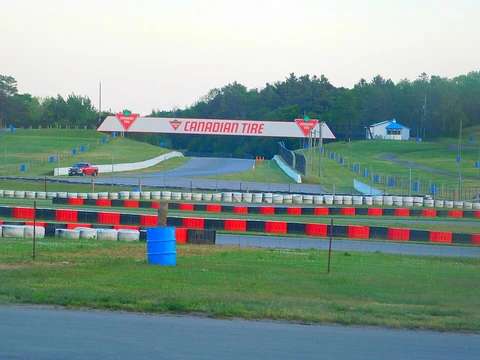
Canadian Tire Motorsport Park in Bowmanville, Ontario, is the country's premier multi-purpose facility, running IndyCar, NASCAR, and various national series on both its road course and oval. Circuit Gilles-Villeneuve in Montreal serves as the F1 venue, while numerous smaller regional tracks across the provinces support club and amateur racing.
Which series should a new fan follow to get a feel for Canadian motorsport?
IndyCar and NASCAR both schedule Canadian rounds, and several Canadian drivers are active in F1, IndyCar, and rally competition. Domestic programs like the Canadian Tire Series and provincial karting leagues give a window into where the next generation of talent is developing.
What organization governs motorsport in Canada?
The Fédération du Canada d'Automobile (FCA) handles driver licensing, safety regulations, and national championship sanctioning across all racing disciplines. It operates as the country's recognized national body under the FIA and coordinates with international series promoters.
What is widely regarded as the most emotional moment in Canadian racing?
Gilles Villeneuve's 1978 Canadian Grand Prix win in Montreal, where he crossed the line in a Ferrari to a roaring home crowd, is often cited as the defining moment. Jacques Villeneuve's 1997 World Championship added a second generation of triumph to the family's story.
Where should a newcomer begin exploring Canadian motorsport?
Attending or streaming a Canadian GP weekend in Montreal or an IndyCar race at Bowmanville offers the most accessible entry point into the country's racing culture. Tracking the season of a current Canadian driver in IndyCar, NASCAR, or F1 gives a personal thread to follow back into the sport's broader history.
Are there significant Canadian contributions beyond the drivers?
Canadian engineers, team strategists, and technical directors have held key roles in F1, IndyCar, and rally teams over the decades. The country also maintains a steady pipeline of young talent through karting academies and junior racing programs that feed into international competition.
What sets Canadian motorsport culture apart from other countries?
Fan communities at events in Montreal and Bowmanville blend European-style racing passion with North American stock-car energy, creating a uniquely lively atmosphere. The bilingual nature of the country means the sport resonates strongly in both English- and French-speaking provinces, giving it a broader cultural footprint than in many racing nations.