
Dardanus Sulcus
A long, bright grooved terrain on Ganymede, younger than surrounding dark regions.
Last updated

NASA/ JPL · Public domain
Dardanus Sulcus is a long, grooved trough on Jupiter’s moon Ganymede, stretching roughly 1,500 kilometers from north to south. Its surface is younger than the darker terrain around it. The feature is named after Dardanus, an ancient ruined city in modern-day Turkey. In Greek mythology, that city stood near the spot where Zeus, in the form of an eagle, abducted the Trojan prince Ganymede and took him to Mount Olympus.
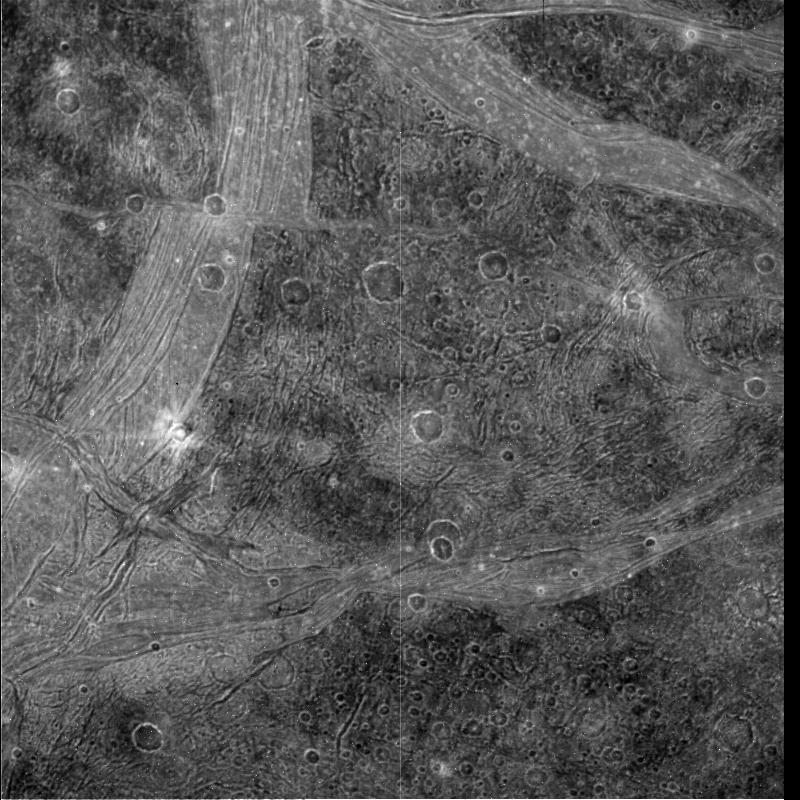
The International Astronomical Union approved the name in 1979, following the convention that Ganymede’s surface features are named after deities, heroes, or places from ancient Near Eastern myths, or figures and locations linked to Ganymede or Troy. Dardanus Sulcus falls into the latter group. On Earth, the Dardanelles Strait also takes its name from the same city. The sulcus cuts through two dark, ancient regions: Barnard Regio and Nicholson Regio, splitting each roughly into western and eastern lobes.
Location
It begins near the crater Danel in northern Barnard Regio and runs south. Along the way, it crosses another bright, grooved terrain called Mysia Sulci. After passing through that, it enters Nicholson Regio, where it again dissects the dark terrain. About five-sixths of the way along its path, it meets another bright sulcus, Arbela Sulci, near the crater Damkina.
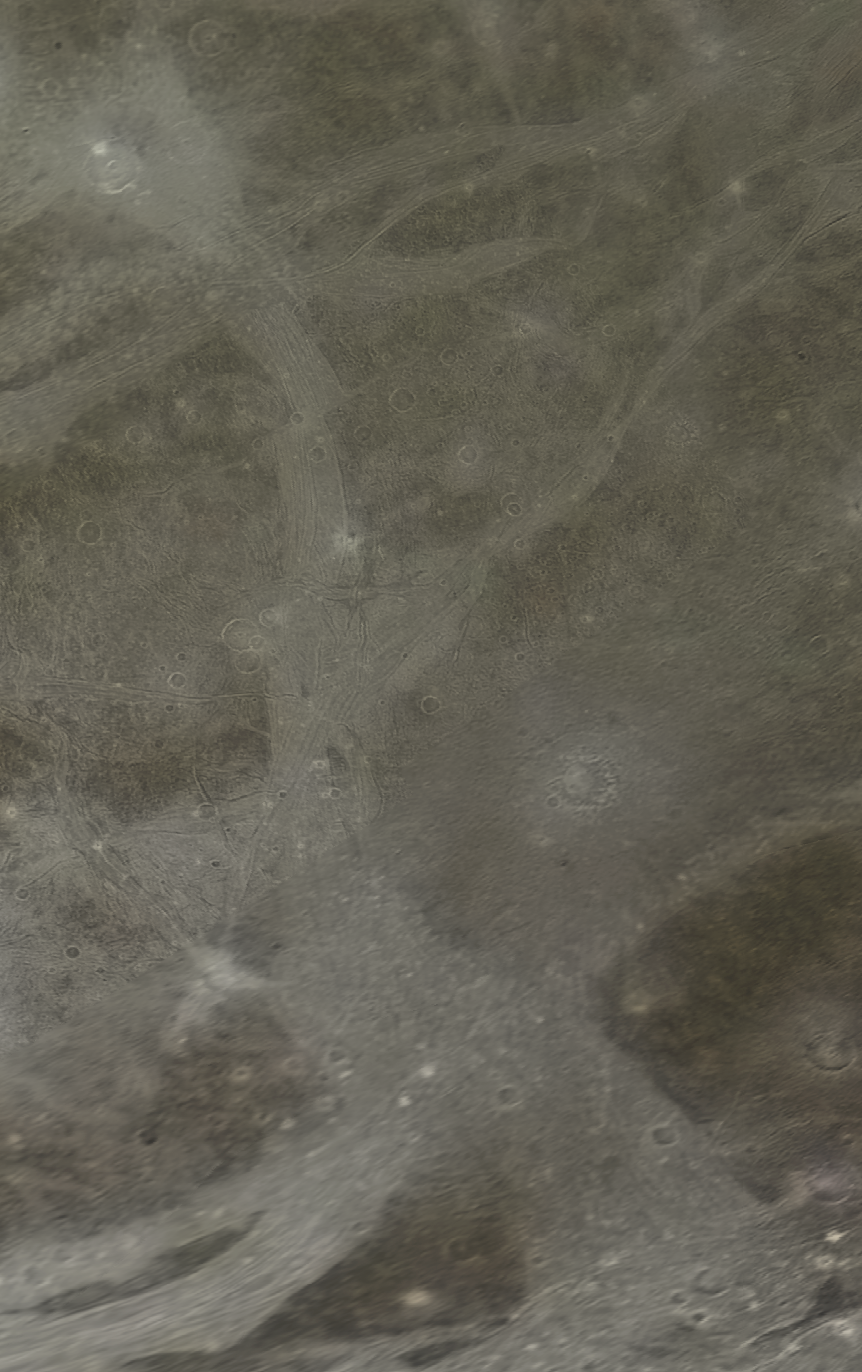
Dardanus Sulcus ends near the crater Nabu at the southern edge of Nicholson Regio. The sixth quadrangle of Ganymede is named after this sulcus (designated Jg6), but because of its length and the position of its northern end, more than half of it lies within the Nabu quadrangle (Jg11) to the south. The sulcus sits on the sub-Jovian hemisphere—the side of Ganymede that always faces Jupiter—so an observer there would see Jupiter fixed in the same spot in the sky.
Characteristics
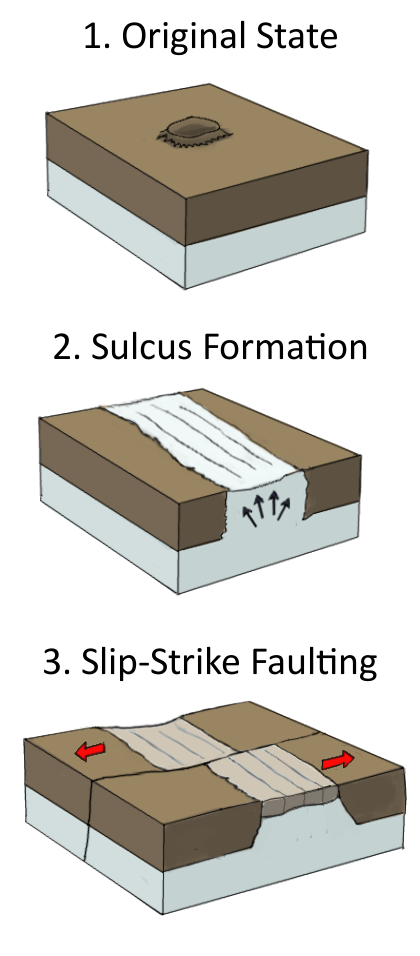
Like many bright regions on Ganymede, Dardanus Sulcus is a bright terrain with multiple sets of ridges and grooves. Scientists agree that bright terrains are younger than the darker, more rugged ones.
They form when fresh water ice rises from beneath the surface, erasing and smoothing over the dark terrain. This fresh ice reflects sunlight well, making young terrains like Dardanus Sulcus much brighter than the surrounding dark regions, such as Nicholson Regio. This ongoing resurfacing through tectonic activity is common on Ganymede, shaping its appearance.
Did You Know?
- Dardanus Sulcus runs for approximately 1,500 kilometres (930 mi) from north to south across Ganymede.
Frequently Asked Questions
What is Dardanus Sulcus?
It is a long, grooved trough on Ganymede, one of Jupiter's large moons, running roughly 1,500 kilometres from north to south. The feature sits on the sub-Jovian hemisphere and threads through two of Ganymede's mapped quadrangles, Jg6 and Jg11.
How big is Dardanus Sulcus and which direction does it run?
The trough stretches approximately 1,500 kilometres (about 930 miles) and is oriented north to south. It crosses the Dardanus Sulcus quadrangle (Jg6) and the Nabu quadrangle (Jg11).
When was the name Dardanus Sulcus officially approved?
The International Astronomical Union ratified the designation in 1979. That followed the IAU's naming rule for Ganymede, which requires surface features to be drawn from deities, heroes, or places in ancient Near Eastern and Greek mythology.
More in Moons of Jupiter
Sources
Compiled from Wikipedia and the sources listed below. Text from Wikipedia is available under CC BY-SA 4.0; this entry is adapted from it.
- Wikipedia: Dardanus Sulcus (CC BY-SA 4.0).
Spotted an error? Know more?
Reader corrections go straight into our review queue. Suggest an edit · How this site is sourced