Richard Serra
Early 20th-century movement emphasizing experimentation, abstraction, and subjective experience across arts and culture.

Modernism was an early 20th-century movement in literature, visual arts, performing arts, and music that emphasized experimentation, abstraction, and subjective experience. Philosophy, politics, architecture, and social issues were all aspects of this movement. Modernism centered around beliefs in a 'growing alienation' from prevailing 'morality, optimism, and convention' and a desire to change how 'human beings in a society interact and live together'.
- field
- Sculpture
- nationality
- American
- known_for
- Large-scale abstract site-specific sculptures in steel
Lore & Background
The modernist movement emerged during the late 19th century in response to significant changes in Western culture, including secularization and the growing influence of science. It is characterized by a self-conscious rejection of tradition and the search for newer means of cultural expression. Modernism was influenced by widespread technological innovation, industrialization, and urbanization, as well as the cultural and geopolitical shifts that occurred after World War I. Artistic movements and techniques associated with modernism include abstract art, literary stream-of-consciousness, cinematic montage, musical atonality and twelve-tonality, modern dance, modernist architecture, and urban planning. Modernism took a critical stance towards the Enlightenment concept of rationalism. The movement also rejected the concept of absolute originality — the idea of 'Creatio ex nihilo' creation out of nothing — upheld in the 19th century by both realism and Romanticism, replacing it with techniques of collage, reprise, incorporation, rewriting, recapitulation, revision, and parody. Another feature of modernism was reflexivity about artistic and social convention, which led to experimentation highlighting how works of art are made as well as the material from which they are created.
Reader's Guide
Modernism was a cultural movement that impacted the arts as well as the broader Zeitgeist. It is commonly described as a system of thought and behavior marked by self-consciousness or self-reference, prevalent within the avant-garde of various arts and disciplines. It is also often perceived, especially in the West, as a socially progressive movement that affirms the power of human beings to create, improve, and reshape their environment with the aid of practical experimentation, scientific knowledge, or technology. From this perspective, modernism encourages the re-examination of every aspect of existence. Modernists analyze topics to find the ones they believe to be holding back progress, replacing them with new ways of reaching the same end. According to historian Roger Griffin, modernism can be defined as a broad cultural, social, or political initiative sustained by the ethos of 'the temporality of the new'. Griffin believed that modernism aspired to restore a 'sense of sublime order and purpose to the contemporary world, thereby counteracting the (perceived) erosion of an overarching 'nomos', or 'sacred canopy', under the fragmenting and secularizing impact of modernity'. Therefore, phenomena apparently unrelated to each other such as 'Expressionism, Futurism, Vitalism, Theosophy, Psychoanalysis, Nudism, Eugenics, Utopian town planning and architecture, modern dance, Bolshevism, Organic Nationalism — and even the cult of self-sacrifice that sustained the Hecatomb of the First World War — disclose a common cause and psychological matrix in the fight against (perceived) decadence.' All of them embody bids to access a 'supra-personal experience of reality' in which individuals believed they could transcend their mortality and eventually that they would cease to be victims of history to instead become its creators.
Did You Know?
- Modernism emerged during the late 19th century in response to secularization and the growing influence of science.
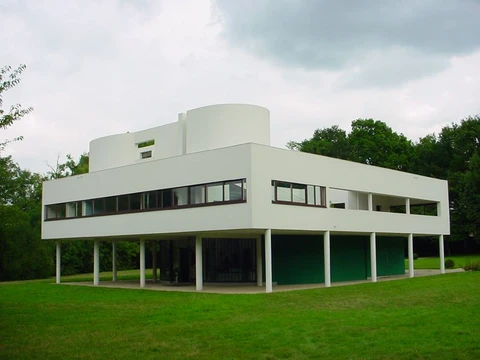
- Artistic techniques associated with modernism include abstract art, literary stream-of-consciousness, cinematic montage, musical atonality and twelve-tonality, modern dance, modernist architecture, and urban planning.
- Modernism rejected the concept of absolute originality, replacing it with techniques of collage, reprise, incorporation, rewriting, recapitulation, revision, and parody.
- Historian Roger Griffin defined modernism as a broad initiative sustained by the ethos of 'the temporality of the new'.
- Modernism took a critical stance towards the Enlightenment concept of rationalism.
Frequently Asked Questions
Who is Richard Serra?
Richard Serra (1938–2024) was an American sculptor celebrated for designing enormous, site-specific steel installations that reshape how people move through urban and architectural spaces. He is widely regarded as one of the most influential sculptors of the late twentieth century.
What materials and style defined Richard Serra's work?
Serra worked almost exclusively with steel, forging massive abstract forms tailored to a particular landscape, building, or public setting. His insistence on the raw physicality and weight of the material placed him squarely within the postminimalist tradition.
What art movement is Richard Serra most associated with?
He is most closely linked to postminimalism, a movement that moved beyond minimalism's restrained geometry by foregrounding process, material heft, and the viewer's bodily experience of a sculpture.
Why is Richard Serra important in art history?
Serra redefined sculpture as an environment you walk through rather than a static object you look at, making the interplay between the viewer, the steel, and the surrounding site the heart of the experience. That site-specific approach went on to shape decades of installation and public-art practice.
When did Richard Serra die and what is his lasting legacy?
Serra passed away on March 26, 2024, at the age of 85. His monumental steel works remain installed in cities and museums around the world, and he is remembered as a defining figure of late-twentieth-century sculpture.
More in Modernist & Contemporary Pioneers 1-22
Spotted an error? Know more?
This is a living reference — every entry is fact-audited, and reader corrections feed straight into our audit queue. Suggest an edit · See this site's audit record