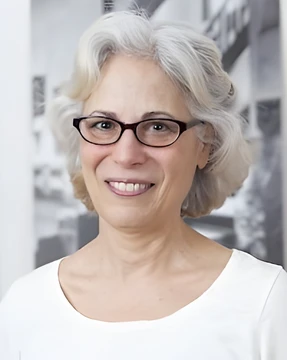
Cornel West
American philosopher, activist, and independent presidential candidate.

Cornel Ronald West (born June 2, 1953) is an American philosopher, theologian, activist, and public intellectual who ran as an independent candidate in the 2024 U.S. presidential election and is a prominent left-wing voice. His philosophy centers on the interplay of race, gender, and class in American society. A socialist, he draws on Christianity, the black church, democratic socialism, left-wing populism, neopragmatism, and transcendentalism. Over his career, he has held professorships and fellowships at Harvard, Yale, Union Theological Seminary, Princeton, Dartmouth, Pepperdine, and the University of Paris in Saint-Denis. His influential books include *Race Matters* (1993) and *Democracy Matters* (2004). He has appeared in documentaries and the films *The Matrix Reloaded* and *The Matrix Revolutions*, and has released spoken word and hip hop albums.
West was born in Tulsa, Oklahoma, and raised in Sacramento, California, where he graduated from John F. Kennedy High School. His mother, Irene Rayshell (Bias), was a teacher and principal; his father, Clifton Louis West Jr., was a Defense Department contractor; his grandfather Clifton L. West Sr. was a Baptist pastor. Irene B. West Elementary School in Elk Grove, California, is named after his mother. As a teen, he marched in civil rights demonstrations and organized protests for Black studies courses at his high school, where he was student body president. He later wrote that he admired Malcolm X, the Black Panther Party, and James Cone’s Black theology.
In 1970, he entered Harvard College, studying under philosophers Robert Nozick and Stanley Cavell. He graduated magna cum laude in 1973 in Near Eastern languages and civilization. He credits Harvard with broadening his ideas and cites the Black Panther Party as an influence, though his Christianity kept him from joining; instead, he worked in local breakfast, prison, and church programs. He then earned a master’s and Ph.D. from Princeton in 1980, completing a dissertation on *Ethics, Historicism, and the Marxist Tradition* (later published as *The Ethical Dimensions of Marxist Thought*) under Raymond Geuss and Sheldon Wolin. He was the first African American to earn a Princeton Ph.D. in philosophy. At Princeton, he was influenced by Richard Rorty’s neopragmatism; Rorty remained a close friend and colleague.
In his late 20s, West returned to Harvard as a W. E. B. Du Bois Fellow, then became an assistant professor at Union Theological Seminary. In 1984, he joined Yale Divinity School with a joint appointment in American studies. At Yale, he participated in protests for a clerical labor union and divestment from apartheid South Africa; one protest led to his arrest and jailing. The university canceled his spring 1987 leave as punishment, so he commuted from Yale to the University of Paris in Saint-Denis while teaching two classes. He then spent a year back at Union Theological Seminary before moving to Princeton as a professor of religion and director of African American Studies (1988–1994). He later accepted a Harvard professorship in African American studies with a joint appointment at Harvard Divinity School, teaching one of the university’s most popular courses. In 1998, he became the first Alphonse Fletcher University Professor, teaching in African American studies, divinity, religion, and philosophy. He was also inducted into Omicron Delta Kappa at SUNY Plattsburgh in 1998.
In 2000, Harvard president Lawrence Summers privately rebuked West for missing classes, contributing to grade inflation, neglecting serious scholarship, and focusing on financially profitable projects. Summers reportedly suggested West produce an academic book, as his recent output was mostly co-written or edited volumes, and objected to West’s CD *Sketches of My Culture* and his political campaigning for Bill Bradley. West said he missed only one class, to give a keynote at a Harvard-sponsored AIDS conference. Summers also allegedly proposed regular meetings to discuss West’s academic progress. Summers refused to comment on the matter.
- field
- Philosophy, theology, activism
- nationality
- American
Lore & Background
Kennedy High School. As a teen, he marched in civil rights demonstrations and organized protests demanding Black studies courses at his high school, where he was student body president. He then earned a master's degree and Ph.D. in philosophy.
Did You Know?
- He was the first African American to earn a Ph.D. in philosophy from Princeton University, in 1980.
- His Ph.D. dissertation, supervised by Raymond Geuss and Sheldon Wolin, was later revised as The Ethical Dimensions of Marxist Thought.
Frequently Asked Questions
Who is Cornel West?
Cornel West is an American philosopher, theologian, and Black political activist born in Tulsa, Oklahoma on June 2, 1953. He is widely recognized as a democratic socialist and public intellectual who has been a prominent voice in left-wing American politics.
What are Cornel West's most famous works?
His best-known books include Race Matters (1993) and Democracy Matters (2004), both of which explore the intersections of race, class, and power in American life. These texts cemented his reputation as a leading critical thinker on inequality.
What role did Cornel West play in the 2024 U.S. presidential election?
West ran as an independent candidate in the 2024 presidential race, positioning himself as an outsider voice for working-class and marginalized communities. His candidacy highlighted his long-standing commitment to democratic socialism and left-wing populism.
What intellectual traditions shape Cornel West's philosophy?
West draws from a wide range of sources, including Christianity, the Black church tradition, democratic socialism, and neopragmatism. His work consistently centers the struggles of race, gender, and class as intertwined forces in American society.
Why is Cornel West considered important in modern political thought?
He bridges academic philosophy, theology, and grassroots activism in a way that few contemporary thinkers manage. His background as the grandson of a Baptist minister and his decades of public commentary have made him a defining figure in progressive and socialist discourse in the United States.
More in Modern Political Theorists And Sociologists 1-18
Spotted an error? Know more?
This is a living reference — every entry is fact-audited, and reader corrections feed straight into our audit queue. Suggest an edit · See this site's audit record