Frequently Asked Questions
The most-asked questions about modern pagan musical groups.
What exactly is modern pagan music as a genre?
It is a broad umbrella term for contemporary music that fuses folk instrumentation, modal melodies, and rhythmic patterns drawn from pre-Christian European traditions with modern rock, metal, or electronic production. The genre centers on themes of polytheistic myth, seasonal cycles, and nature reverence rather than any single organized religion.
Which artists or bands are considered foundational to the scene?
Finnish groups Primordial and Moonsorrow, German band In Extremo, and Irish band Eluveitie are often cited as 1990s pioneers who established the template. More recently, Icelandic ensembles Heilung and Wardruna brought the style to a global audience through cinematic, ritualistic performances.
Where should a complete newcomer start listening?
If you prefer heavier, guitar-driven sound, begin with Eluveitie's 'Spirit' or Moonsorrow's 'Tuska.' For a more atmospheric, percussion-and-voice-forward entry point, Wardruna's 'Runaljod' EPs or Heilung's 'Völuspá' are widely recommended first listens.
What instruments are most characteristic of the sound?
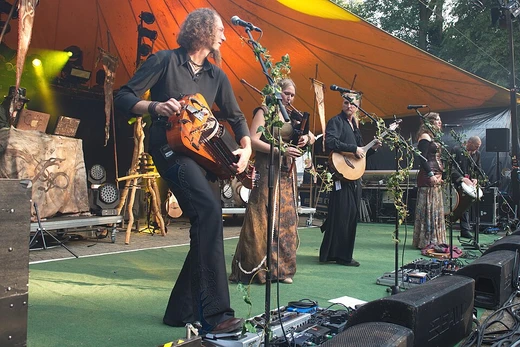
Typical lineups pair electric or acoustic guitar, bass, and drums with instruments such as the hurdy-gurdy, nyckelharpa, bodhrán, frame drums, tin or wooden flutes, and sometimes throat-singing or call-and-response chanting. The blend of ancient timbres with amplified modern instruments is the genre's signature texture.
How is this different from medieval music or traditional folk?
Medieval music projects aim to historically reconstruct period repertoire, while traditional folk is a living community practice tied to a specific region. Modern pagan music is a creative, genre-driven art form that borrows melodic and rhythmic vocabulary from those traditions but composes original material for a global audience.
What lyrical themes appear most frequently?
Norse, Celtic, Slavic, and Baltic mythologies are the most common source material, with songs narrating the deeds of gods, heroes, and spirits. Equally prevalent are themes of solstice and equinox cycles, animal totems, ancestral memory, and a spiritual relationship with forests, seas, and mountains.
When did the genre first crystallize as a recognizable scene?
The mid-to-late 1990s in Scandinavia, the Baltic states, and Central Europe saw the first wave of bands explicitly merging black or thrash metal with folk instrumentation. By the early 2000s the term 'folk metal' was in common use, and the broader 'pagan' label grew as artists leaned further into mythological and spiritual content.
What are some well-known festivals or gatherings for fans?
Wacken Open Air in Germany has a dedicated folk/pagan stage that draws thousands of genre fans each August. Smaller dedicated events like the Finnish Vaino Folk Festival, the Hungarian Folk Metal Camp, and various Nordic 'hávamál' gatherings also serve as annual community touchpoints.
What's the practical difference between pagan metal, folk metal, and neofolk?
Folk metal is the broadest category, covering any metal that incorporates folk elements regardless of lyrical subject. Pagan metal is a subset whose lyrics and imagery explicitly reference polytheistic or nature-based spirituality. Neofolk (or dark folk) tends toward acoustic, ambient, or post-punk arrangements and may not use any metal instrumentation at all.
Has the genre experienced any major mainstream breakthrough moments?
Wardruna's contribution to Hans Zimmer's 'Dune' soundtrack and Heilung's viral ritual-performance videos on social media in the early 2020s introduced the aesthetic to tens of millions of listeners outside the metal community. Prior to that, the genre's biggest crossover moment was the late-1990s popularity of In Extremo's theatrical stage shows in Germany.