Brucite
Magnesium hydroxide mineral with industrial and concrete degradation roles.

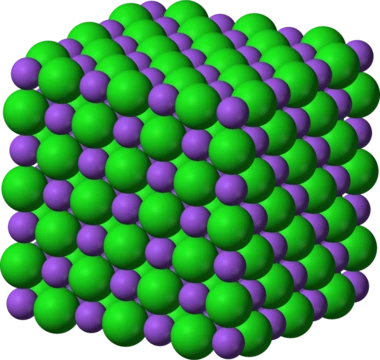
Brucite is the mineral form of magnesium hydroxide (Mg(OH)₂). It commonly forms when periclase alters in marble, appears as a low-temperature hydrothermal vein mineral in metamorphosed limestones and chlorite schists, and develops during the serpentinization of dunites. It is typically found alongside serpentine, calcite, aragonite, dolomite, magnesite, hydromagnesite, artinite, talc, and chrysotile. Its structure is layered, resembling cadmium iodide, with hydrogen bonds holding the layers together.
First described in 1824 by François Sulpice Beudant, it was named after American mineralogist Archibald Bruce (1777–1818), who discovered it. A fibrous variety is called nemalite, occurring as fibers or laths that usually elongate along the [1010] direction, though sometimes along [1120].
Notable occurrences include Wood's Chrome Mine at Cedar Hill Quarry in Lancaster County, Pennsylvania, USA. Yellow, white, and blue brucite with a botryoidal habit was found in the Qila Saifullah District of Balochistan, Pakistan, and later in the Bela Ophiolite of Wadh, Khuzdar District, also in Balochistan. Other localities include South Africa, Italy, Russia, and Canada, but the most significant discoveries are from the US, Russia, and Pakistan.
Synthetic brucite is mainly used as a precursor to magnesia (MgO), a refractory material and thermal insulator. It also serves as a flame retardant, as it thermally decomposes to release water, similar to aluminum hydroxide and mixtures of huntite and hydromagnesite. It is an important source of magnesium for industry. While generally considered safe, brucite can be contaminated with naturally occurring asbestos fibers.
In cement and concrete exposed to seawater containing both Mg²⁺ and SO₄²⁻ ions, the precipitation of poorly soluble brucite enhances gypsum formation during sulfate attack. This precipitation drives the chemical equilibrium toward gypsum and ettringite, an expansive phase that causes mechanical stress in hardened cement paste. However, brucite has a small molar volume (24.63 cm³/mol), which may clog the porous network and slow the diffusion of harmful ions, delaying decalcification of the C-S-H phase (the binder in concrete) and its transformation into M-S-H. The exact mechanism of brucite’s role in degradation is debated. If it had a high molar volume, it would be considered a swelling phase like ettringite, but that is not the case. Whether it causes expansion is unclear. If it replaces another phase locally (topochemical replacement) and has a smaller molar volume, no expansion is expected—only reduced porosity. But if many tiny crystals grow between existing ones, even with a small molar volume, they could exert crystallization pressure, leading to tensile stress, expansion, and cracking. Prolonged contact between seawater or magnesium-rich brines and concrete can cause durability issues, especially for submerged structures with steel reinforcements, due to pitting corrosion from chloride ions. Using dolomite as aggregate in concrete with high-alkali cement can also trigger brucite precipitation through the dedolomitization reaction, as seen in alkali-aggregate reactions. For this reason, dolomite is prohibited as an aggregate in concrete.
- chemical_formula
- Mg(OH)2
- discoverer
- François Sulpice Beudant
- named_for
- Archibald Bruce
- crystal_structure
- Layered CdI2-like structure with hydrogen-bonds between layers
- fibrous_variety
- Nemalite
- molar_volume
- 24.63 cm3/mol
Lore & Background
Brucite, the mineral form of magnesium hydroxide, is a secondary mineral that commonly forms through the alteration of periclase in marble, as a low-temperature hydrothermal vein mineral in metamorphosed limestones and chlorite schists, and during the serpentinization of dunites. It exhibits a layered structure similar to cadmium iodide, with hydrogen bonds holding the layers together. The mineral is frequently found alongside serpentine, calcite, aragonite, dolomite, magnesite, hydromagnesite, artinite, talc, and chrysotile. A fibrous variety is known as nemalite, occurring as fibers or laths that are typically elongated along specific crystalline directions. In terms of appearance, notable specimens include yellow, white, and blue brucite displaying a botryoidal habit. Significant localities include Wood's Chrome Mine and Cedar Hill Quarry in Lancaster County, Pennsylvania; the Qila Saifullah District and the Bela Ophiolite of Wadh in the Khuzdar District, both in Baluchistan, Pakistan; as well as occurrences in South Africa, Italy, Russia, and Canada. Synthetic brucite is primarily used as a precursor to magnesia, a refractory and thermal insulator, and serves as a flame retardant by releasing water upon thermal decomposition. It is also an important industrial source of magnesium, though it may be contaminated with naturally occurring asbestos fibers.
Reader's Guide
Synthetic brucite is mainly consumed as a precursor to magnesia (MgO), a useful refractory and thermal insulator. It finds some use as a flame retardant because it thermally decomposes to release water in a similar way to aluminium hydroxide and mixtures of huntite and hydromagnesite. It also constitutes a significant source of magnesium for industry. Although generally deemed safe, brucite can be contaminated with naturally occurring asbestos fibers. In cement and concrete exposed to Mg2+ and SO2−4 ions simultaneously present in seawater, the precipitation of poorly soluble brucite contributes to enhance the formation of gypsum in sulfate attack. The precipitation of insoluble Mg(OH)2 helps drive the chemical equilibrium, exacerbating sulfate attack and forming gypsum and ettringite. However, brucite's small molar volume may clog the porous network, hindering diffusion of harmful species and delaying decalcification of C-S-H. The exact mechanism of brucite degradation remains debated; it is unclear if it causes expansion or not. Prolonged contact between seawater or Mg-brines and concrete may induce durability issues. The use of dolomite as aggregate in concrete with high alkali content can also cause brucite precipitation, driving the dedolomitization reaction, and consequently dolomite is prohibited as aggregate for concrete.
Did You Know?
- A fibrous variety of brucite is called nemalite.
- Brucite can be contaminated with naturally occurring asbestos fibers.
- The use of dolomite as aggregate in concrete is prohibited due to brucite precipitation driving the dedolomitization reaction.
More in Minerals & Crystals 1-24
Spotted an error? Know more?
This is a living reference — every entry is fact-audited, and reader corrections feed straight into our audit queue. Suggest an edit · See this site's audit record