Thule Site J
Northernmost US Space Force radar station for missile warning.
Last updated

via Wikipedia: Thule Site J · see source
Where it is
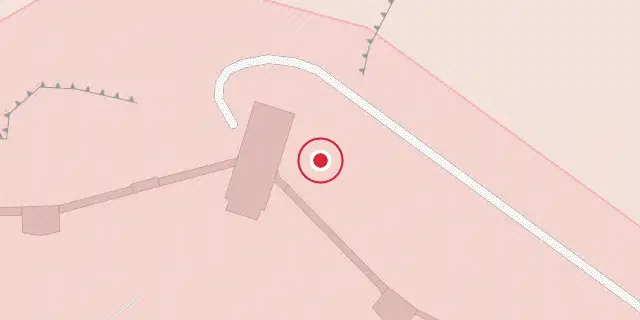
Coordinates: 76°34′12″N 68°17′56″W (76.5700, -68.2990) · Open in OpenStreetMap
Coordinates and connected clubs: the infobox of Wikipedia: Thule Site J (CC BY-SA 4.0). Map: drawn by Codexery from OpenStreetMap tiles.
Thule Site J (J-Site) is a United States Space Force radar station in Greenland near Pituffik Space Base, used for missile warning and spacecraft tracking. It is the northernmost station of the Solid State Phased Array Radar System. The installation was built as the first site of the RCA 474L Ballistic Missile Early Warning System and originally housed five of the twelve BMEWS radars.
History
General Operational Requirement 156 for BMEWS was issued on 7 November 1957; the system had originally been designed to go with the active portion of the WIZARD system. On 4 February 1958, the USAF informed Air Defense Command that BMEWS was an all-out program placed on the Department of Defense master urgency list. The US announced on 14 January 1958 its decision to establish a Ballistic Missile Early Warning System, with Thule to be operational in 1959. A May 1958 estimate put total costs for Thule and Clear Air Force Station at approximately $800 million; a 13 October 1958 plan estimated completion for both in September 1960.
A World War II freighter operated by Burns & Roe originally supplied electrical and heating power to Site J until a powerplant was built later; water came from Thule AB via a branch line. Kiewit was contracted for heavy construction, including AN/FPS-50 reflector foundations and tunnels between transmitter buildings.
Construction began in May 1958; a trial reflector installation failed because ordinary carbon steel bolts were used instead of 1.5% chrome steel. The maintenance building with electric heat was the first completed. The four AN/FPS-50 reflectors with 25-ton foundations were finished by 8 August 1959; two pedestals for trackers were built for deferred radars.
Did You Know?
- On 5 October 1960, radar returns during Thule moonrise produced a false alarm while Soviet Premier Nikita Khrushchev was in New York.
- The BRCS undersea cable from Greenland was cut in September, October, and November 1961, presumably by fishing trawlers.
- In June 1980, Thule's FPS-49A radome by Goodyear burnt to the ground and was rebuilt.
- Thule's AN/FPS-132 Upgraded Early Warning Radar completes about 10% of the United States' observations of Earth orbiting satellites.
More in Military Space Program of the United States
Sources
Compiled from Wikipedia and the sources listed below. Text from Wikipedia is available under CC BY-SA 4.0; this entry is adapted from it.
- Wikipedia: Thule Site J (CC BY-SA 4.0).
Spotted an error? Know more?
Reader corrections go straight into our review queue. Suggest an edit · How this site is sourced