United States military ration
Sustaining U.S. forces from garrison to frontline.
United States military ration refers to the rations provided to sustain service members of the U.S. Armed Forces, including both field and garrison rations, as well as the military nutrition research conducted in relation to military food. These rations are designed for quick distribution, preparation, and consumption in the field, and they typically have long storage lives in adverse conditions due to thick packaging or shelf-stable formulations.
Quick Facts
- Caloric baseline per ration
- at least 2,400 kcal
- Spirit ration reinstated
- 1846
- Spirit ration finally discontinued
- 1865
Facts from the source article.
History
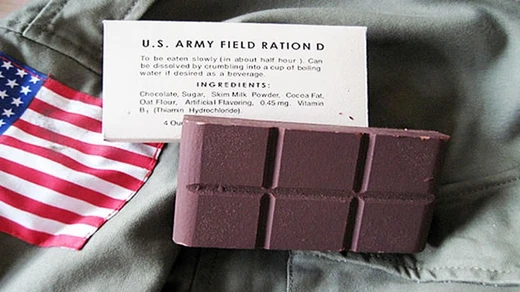
From the Revolutionary War through the Spanish-American War, the standard U.S. Army ration set by the Continental Congress was the garrison ration. This included meat or salt fish, bread or hardtack, and vegetables, plus an alcohol ration. In 1785, that alcohol ration was four ounces of rum, but by 1790 it was cut to two ounces of whiskey, brandy, or rum. Starting in 1794, soldiers about to fight or serving on the frontier could get a double ration of four ounces of rum or whiskey, and by 1799 this extra allowance also went to troops doing fatigue duties. The alcohol ration ended in 1832, replaced by coffee and sugar, which was increased in 1836. In 1846, an alcohol ration came back for soldiers on construction or surveying jobs, but it was dropped again in 1865. During the Civil War, both sides had trouble feeding their troops, and the challenges of moving food led to many different rations. World War I saw three main types of rations: the Reserve ration, the Trench ration, and the Emergency ration, also called the Iron ration. The first individual field ration was the iron ration, introduced in 1907. It came in a sealed one-pound tin packet containing three three-ounce cakes made from beef bouillon powder and parched, cooked wheat, three one-ounce bars of sweetened chocolate, and salt and pepper packets. It was meant only for emergencies when soldiers couldn't get regular food. Though later replaced by the Reserve Ration, the lessons from the Iron Ration helped create the emergency D-ration. The trench ration appeared early in the war to solve a specific problem: cooked food from field kitchens could be ruined by gas attacks. This ration was a large tin box covered in canvas, filled with commercially bought canned meats like salmon, corned beef, and sardines. It was heavy and bulky, and soldiers got tired of the same few choices, so it was soon swapped out for the Reserve Ration.
Present-day issuance
Currently available rations include the Unitized Group Ration, which is the standard group ration for feeding personnel in field kitchens and garrisons, succeeding the A-, B-, and T-rations. Subtypes include the UGR-H&S (Heat & Serve), precooked and shelf-stable meals designed to be heated and served in less than an hour; the UGR-A, fresh meals requiring refrigeration and a field kitchen; the UGR-M (formerly UGR-B), a group ration of dehydrated and shelf-stable foods for the U.S. Marine Corps; and the UGR-E (Express), group rations in self-heating packages for situations without field kitchens. Individual field rations include the Meal, Ready-to-Eat and the Close Combat Assault Ration, a compact, lightweight ration designed for consumption on the move. The composition of these rations is predetermined to ensure soldiers receive necessary nutrients, with a baseline recommendation of at least 2,400 kcal per ration.
More in Military Food of the United States
Spotted an error? Know more?
Reader corrections go straight into our review queue. Suggest an edit · How this site is sourced