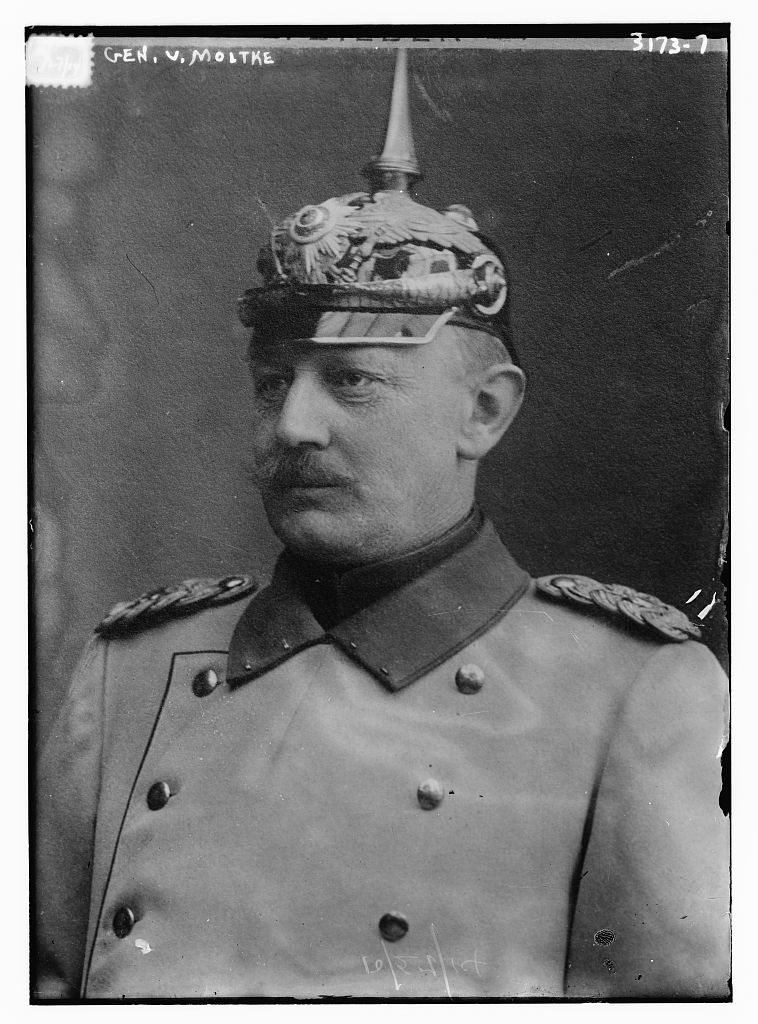
Helmuth von Moltke the Younger
German general and Chief of Staff during World War I's opening.

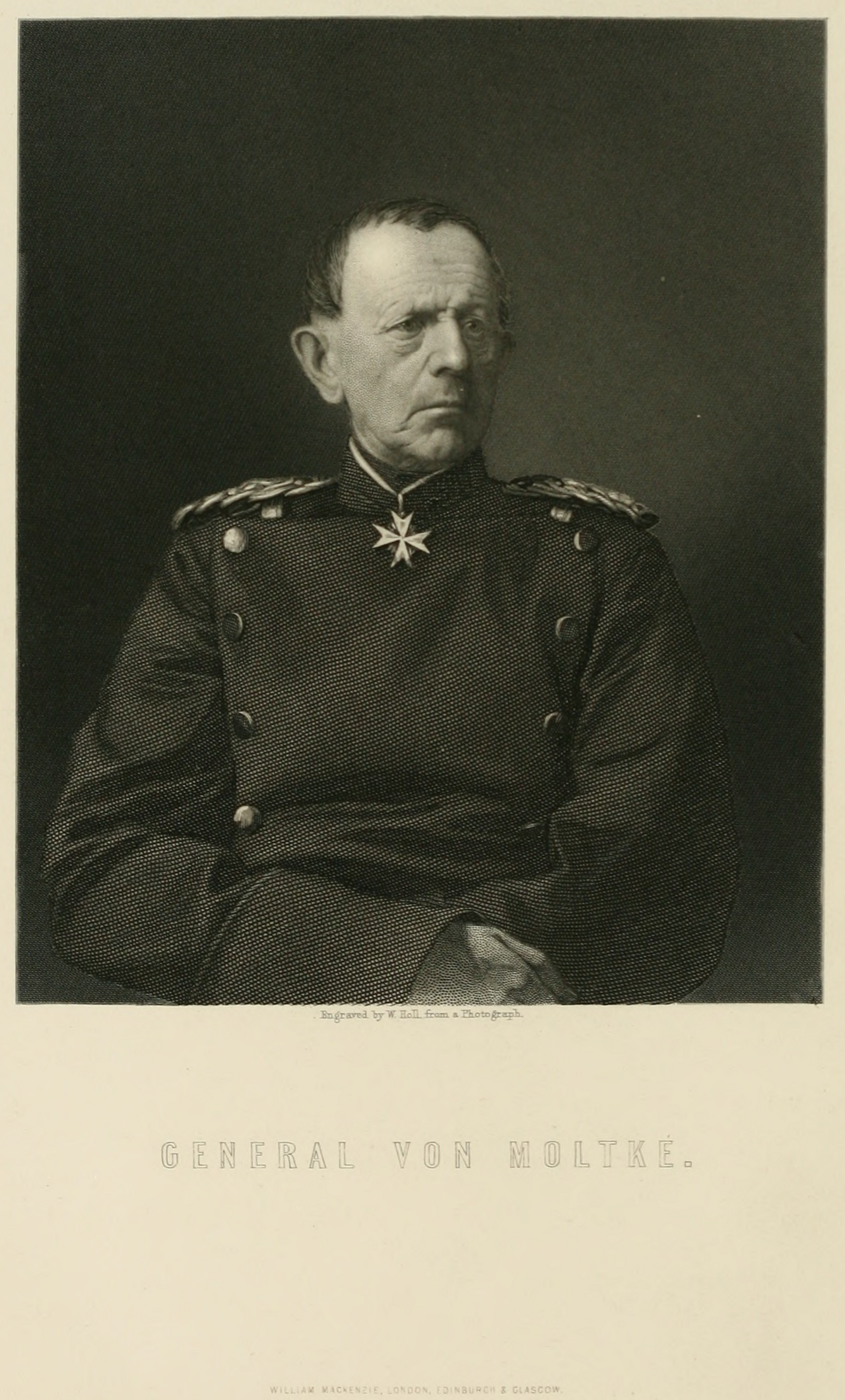
William Holl · Public domain
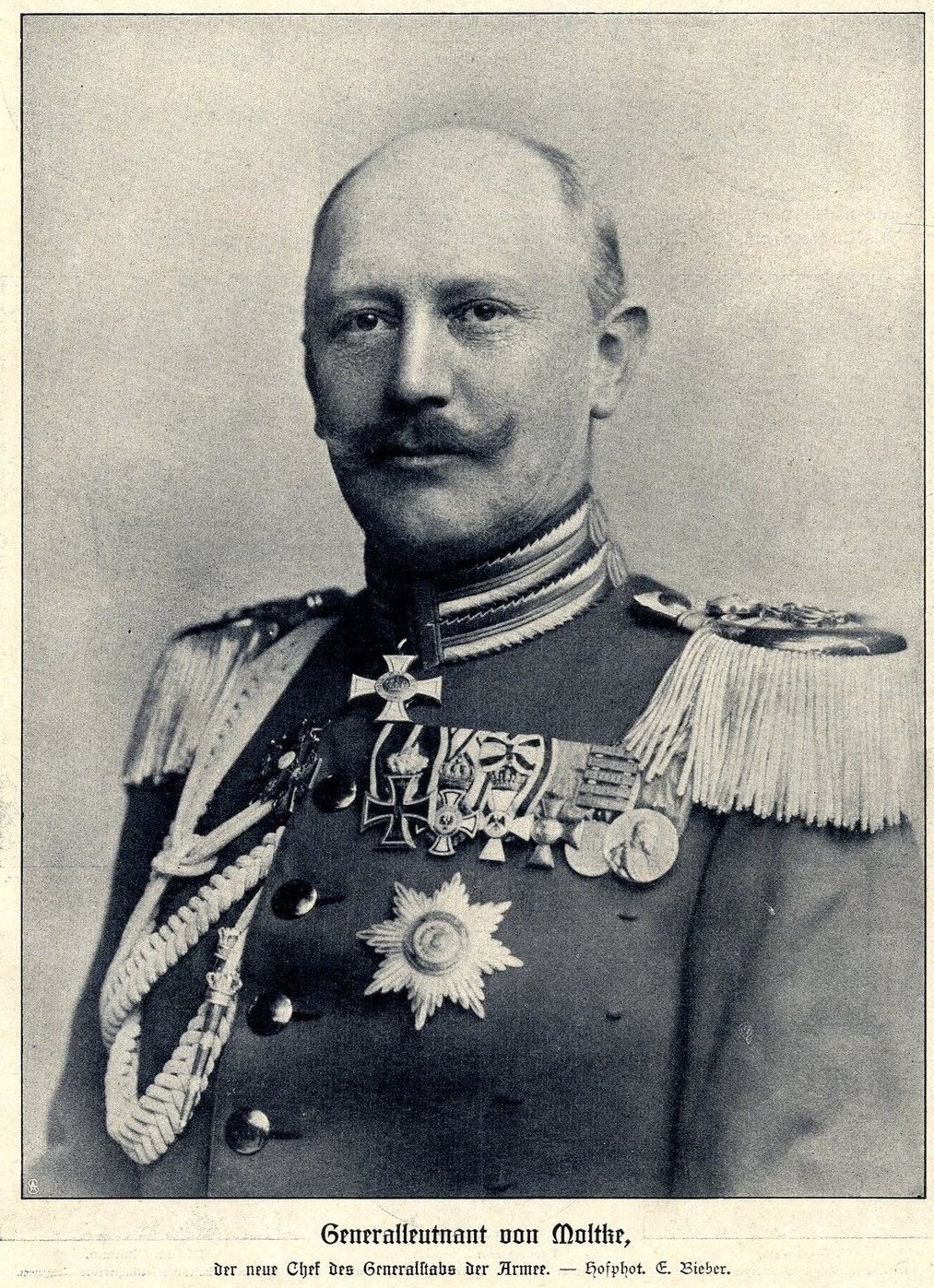
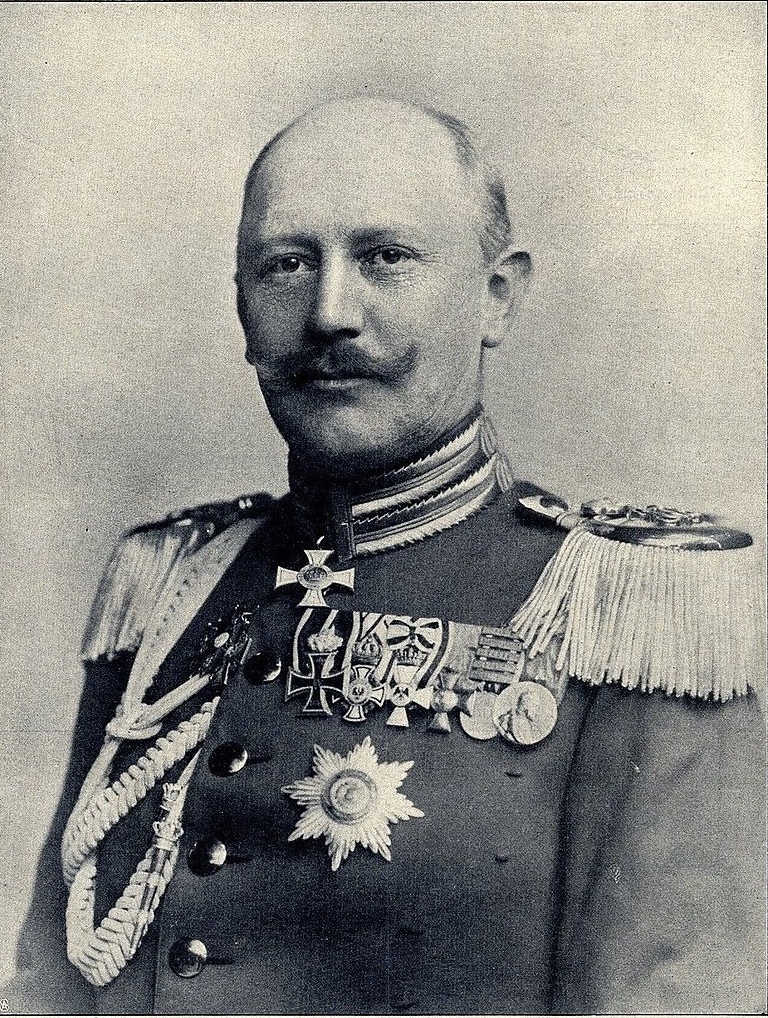
Helmuth von Moltke the Younger was a German general who served as Chief of the Great German General Staff at the start of World War I. He was the nephew of the famous Field Marshal Helmuth von Moltke the Elder. Born in Biendorf, in the Grand Duchy of Mecklenburg-Schwerin, he was named after his uncle. During the Franco-Prussian War, he fought with the 7th Grenadier Regiment and was cited for bravery. After attending the War Academy, he joined the General Staff in 1880 and later became personal adjutant to his uncle. Following his uncle’s death in 1891, he became aide-de-camp to Emperor Wilhelm II, entering the Emperor’s inner circle. He later commanded the 1st Guards Infantry Brigade and, as a Lieutenant General, the 1st Guards Infantry Division.
In 1904, Moltke was made Quartermaster-General, effectively the Deputy Chief of the General Staff. He became Chief in 1906 when Alfred von Schlieffen retired, a controversial appointment. Other candidates included Hans Hartwig von Beseler, Karl von Bülow, and Colmar Freiherr von der Goltz. Critics say Moltke got the job because of his famous name and his friendship with the Emperor, who called him Julius. Historians note that Beseler was too close to Schlieffen, while Bülow and Goltz were too independent for the Emperor’s liking. Moltke’s friendship with Wilhelm II gave him a freedom others would not have had. At least one rival, Goltz, disapproved of Moltke’s performance.
As Chief, Moltke spent much time refining the war plans left by Schlieffen. The so-called “Schlieffen Plan” assumed Germany would have to fight France and Russia at the same time. Moltke kept the plan but made changes, such as excluding Holland from the invasion route. In a war with Russia, the plan called for a decisive attack on France first, invading the Low Countries to outflank French defenses and encircle Paris. In December 1911, Moltke told the General Staff that everyone was preparing for the great war they all expected. In 1913, he scrapped Germany’s only alternative, the Eastern Deployment Plan, which would have confined fighting to Russia alone. By the time of the July Crisis, Germany could not go to war with Russia without also attacking France.
Just before the war and the First Battle of the Marne, the Kaiser was told by his ambassador that the British Foreign Secretary had offered French neutrality, guaranteed by Britain. The Kaiser believed Britain might stay neutral if Germany did not attack France. Seeing a chance to avoid a two-front war, he ordered Moltke to shift forces from west to east. Moltke refused, arguing that changing a long-planned mobilization would cause chaos. Years later, the head of the German railway division disagreed, pointing to a contingency plan for such a situation. The offer turned out to be a misunderstanding, and the Kaiser told Moltke to proceed as planned.
During the war’s opening, Moltke was confident. On 16 August 1914, he said the last forts of Liège would be shot to pieces and believed the Austro-Hungarian Army was strong enough to hold off the Russians. A military attache on the train considered this wishful thinking. Moltke’s health, already strained by his argument with the Kaiser, broke down after Germany’s defeat at the First Battle of the Marne. On 14 September 1914, he was replaced by Erich von Falkenhayn. Whether the failure of the Marne Campaign was Moltke’s fault remains debated.
- field
- Military
- nationality
- German
- known_for
- Chief of the Great German General Staff during the outbreak of World War I
Verified Timeline
Lore & Background
Helmuth von Moltke was born in Biendorf, Grand Duchy of Mecklenburg-Schwerin, on 25 May 1848, and was named after his uncle, the future Generalfeldmarschall Helmuth von Moltke the Elder. During the Franco-Prussian War he served with the 7th Grenadier Regiment and was cited for bravery. He attended the War Academy between 1875 and 1878, joined the General Staff in 1880, and in 1882 became personal adjutant to his uncle. In 1891, on the death of his uncle, he became aide-de-camp to Emperor Wilhelm II. His appointment as Chief of the General Staff in 1906 was controversial, with critics charging that he gained the position on the strength of his name and his friendship with the Emperor, who liked to call him Julius. As Chief, Moltke reviewed and modified the Schlieffen Plan, excluding Holland from the invasion route. In 1913 he discarded the Eastern Deployment Plan, meaning that by the July Crisis there was no way for Germany to go to war with Russia without simultaneously opening hostilities against France. During the outbreak of World War I, Moltke refused the Kaiser's order to divert forces from west to east, arguing that such a drastic alteration of a long-planned major mobilization could not be done without throwing the forces into organizational chaos. The failure of the Marne Campaign remains debated, with some historians blaming Moltke's modifications to the Schlieffen Plan and others citing the actions of field commanders like Alexander von Kluck. Following the German retreat from the Marne, Moltke allegedly reported to the Kaiser, 'Your Majesty, we have lost the war,' though this is not confirmed. He died in Berlin on 18 June 1916.
Reader's Guide
Helmuth von Moltke the Younger's significance lies in his tenure as Chief of the Great German General Staff from 1 January 1906 to 14 September 1914 during the opening months of World War I. His legacy is deeply controversial, centered on his involvement in Germany's decision to go to war and the execution of the invasion of France and Belgium that culminated in the First Battle of the Marne. As Chief, he modified the Schlieffen Plan, excluding Holland and discarding the Eastern Deployment Plan, which locked Germany into a two-front war. During the Marne Campaign, his decisions—such as moving 180,000 men east before the war and sending two corps and a cavalry division to reinforce Ludendorff and Hindenburg just before the victory at the Battle of Tannenberg—are debated as causes of the German defeat. Some historians contend that Moltke lost control of the invading armies during August and thus was unable to react when the First Battle of the Marne developed in September. Others point to the gap created between the 1st and 2nd Armies near Paris. The article preserves this uncertainty, noting that Moltke may have reported to the Kaiser, 'Your Majesty, we have lost the war,' though this is not confirmed. His legacy remains a matter of dispute among historians.
Did You Know?
- Moltke was named after his uncle, Generalfeldmarschall Helmuth von Moltke the Elder, and served as his personal adjutant from 1882 until the elder's death in 1891.
- Emperor Wilhelm II affectionately called Moltke 'Julius' due to their close friendship.
- In 1913, Moltke discarded the Eastern Deployment Plan, making it impossible for Germany to fight Russia without also attacking France.
- On 16 August 1914, Moltke declared from his train that 'the last forts of Liège will be shot to pieces,' but his attache considered this wishful thinking.
- Moltke died on 18 June 1916 during the state memorial ceremony for Generalfeldmarschall Colmar Freiherr von der Goltz.
Early Career and the Shadow of a Legend
Helmuth Johannes Ludwig von Moltke entered the world on 25 May 1848 in Biendorf, within the Grand Duchy of Mecklenburg-Schwerin, carrying a name that would follow him like a banner throughout his life. His uncle, Helmuth Karl Bernhard von Moltke, was already rising toward the rank of Field Marshal and would become a hero of German unification, and the young Helmuth was named directly in his honor. That legacy shaped his trajectory from the start. During the Franco-Prussian War he served in the 7th Grenadier Regiment and earned a citation for bravery, proving he was no mere namesake. Between 1875 and 1878 he studied at the War Academy, then joined the General Staff in 1880. In 1882 he became personal adjutant to his uncle, who held the top staff position at the time. When the elder Moltke died in 1891, the younger one stepped into the inner circle of Emperor Wilhelm II as his aide-de-camp. From there his command portfolio grew steadily: the 1st Guards Infantry Brigade in 1898, and by 1902, at the rank of Lieutenant General, the 1st Guards Infantry Division.
A Contested Throne in the General Staff
When Alfred von Schlieffen retired in 1906, the question of his successor became one of the most debated appointments in the German military establishment. Moltke had already been serving as Quartermaster-General since 1904, effectively the deputy chief, which gave him a natural claim. Yet the competition was fierce: Hans Hartwig von Beseler, Karl von Bülow, and Colmar Freiherr von der Goltz all had plausible credentials. Critics have long argued that Moltke's selection owed more to his surname and his personal bond with Wilhelm II, who affectionately called him Julius, than to any superior strategic mind. The Emperor's closeness to Moltke granted him a degree of freedom in decision-making that none of the other candidates could have expected. Historians counter that Beseler was too entangled with Schlieffen's legacy to be a viable successor, while Bülow and Goltz were too independent for a ruler who craved control. Goltz, at minimum, was openly critical of Moltke's performance once he took the top post. The controversy has never fully faded.
Narrowing the Path to War
Once at the helm of the General Staff, Moltke turned his attention to the war plans inherited from Schlieffen. The core architecture remained: Germany faced the prospect of a two-front war, and the answer was a swift, decisive offensive through the Low Countries to outflank French defenses and swing behind Paris for a battle of encirclement. Moltke made adjustments, most notably removing Holland from the operational scope, but the fundamental logic was unchanged. In December 1911, he addressed the General Staff with a stark warning: 'All are preparing themselves for the great war, which all sooner or later expect.' Then came a far more consequential decision. In 1913 he discarded the Eastern Deployment Plan, Germany's only alternative that would have confined a conflict to Russia alone. By the time the July Crisis erupted in 1914, the strategic option of fighting Russia without simultaneously opening hostilities against France had been eliminated. The path to a two-front war was no longer a choice; it was the only road left.
The Marne and the Fall of a Chief
In the days before the guns opened, Moltke found himself in a direct confrontation with the Kaiser. Acting on a report from Prince Lichnowsky that Britain's Foreign Secretary Sir Edward Grey had offered French neutrality, the Emperor ordered Moltke to divert forces from west to east. Moltke flatly refused, insisting that redirecting a mobilization already in motion would plunge the army into chaos. Years later, General Hermann von Staabs published a book arguing a contingency plan for this scenario had existed, undercutting Moltke's justification. In the end, Grey's supposed offer proved a misreading, and the original plan proceeded. Moltke, meanwhile, radiated confidence. On 16 August 1914, aboard a train bound for Koblenz, he declared, 'Today the last forts of Liège will be shot to pieces,' and judged the Austro-Hungarian Army fully capable of holding off Russia. His attache Josef von Stürgkh privately called this wishful thinking. That confidence shattered at the Marne. The stress of the argument with the Kaiser, compounded by the defeat, broke his health, and on 14 September 1914 he was replaced by Erich von Falkenhayn. Whether the Marne failure was his responsibility remains debated, since Schlieffen himself had spotted a structural flaw in the plan without proposing a fix.
Gallery
Frequently Asked Questions
Who is Helmuth von Moltke the Younger?
He was a German general who held the post of Chief of the Great German General Staff at the outbreak of World War I. The epithet 'the Younger' sets him apart from his uncle, the renowned Prussian strategist Helmuth von Moltke the Elder.
What was Moltke the Younger's role in the opening of World War I?
As head of the German General Staff, he directed the planning and execution of the 1914 invasion of France and Belgium. His command decisions in those first weeks set the trajectory for the entire early war.
Why is Moltke the Younger considered a controversial figure?
He is frequently blamed for steering Germany toward war and for the flawed execution of the planned sweep through Belgium. Critics highlight his overreach and wavering judgment during the opening campaign as factors that prolonged the conflict.
What happened to Moltke the Younger after the First Battle of the Marne?
The Marne in September 1914 shattered Germany's rapid advance toward Paris, and Moltke was relieved of his command shortly thereafter. He was replaced as Chief of the General Staff and never regained a comparable position for the remainder of the war.
Why does Moltke the Younger still matter to military historians?
His brief tenure offers a key case study in how strategic planning, political pressure, and battlefield reality collide at the highest level of command. The collapse of the original invasion plan at the Marne remains a standard teaching example in operational warfare.
More in Military Commanders Of The World Wars 1-24
Spotted an error? Know more?
This is a living reference — every entry is fact-audited, and reader corrections feed straight into our audit queue. Suggest an edit · See this site's audit record