Frequently Asked Questions
The most-asked questions about microprocessors.
What exactly is a microprocessor?
A microprocessor is an integrated circuit that serves as the central processing unit of a computing device, fetching, decoding, and executing instructions. It integrates the arithmetic logic unit, control unit, and a bank of registers onto a single silicon die.
Who created the first microprocessor and when?
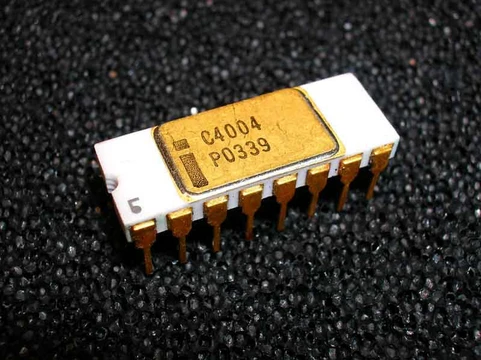
Intel shipped the 4004 in 1971, a design driven by Federico Faggin, Ted Hoff, and Stanley Mazor for a Japanese calculator maker. It ran at roughly 740 kHz and contained about 2,300 transistors.
What are the major microprocessor manufacturers today?
Intel and AMD lead the x86 desktop and server market, while ARM-licensed designs from Qualcomm, Apple, MediaTek, and others dominate the smartphone and increasingly the laptop space. Foundries such as TSMC and Samsung fabricate chips for many of these brands.
What does the nanometer figure on a processor actually mean?
It is a shorthand for the fabrication process node, roughly indicating the smallest transistor feature size the foundry can produce. In modern 3-D and GAA architectures the number is less a literal dimension and more a marketing label for a generation of process technology.
How does a microprocessor differ from a microcontroller?
A microprocessor is a general-purpose CPU that depends on external memory and I/O chips, whereas a microcontroller bakes flash, RAM, and peripheral interfaces onto one chip for embedded, single-task use. Microcontrollers typically run at much lower clock speeds and draw far less power.
What is Moore's Law and is it still relevant?
Gordon Moore noted in 1965 that transistor counts on a chip tended to double roughly every two years, a rule of thumb that guided the industry for decades. Physical and economic limits have slowed the cadence in recent years, though 3-D stacking and new transistor geometries keep density climbing.
What are the key internal building blocks of a modern microprocessor?
The core consists of an ALU for math and logic, a control unit that sequences operations, and registers for fast temporary storage. Surrounding those are multi-level cache hierarchies, branch predictors, out-of-order execution pipelines, and, in multi-core parts, shared interconnects.
What is the practical difference between x86 and ARM architectures?
x86 is a complex instruction set (CISC) that grew out of 1970s minicomputer designs and still dominates desktops and data centers. ARM is a reduced instruction set (RISC) optimized for low power, now found in phones, tablets, laptops, and an expanding slice of servers.
Who are some of the most influential figures in microprocessor history?
Gordon Moore and Robert Noyce co-founded Intel and set the industry's competitive pace, while Federico Faggin led the original 4004 design team. In the modern era, figures like Jim Keller have shaped both AMD's and Apple's silicon roadmaps.
Why did the industry move from single-core to multi-core designs?
Rising heat and power walls around the mid-2000s made it impractical to keep pushing a single core's clock frequency. Adding independent cores on one die let manufacturers deliver more total throughput within the same thermal budget.