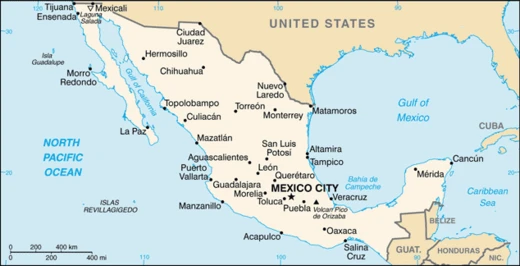
Torreón
Young industrial city in Coahuila, Mexico.
Last updated
Where it is
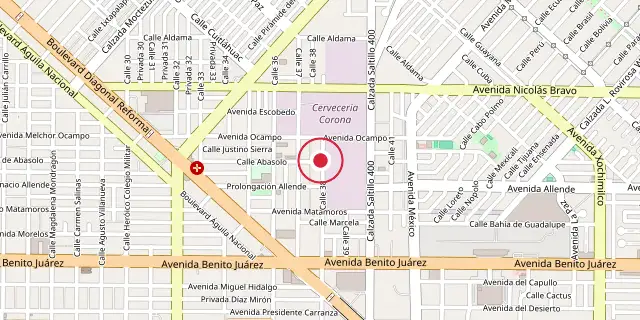
Coordinates: 25°32′31″N 103°24′29″W (25.5420, -103.4080) · Open in OpenStreetMap
Coordinates and connected clubs: the infobox of Wikipedia: Torreón (CC BY-SA 4.0). Map: drawn by Codexery from OpenStreetMap tiles.
It is the location of the Cristo de las Noas statue, the third tallest statue of Christ in Latin America.[1] During the Mexican Revolution (1910–1920), Torreón was a rapidly expanding railway center.[2][3]
Geography and history
The first victims were Chinese agricultural workers killed in orchards and gardens by advancing revolutionary forces on 13 May 1911.[2] The massacre was an expression of anti-Chinese racism that swept North America in the 19th and early 20th centuries.[2] The massacre killed half of Torreón’s Chinese population at the time.[2] Mexico agreed to pay 3.1 million pesos in gold in reparations to China, but the payment was never made.[2]
Nobody was ever charged, tried, or convicted over the massacre in Torreón.[2] Revolutionary general Pancho Villa was the most notable figure to capture Torreón, which was seized multiple times during the Mexican Revolution.[3] In 1911, revolutionaries killed 303 Chinese immigrants in Torreón over a span of ten hours, an event known as the Torreón massacre.[3] An important convention held in Torreón during the revolution resulted in an agreement among the rebel forces.[3]
Standing 21.80 meters tall, the Cristo de las Noas statue is located on a hilltop that also contains a Catholic church and provides a panoramic view of Torreón.[1]
What the cited sources add
Before the massacre, Chinese migrants opened a bank, built a tram connecting Torreón with Gómez Palacios, and ran most local laundries.[2] Some locals, including a lumberyard owner, sheltered Chinese residents from the mob.[2] Most survivors fled Torreón, though some later returned, and the local Chinese community now numbers about 1,000.[2] As part of a series of events acknowledging difficult periods in Mexico's past, President Andrés Manuel López Obrador planned to go to Torreón to apologize for the massacre.[2]
According to a report, local historians regarded the massacre as merely a minor story.[2] The Chinese community in Torreón, while not the largest in Mexico, was the wealthiest, as stated in a news article.[2] In his book, Herbert argues that anti-Chinese prejudice was widespread in Torreón and challenges the idea that the massacre was a spontaneous event.[2]
References
- Wikipedia, "Torreón" (CC BY-SA 4.0), which cites: Travel Torreón, "Cristo de las Noas"; "Cristo de las Noas" (original not read by us) en.wikipedia.org
- Mexico faces up to uneasy anniversary of Chinese massacre, theguardian.com, 16 May 2021. facts only, no text reused. theguardian.com
- Wikipedia, "Torreón" (CC BY-SA 4.0), which cites: Jacques, "The Chinese Massacre in Torreon (Coahuila) in 1911", Arizona and the West, Autumn 1974, p. 233–246; Mexico faces up to uneasy anniversary of Chinese massacre, theguardian.com, 16 May 2021 (we also read that source) en.wikipedia.org
Each numbered sentence above was checked against the source it cites before publication. Sentences citing Wikipedia adapt text from the English Wikipedia article Torreón (contributors), used under CC BY-SA 4.0; this entry is available under the same licence. Other sources were used for facts only; no text or images are copied from them.
More in Mexican Cities
Sources
Compiled from Wikipedia and the sources listed below. Text from Wikipedia is available under CC BY-SA 4.0; this entry is adapted from it.
- Wikipedia: Torreón (CC BY-SA 4.0).
Spotted an error? Know more?
Reader corrections go straight into our review queue. Suggest an edit · How this site is sourced