Roald Dahl's Marvellous Medicine
A memoir exploring medicine's impact on Roald Dahl's life and work.
Last updated
Roald Dahl's Marvellous Medicine is a book by British professor of neurology Tom Solomon, published in 2016 by Liverpool University Press. It details the extent to which medicine affected the life of British children's writer Roald Dahl and reveals connections between those experiences and what he wrote in his books. The work is based on Solomon's recollections of conversations with Dahl, whom he cared for as a newly qualified physician at the John Radcliffe Hospital, Oxford, in 1990 when Dahl was terminally ill with leukaemia.
Content
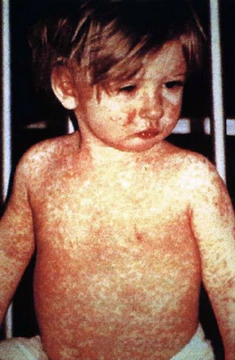
The book is divided into five parts: “A Towering Giant”, “The Great Inventor”, “An Enormous Shadow”, “Gobblefunking”, and “No Book Ever Ends”, encompassing 17 chapters, followed by acknowledgments, a bibliography, notes, photo credits, an index, and a list of charities that benefit from its proceeds. Eight pages of photographs of Dahl are displayed in the centre pages. It details the extent to which medicine affected Dahl's life, including his involvement in developing the Wade-Dahl-Till valve to treat the hydrocephalus his son Theo suffered after a severe head injury, the death of Olivia Dahl, stroke rehabilitation, and Dahl's measles vaccination letter of 1986 written in response to ongoing cases of measles in the United Kingdom despite an effective vaccine.
The book also draws connections between these events and his children’s stories, such as how the mixed-up words of The BFG were possibly inspired by the language his first wife, Patricia Neal, used following her stroke.
Reviews
A review from the British Society of Literature and Science praised the book as both engaging and inspiring, appealing to medical humanities scholars and general readers alike. It found the narrative becomes especially moving as it progresses, underscoring the essential link between medicine and emotion. The review stressed that storytelling is key to diagnosis and building empathy, but it criticised the "wandering" narrative style, which may confuse readers unfamiliar with Dahl's life, and noted that heavy scientific terminology can be tough for laypeople, even though the author tries to explain it.
The Lancet observed that while many know Dahl's characters like the Oompa-Loompas, few are aware of his medical contributions, and this book fills that gap. The Australasian Journal of Neuroscience described the work as a balanced mix of biography, memoir, and popular science, revealing a lesser-known side of Dahl. It called the wandering style odd but still labelled it an "incredible story." The Times Literary Supplement noted the book demonstrates how deeply medicine and illness shaped Dahl’s life.
More in Measles
Sources
Compiled from Wikipedia and the sources listed below. Text from Wikipedia is available under CC BY-SA 4.0; this entry is adapted from it.
- Wikipedia: Roald Dahl's Marvellous Medicine (CC BY-SA 4.0).
Spotted an error? Know more?
Reader corrections go straight into our review queue. Suggest an edit · How this site is sourced