Walls of Milan
Three wall systems shaped Milan's urban layout.
Milan, Italy, has had three distinct systems of defensive walls, built in the Roman, Medieval, and Spanish periods. Although little physical fabric remains, the walls' layouts are preserved in the city's modern street rings: the Cerchia dei Navigli follows the Medieval circuit, and the Cerchia dei Bastioni follows the Spanish one. A third ring, the External Ring Road, was part of the 1884 Beruto Plan and does not correspond to any old wall.
Quick Facts
- Oldest walls built
- 49 BC
- Medieval walls built
- 12th century
- Spanish walls built
- 1546–1560
- Spanish wall perimeter
- about 11 km / 6.84 mi
- Medieval wall gates
- 7 main gates
- Spanish wall gates
- 11 gates
Facts from the source article.
Roman walls
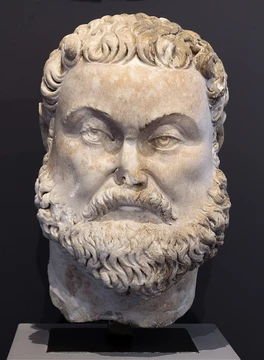
The oldest wall system was erected when Milan (Mediolanum) became a Roman municipium in 49 BC. It was roughly square, each side about 700 m long, and had six main gates: Porta Romana, Porta Ticinese, Porta Vercellina, Porta Orientale (or Porta Argentea), Porta Jovia, and Porta Cumana. Some of these names were later reused for gates of subsequent wall systems in the same areas. In the Imperial era, when Mediolanum served as capital of the Western Roman Empire, Emperor Maximian expanded the walls eastward to enclose the Hercules' thermae and westward to include the arena, bringing the total area to over 100 hectares. Two additional gates were added: Porta Nuova and Porta Tonsa. Several remnants of the Roman walls survive. A section of the 1st-century tower of Porta Ticinese is partially embedded in modern buildings in the northern part of Carrobbio. A trait of the Republican walls exists in the basement of buildings in San Vito. A Maximian tower and a short wall segment are preserved in a garden on Via Medici. The courtyard of the Archaeological Museum of Corso Magenta contains a 24-sided polygonal Maximian tower. Traits of Maximian walls are found in basements on Via Montenapoleone. In the cloister of the Monastery of San Vittore, now the Leonardo da Vinci Museum of Science and Technology, remnants of an octagonal building and two towers remain.
Medieval walls
The medieval walls were built in the 12th century, primarily as a defense against Frederick I Barbarossa, who repeatedly raided Lombardy. Construction began in 1156 with a deep moat filled by water from the Seveso and Nirone rivers, supplemented by wooden walls and possibly reused Roman wall remnants. Despite these measures, Frederick I Barbarossa razed Milan in 1162. Reconstruction immediately followed, this time using stone. The final circuit was almost circular, described by the poet Bonvesin de la Riva as being of admirable roundness. It had seven main gates—Porta Ticinese, Porta Vercellina, Porta Giovia, Porta Comasina, Porta Romana, Porta Nuova, and Porta Orientale—and about ten posterns, including Pusterla dei Fabbri, Pusterla di Sant'Ambrogio, Pusterla delle Azze, Pusterla di San Marco, Pusterla Monforte, Pusterla Tosa, Pusterla di Sant'Eufemia, and Pusterla della Chiusa. Most of the medieval walls were demolished between the 16th and 19th centuries, but the moats were retained and used as canals. Surviving traits include the old 12th-century Porta Nuova at the end of Via Manzoni; Porta Ticinese, also a main gate; remnants of medieval Porta Romana in the basement of two buildings at the crossroad of Corso di Porta Romana and Via Sforza; about 20 meters of wall on Via San Damiano; a bas-relief fragment from Porta Orientale in a building at Corso di Porta Venezia, 21; and a 1939 reconstruction of the Pusterla di Sant'Ambrogio near the eponymous church.
Spanish walls
Milan’s Spanish Walls, known as the Mura Spagnole, were constructed from 1546 to 1560 on orders from Ferrante Gonzaga, the city’s governor during Spanish rule. Stretching about 11 kilometers, this new defensive ring was far larger than the medieval walls it replaced. Sections were strengthened with moats carved from the many canals that ringed the city. By the mid-18th century, the walls had lost their military role. Governor Gian Luca Pallavicini turned them into a scenic walkway. The writer Stendhal noted in his diary that from any point on the walls you could see the Duomo, and from the northern stretch you could spot both the cathedral to the south and the Alps to the north. The walls originally had eleven gates: Porta Romana, Porta Tosa (later Porta Vittoria), Porta Orientale (renamed Porta Venezia in 1860), Porta Nuova, Porta Comasina (renamed Porta Garibaldi in 1860), Porta Tenaglia, Porta Sempione, Porta Vercellina, Porta Ticinese, Porta Lodovica, and Porta Vigentina. When Milan became part of the Napoleonic Empire, governor Francesco Melzi d’Eril ordered the walls torn down and the gates replaced. The new gates were designed as customs checkpoints, meant to reflect Napoleonic grandeur and Milan’s status as capital of the Kingdom of Italy. Many of today’s gates stand where the Spanish ones once did but date only to the 19th century. The best-preserved remnants of the Spanish walls are near Porta Romana, in spots like Piazza Medaglie d’Oro, the area between that square and Piazza XXIV Maggio, and Viale Vittorio Veneto. In Viale Monte Nero, two small gardens were carved from the old walls.
More in Maximian
Spotted an error? Know more?
Reader corrections go straight into our review queue. Suggest an edit · How this site is sourced