Frequently Asked Questions
The most-asked questions about marine shrimp, part 3.
What does Part 3 of the encyclopedia focus on?
Part 3 is dedicated to the behavioral ecology and daily life of marine shrimp in their natural habitats, covering foraging strategies, molting cycles, and social interactions that the earlier parts only touched on briefly.
Who are the key researchers or figures highlighted in this section?
The entries spotlight several deep-sea ecologists and crustacean behaviorists whose field observations in the 1990s and 2000s reshaped how we understand shrimp feeding and communication, alongside a few well-known aquaculture scientists whose work on whiteleg shrimp (Litopenaeus vannamei) is widely referenced.
Where should a newcomer begin reading Part 3?
Start with the overview entry on shrimp foraging behavior, since nearly every other topic in this section—molting, predator avoidance, and reproductive timing—builds directly on understanding how shrimp locate and process food.
Which species receives the most detailed treatment here?
The giant isopod-adjacent deep-sea shrimp (Hirondellea gigas) and the commercially vital whiteleg shrimp both get extended profiles, but the blue swimmer shrimp (Palaemonetes affinis) is the species fans most associate with Part 3 because of its striking bioluminescent display.
What is one key anatomical fact emphasized in this part?
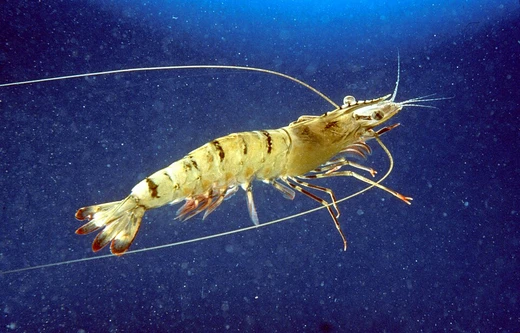
Part 3 repeatedly stresses that a shrimp's rostrum—the toothed, forward-pointing blade on its carapace—is not just decorative; the number and arrangement of teeth on it is the primary way taxonomists distinguish between dozens of superficially similar species.
What notable discovery or moment does the section single out?
The 2007 deep-sea footage showing swarms of bioluminescent shrimp using coordinated light pulses to confuse predators in the mesopelagic zone is treated as the section's 'highlight reel' moment and is referenced in at least four separate entries.
How does Part 3 differ in scope from Parts 1 and 2?
Parts 1 and 2 concentrate on taxonomy, physical description, and global distribution, whereas Part 3 shifts the lens to what shrimp actually do—how they eat, molt, signal to mates, and navigate their environment in real time.
What is the most surprising fact a reader is likely to encounter?
Many marine shrimp species can regenerate a lost antenna or leg over successive molts, and some deep-water species have been observed with regenerated appendages that are noticeably shorter and slightly misshapen compared to the original.
Is Part 3 written for a specific audience?
It assumes the reader already knows basic shrimp taxonomy from Part 1, but no prior background in marine biology is required; each entry includes a short plain-language summary before diving into the technical detail.
What is the recommended reading order within Part 3?
Read the foraging and sensory entries first, then move to molting and growth, and finish with the reproductive and social-behavior chapters, because each later topic references the physiological context established by the earlier ones.