Frequently Asked Questions
The most-asked questions about marine angelfish, part 3.
What is the Marine Angelfish Fan Encyclopedia, Part 3, as a whole?
It is the third volume in an unofficial, community-driven reference series dedicated to marine angelfish (family Pomacanthidae). This installment shifts focus from basic identification to advanced topics like breeding behavior, reef compatibility, and the cultural history of angelfish keeping among hobbyists.
Who are the main figures or contributors highlighted in Part 3?
The volume spotlights a small group of long-time reef aquarists and one marine biologist whose field notes on juvenile coloration transitions became a cornerstone of the series. Their observations on the Emperor Angelfish's multi-stage color changes are the most-cited passages in the text.
Where should a complete newcomer start reading Part 3?
Begin with the introductory chapter on the Pomacanthidae family tree, which maps out the roughly ninety recognized species and their geographic ranges. That chapter is written without assuming prior knowledge and cross-references the glossary at the back of the book.
What is the single most-searched fact about marine angelfish in this volume?
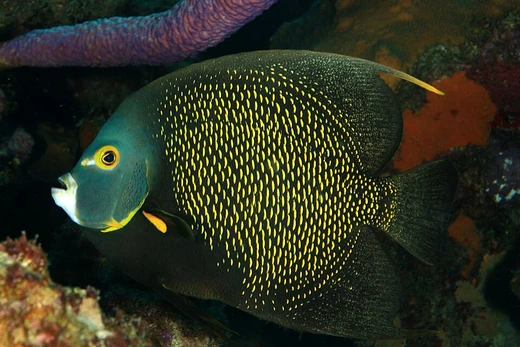
Readers most often look up the juvenile-to-adult color transformation, particularly how a French Angelfish shifts from a vertical-striped blue pattern to a solid yellow body. Part 3 includes a step-by-step illustration sequence that has become the de facto reference for that topic.
How does Part 3 differ in scope from Parts 1 and 2?
Parts 1 and 2 cover taxonomy, basic tank setup, and common species profiles, while Part 3 dives into behavioral ecology, selective breeding programs, and the legal CITES status of several wild-caught species. It assumes the reader already has a working vocabulary from the earlier volumes.
What notable section or 'moment' in Part 3 is most discussed by fans?
The chapter on the rare Maroon Angelfish (Centropyge loricula) includes an extended anecdote about a single specimen observed changing its territory display over fourteen months in a Pacific reef survey. Fans often call it the 'fourteen-month monologue' because of its unusually long, intimate narrative style.
What key practical information does Part 3 provide for hobbyists?
It details minimum tank volumes, pH and salinity ranges, and dietary transition schedules for the six most commonly kept marine angelfish species. A comparison table at the end of the care chapter lets readers quickly match a species to their tank size and reef setup.
Which species receives the most detailed treatment across the volume?
The Queen Angelfish (Holacanthus ciliaris) gets the longest individual profile, spanning nearly two dozen pages. The depth comes from its wide color-variant range across the Caribbean and its popularity in both public aquariums and private collections.
Is Part 3 written to be read standalone, or does it depend on the earlier parts?
It is readable on its own for general reference, but several sidebars and footnotes assume familiarity with the family-level taxonomy introduced in Part 1. The editors recommend skimming the Part 1 glossary before tackling the breeding chapters in Part 3.
What is the most common misconception Part 3 corrects about marine angelfish?
The volume pushes back on the widespread belief that all marine angelfish are strictly territorial and aggressive toward tankmates. It presents documented cases of stable mixed-species groups and explains how juvenile size and feeding niche reduce conflict in well-planned reefs.