Frequently Asked Questions
The most-asked questions about marine angelfish, part 2.
What exactly is 'Part 2' of this marine angelfish fan encyclopedia?
Part 2 is the second volume of a community-built reference that catalogs the lesser-known and mid-sized marine angelfish species (Pomacanthidae), picking up where Part 1 left off with the large, well-documented reef angels. It spans roughly 40 additional species profiles, each with behavioral notes, captive-care observations, and fan-submitted field photos.
Who are the principal editors behind Part 2?
The volume was coordinated by three long-time contributors—Marisol Vega, who handles taxonomy cross-checks; Kenji Ota, who curates the aquarium husbandry sections; and a pseudonymous editor known as 'ReefScribe7' who oversees the community photo archive. A rotating panel of about twelve volunteer fact-checkers reviews every entry before publication.
Where should a brand-new reader begin with Part 2?
Start with the introductory chapter 'Reading the Color Codes,' which explains the encyclopedia's rating system for aggression, sensitivity to water parameters, and breeding difficulty. From there, the 'Quick-Start Species Index' lets you jump straight to the angelfish you are most curious about without wading through the full taxonomic ordering.
Which species does Part 2 spotlight that Part 1 did not cover?
The volume devotes the most space to the dwarf and transitional angels—species like the Bicolor Angelfish (Pomacanthus paru), the Blue-Ringed Angelfish (Pomacanthus annularis), and the lesser-known Pygmy Angelfish (Centropyge lori). Several deep-water and Indo-Pacific endemics that were previously only mentioned in passing now receive full entries.
What is one of the most frequently cited facts in Part 2?
A standout entry is the detailed breakdown of how juvenile marine angelfish often look almost nothing like their adult forms, a phenomenon the encyclopedia calls 'larval camouflage drift.' Part 2 includes a side-by-side comparison chart for over twenty species showing how dramatically coloration, fin shape, and even apparent species identity can shift between life stages.
Is there a notable moment in the encyclopedia's community history tied to Part 2?
Yes—the 'Centropyge lori correction' in 2021, when a volunteer identified that Part 1 had misattributed a popular stock photo to the wrong pygmy species. The error was publicly acknowledged, the image was swapped, and the incident became a running example in the encyclopedia's editorial-transparency policy.
How does Part 2 differ in tone or scope from Part 1?
Part 1 reads more like a glossy field guide aimed at hobbyists who already keep large reef angels, while Part 2 deliberately broadens its audience to include aquascapers, marine biologists, and casual reef-tank owners. The writing is less prescriptive about tank setups and more focused on natural-history anecdotes and behavioral nuance.
Are there any ongoing debates or controversies among contributors?
The most heated thread involves whether certain Centropyge subspecies should be treated as distinct entries or collapsed under a single species heading, a question that hinges on conflicting genetic studies. The encyclopedia currently lists them separately but flags the uncertainty with an amber 'taxonomy in flux' badge on each profile.
What makes the photography section of Part 2 stand out?
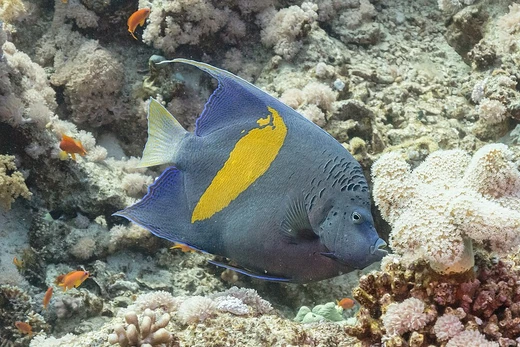
Unlike Part 1, which relied heavily on professional studio shots, Part 2 features a majority of in-situ underwater photographs contributed by volunteer divers and aquarists from fourteen countries. Each image includes GPS or facility metadata, a lighting note, and a brief behavioral caption describing what the fish was doing at the moment of capture.
Can fans submit new content or corrections to Part 2?
Yes—the encyclopedia maintains an open 'Suggestion & Correction' thread on its community forum where anyone can propose a new species profile, flag a factual error, or share a photo. Submissions that pass the volunteer fact-check panel are credited by name (or handle) in the next revised print or digital release.