
RIA Novosti
Information for Peace, for the Friendship of Nations
Last updated

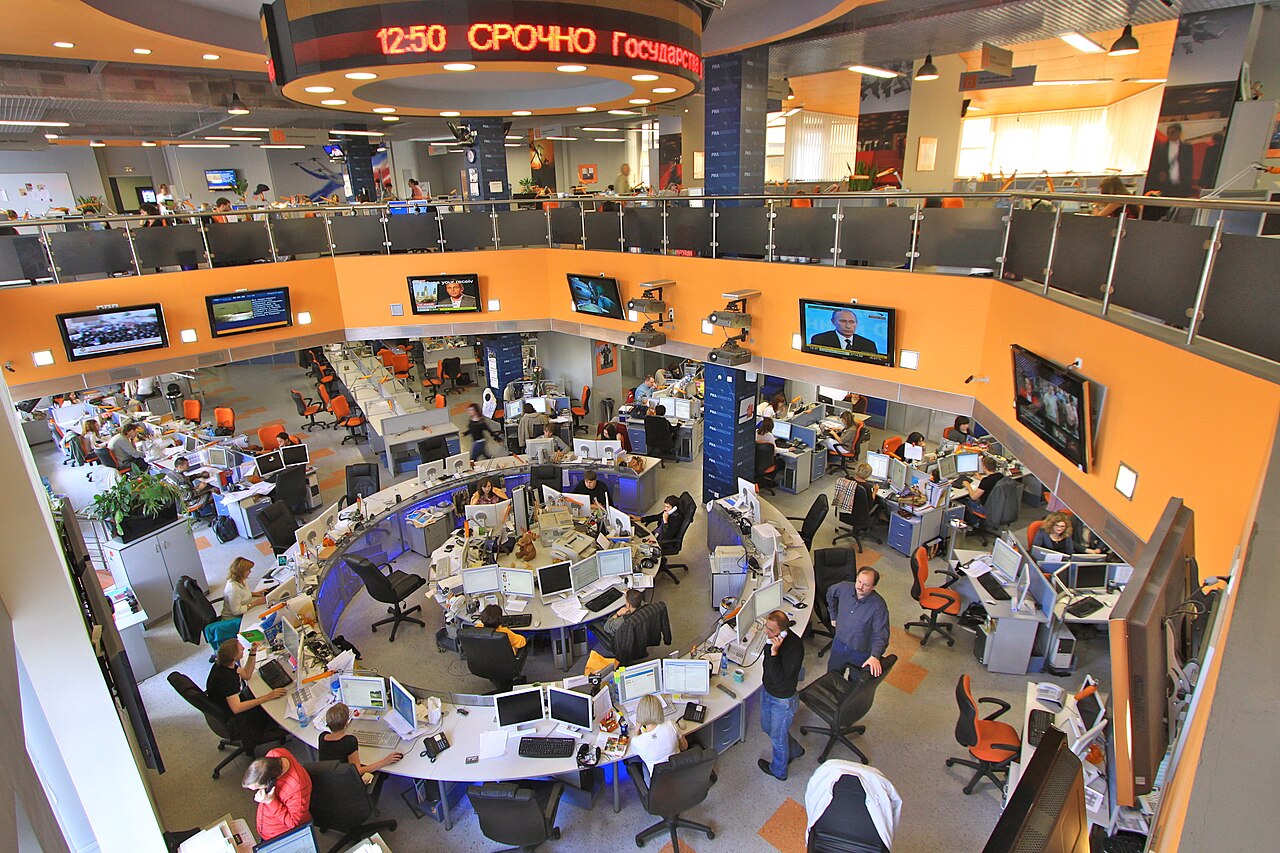
Jürg Vollmer / Maiakinfo · CC BY-SA 3.0
RIA Novosti, sometimes referred to as RIAN or RIA, is a Russian state-owned domestic news agency. On 9 December 2013, by a decree of Russian President Vladimir Putin, it was liquidated and its assets and workforce were transferred to the newly created Rossiya Segodnya agency.
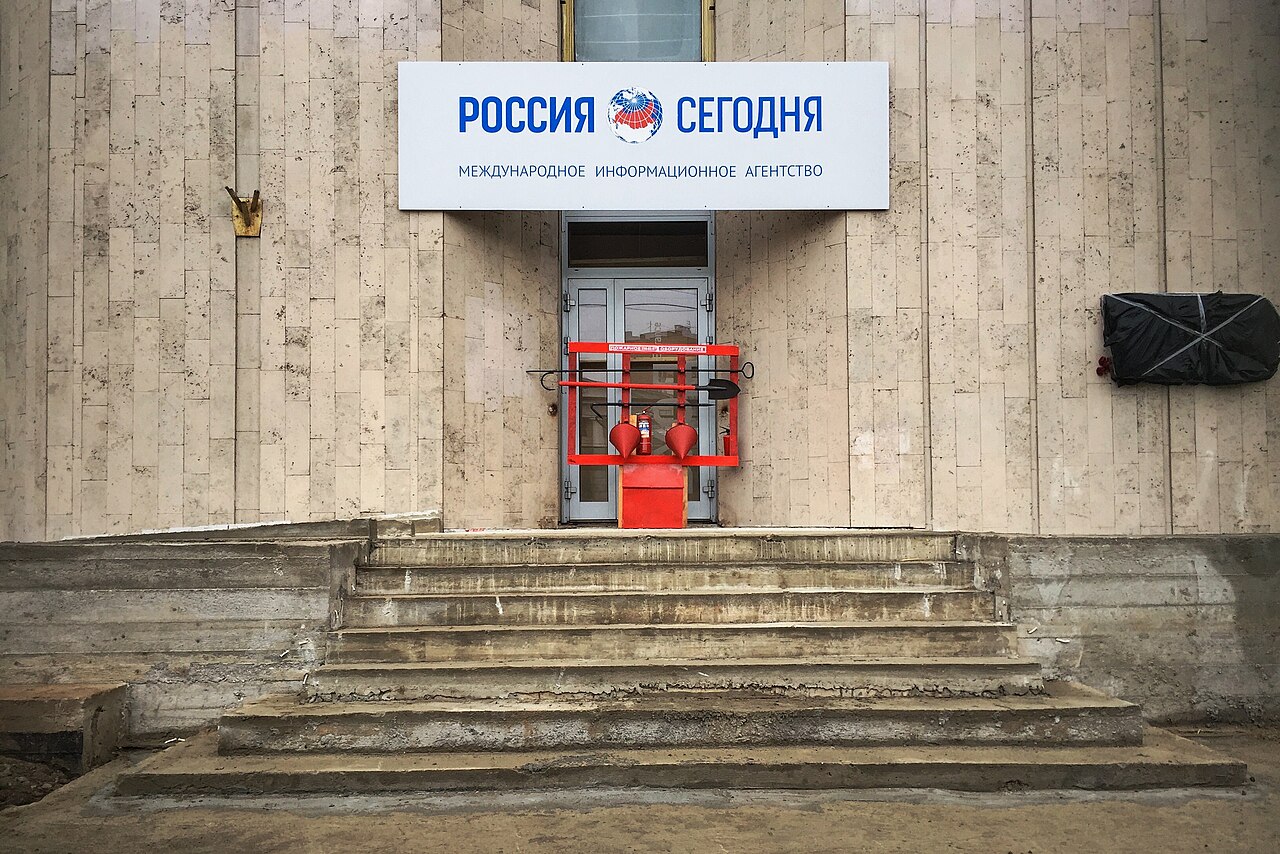
On 8 April 2014, RIA Novosti was registered as part of the new agency. RIA Novosti is headquartered in Moscow. The chief editor is Anna Gavrilova.
Lore & Background
RIA Novosti's history dates back to 24 June 1941, when by a resolution of the USSR Council of People's Commissars and the Communist Party Central Committee, the state-run Soviet Information Bureau (Sovinformburo) was set up. In 1961, the Novosti Press Agency (APN) succeeded Sovinformburo. By a decree of USSR President Mikhail Gorbachev, the Information Agency Novosti (IAN) succeeded APN on 27 July 1990. The Russian Information Agency Novosti was created in September 1991 on the basis of IAN and the Russian Information Agency.
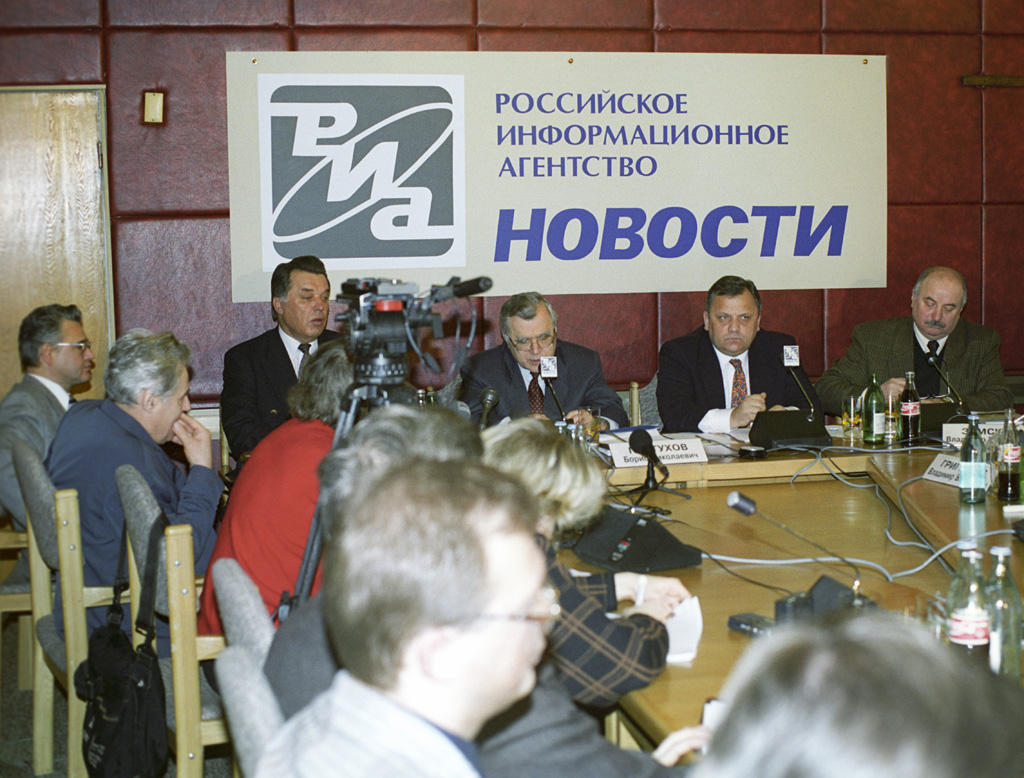
In May 1998, the agency was renamed the Russian Information Agency Vesti, but retained the name RIA Novosti on 1 April 2004. On 9 December 2013, President Putin signed the liquidation of RIA Novosti and its merger with Voice of Russia to create Rossiya Segodnya. On 8 April 2014, RIA Novosti was registered as a news agency and online newspaper.
Soviet Origins and Wartime Propaganda
RIA Novosti's history dates back to 24 June 1941, when by a resolution of the USSR Council of People's Commissars and the Communist Party Central Committee, 'On the Establishment and Tasks of the Soviet Information Bureau', the state-run Soviet Information Bureau (Sovinformburo) was set up. Its main task was to oversee work covering international, military events and the events of the country's domestic life in periodicals and on the radio. From 14 October 1941 to 3 March 1942, it was based in Kuibyshev (historically, Samara). The bureau's main task was to compile reports on the situation on the frontline of the war, work on the home front, and the partisan movement for the radio, newspapers and magazines.
Sovinformburo directed the activity of the All-Slavonic Committee, Anti-Fascist Committee of Soviet Women, Anti-Fascist Committee of the Soviet Youth, Anti-Fascist Committee of Soviet Scientists, and the Jewish Anti-Fascist Committee (liquidated on Stalin's orders in 1948, all members murdered). In 1944, a special bureau on propaganda for foreign countries was set up as part of Sovinformburo. Through 1,171 newspapers, 523 magazines and 18 radio stations in 23 countries, Soviet embassies abroad, 'friendship societies', trade unions, women's, youth and scientific organizations, Sovinformburo informed readers and listeners 'about the struggle of the Soviet people against Fascism and in the post-war years about the main areas of Soviet domestic and foreign policies'. Sovinformburo heads included A.S. Shcherbakov (1941–45), S. A. Lozovsky (1945–48) and Y.S. Khavinson, D.A. Polikarpov.
The Novosti Press Agency and Cold War Reach
In 1961, the Novosti Press Agency (APN) succeeded Sovinformburo. The constituent conference was held on 21 February 1961. The conference of representatives of Soviet public organizations adopted a decision to create a press agency named Novosti.
The APN founders were the USSR Journalists Union, USSR Writers Union, Union of Soviet Societies of Friendship and Cultural Relations with Foreign Countries and the Znaniye Society. On 3 April 1961, the Agency charter was adopted. Under its charter, APN's aim was 'to contribute to mutual understanding, trust and friendship among peoples in every possible way by broadly publishing accurate information about the USSR abroad and familiarizing the Soviet public with people's lives of foreign countries.' APN's motto was 'Information for Peace, for the Friendship of Nations'.
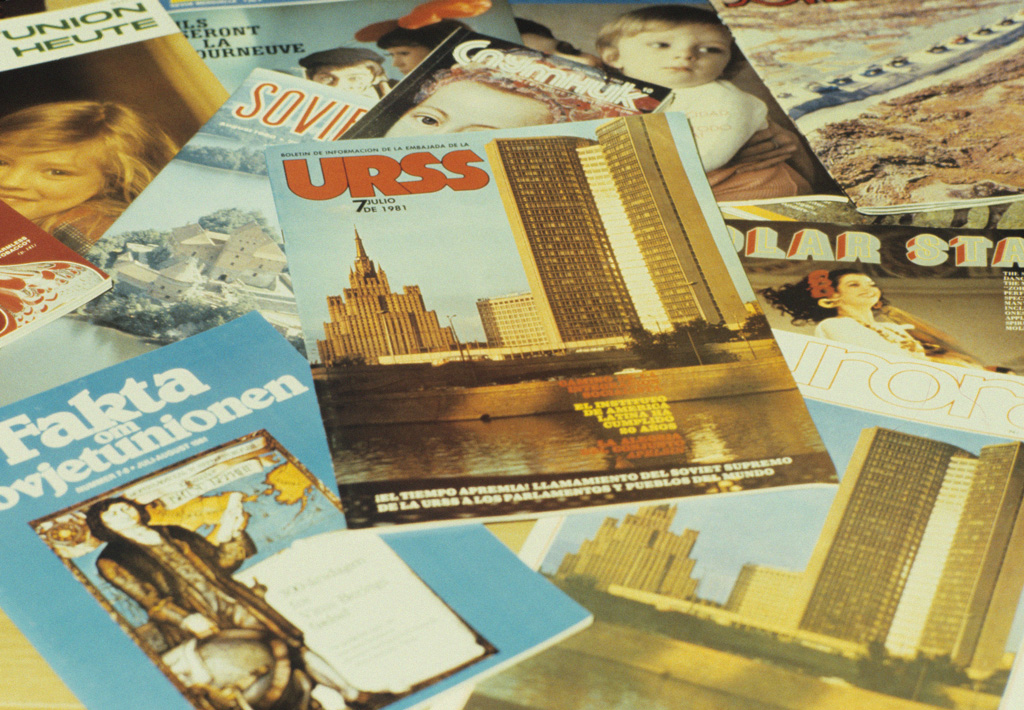
APN had bureaus in over 120 countries. The Agency published 60 illustrated newspapers and magazines in 45 languages with a one-time circulation of 4.3 million copies. With the Union of Soviet Friendship Societies, APN published the newspaper, Moscow News, which in September 1990 became an independent publication. APN Publishing House put out over 200 books and booklets with a total annual circulation of 20 million copies and book series such as ABC Political Science.

In 1989, a TV center opened in APN. Later, it was transformed into the TV-Novosti TV company, which, since 2005, operates RT media network. The APN heads included Boris Burkov (1961–70), Ivan Udaltsov (1970–75), Lev Tolkunov (1975–83), Pavel Naumov (1983–86), Valentin Falin (1986–88), Albert Vlasov (1988–90).
Post-Soviet Transition and 2013 Liquidation
By a decree of USSR President Mikhail Gorbachev, 'On the Establishment of the Information Agency Novosti', the Information Agency Novosti (IAN) succeeded APN on 27 July 1990. IAN's tasks remained the same – 'preparing and publishing printed, TV and radio materials in the USSR and abroad; studying public opinion on Soviet foreign and domestic policies in the USSR and abroad.' A computer databank was created in the Agency, initially containing over 250,000 documents. In 1991, the Infonews hotline started operating. IAN had bureaus in 120 countries and published 13 illustrated magazines and newspapers.
The chairman of the IAN Board was Albert Ivanovich Vlasov. The Russian Information Agency Novosti was created in September 1991 on the basis of IAN and the Russian Information Agency. By a Presidential decree of the Russian president dated 22 August 1991, RIA Novosti was placed within the competence of the Press and Information Ministry. On 9 December 2013, Russian President Vladimir Putin signed the liquidation of RIA Novosti and merging it with Voice of Russia to create Rossiya Segodnya.
Dmitry Kiselyov was appointed as president of the new information agency. On 8 April 2014, RIA Novosti was registered by Roskomnadzor as a news agency and online newspaper. On 10 November 2014, Rossiya Segodnya launched the Sputnik multimedia platform as the international replacement of RIA Novosti and Voice of Russia. Within Russia itself, Rossiya Segodnya continues to operate its Russian language news service under the name RIA Novosti with its ria.ru website.
Reader's Guide
RIA Novosti published news and analyses of social-political, economic, scientific and financial subjects on the Internet and via e-mail in the main European languages, as well as in Persian, Japanese and Arabic. It had a correspondent network in the Russian Federation, CIS and over 40 non-CIS countries.
Its clients include the presidential administration, Russian government, Federation Council, State Duma, leading ministries and government departments, administrations of Russian regions, representatives of Russian and foreign business communities, diplomatic missions, and public organizations. The last editor-in-chief of RIA Novosti was Svetlana Mironyuk. According to the agency, it was partially government-subsidized (2.7–2.9 billion roubles in 2013), but maintained full editorial independence.
More in Magazines & Newspapers
Sources
Compiled from Wikipedia and the sources listed below. Text from Wikipedia is available under CC BY-SA 4.0; this entry is adapted from it.
- Wikipedia: RIA Novosti (CC BY-SA 4.0).
Spotted an error? Know more?
Reader corrections go straight into our review queue. Suggest an edit · How this site is sourced