Frequently Asked Questions
The most-asked questions about mad scientist films.
What defines a mad scientist film as a genre?
A mad scientist film centers on a brilliant but morally compromised researcher who pursues a dangerous experiment—genetic manipulation, artificial life, forbidden technology—driven by obsession, ego, or a twisted vision of progress. The story typically builds toward the creation or invention turning against its maker or causing widespread harm, and the genre spans horror, sci-fi, and comedy.
Who are the most iconic mad scientist characters in cinema?
Boris Badenov from the Pink Panther series, the various incarnations of Dr. Frankenstein in the Universal and Hammer monster cycles, and Dr. Jekyll (who is both creator and creation) are among the most recognizable. More recent examples include Seth Brundle in 'The Fly' (1986) and the recurring villain-scientists in the James Bond franchise.
What should a newcomer watch first to get into mad scientist films?
The 1931 Universal 'Frankenstein' is a natural entry point for the classic Gothic archetype, while 'The Fly' (1986) offers a modern, body-horror take on the same obsession-driven template. For a lighter introduction, the original Pink Panther (1963) or 'The Producers' (1968) show the archetype played for comedy.
What visual and narrative tropes are most associated with the genre?
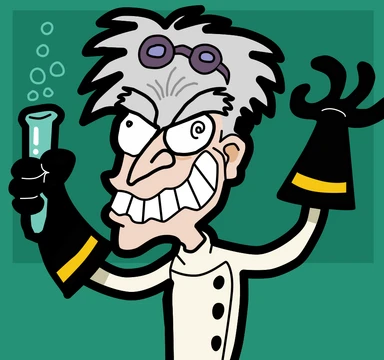
Cluttered laboratories, bubbling vats, lightning strikes, wild hair, and a signature manic laugh are staples that instantly signal a mad scientist to the audience. Narratively, the pattern usually runs: a breakthrough is announced, the experiment goes catastrophically wrong, and the scientist perishes or is consumed by their own invention.
Which actors are most strongly linked to playing mad scientists on screen?
Bela Lugosi and Boris Karloff anchored the Universal era of the 1930s, while Christopher Lee brought a gothic gravitas to Hammer's Frankenstein films. In the modern period, Jeff Goldblum's Seth Brundle in 'The Fly' and the various Pink Panther villains (notably Herbert Lom and Burt Kwouk) are the most frequently cited performances.
How did the mad scientist archetype evolve from the 1930s to today?
Early Universal and Hammer films framed the scientist as a Gothic villain whose hubris invited divine or mechanical punishment, usually ending in death or dismemberment. Contemporary films tend to humanize the character, exploring ethical dilemmas around genetic engineering, AI, and bioethics, while comedy strips the figure down to a bumbling or absurd schemer.
What distinguishes a mad scientist from a generic sci-fi or action villain?
The mad scientist is defined by a single-field obsession and a personal, often emotional drive—love, revenge, or the desire to 'improve' humanity—rather than broad world-domination motives. Their power is intellectual and experimental, and the plot revolves around the consequences of one specific breakthrough rather than military or political conflict.
Are there well-known mad scientist films that are comedies rather than horror?
The Pink Panther series built its entire comedy around Boris Badenov's escalating schemes, and 'The Producers' (1968) parodies the obsessive-creator archetype through Max Bialystock. Animated features like 'The Incredibles' (2004) and 'The Hitchhiker's Guide to the Galaxy' (2005) also fold the mad-scientist beat into lighter narratives.
Which real-world scientific fields most inspire mad scientist plots?
Genetic engineering and cloning, artificial intelligence, and biochemistry are the three disciplines most frequently referenced in the genre. Films like 'Jurassic Park' (1993), '2001: A Space Odyssey' (1968), and 'The Fly' (1986) each anchor their central conflict in a specific branch of science pushed to an extreme.
Is the mad scientist archetype still active in modern filmmaking?
Yes—the figure appears regularly in superhero films (Lex Luthor, Doctor Octopus), in sci-fi thrillers like 'Ex Machina' (2014), and in animated features such as 'The Incredibles 2' (2018). The core template of brilliant creator, dangerous creation, and catastrophic consequence remains one of the most durable structures in popular cinema.