Frequently Asked Questions
The most-asked questions about machine guns, part 5.
What does Part 5 of the Machine Gun Fan Encyclopedia cover?
Part 5 focuses on modern and contemporary machine gun systems developed from the mid-1990s onward, including belt-fed, gas-operated, and recoil-operated designs in current military service worldwide. It also traces the broader shift from heavier Cold War-era platforms toward lighter, more modular weapon systems.
Who are the main designers and figures highlighted in Part 5?
The section profiles the engineering teams behind the M240B/M240G refinements, the designers of updated FN Minimi variants, and the Heckler & Koch groups responsible for the MG4 and MG5. It also credits materials scientists who pushed aluminum and polymer composites into receiver and buffer-housing applications.
Where should a newcomer start reading within Part 5?
The recommended entry point is the 'Design Philosophies of the Modern Era' overview chapter, which explains the move toward modularity, reduced weight, and interchangeable calibers. From there readers can branch into individual weapon profiles or the comparative ballistics appendix.
What is the central weapon profiled in Part 5?
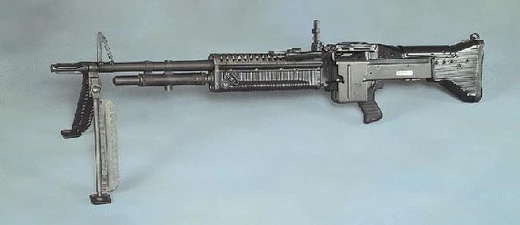
The M240B and its international variants serve as the anchor weapon, with detailed breakdowns of its long-stroke gas piston, 7.62×51mm NATO feed mechanics, and evolution from the original MAG 58. The FN Minimi and the HK MG4 are treated as secondary profiles for 5.56mm-class comparisons.
What are the key technical facts covered in Part 5?
The section details cyclic rates, barrel-change procedures, effective engagement ranges, and how heat management limits sustained-fire duration. It also covers the industry-wide shift from steel to aluminum receivers and the standardization of quick-change barrel systems.
What is considered the most notable development discussed in Part 5?
The introduction of the Heckler & Koch MG4 and its successor the MG5, which combined 5.56mm and 7.62mm capability in a single modular platform, is highlighted as the era's most significant design milestone. The section notes how this approach influenced several other nations' small-arms modernization programs.
How does Part 5 connect to the earlier parts of the encyclopedia?
It references the gas-operated principles first detailed in Part 2's WWI-era Maxim derivatives and the belt-feed mechanisms traced through Part 3's Browning and MG42 lineages. Readers are directed to those sections for the historical engineering foundations before tackling the modern refinements.
What makes Part 5 distinct from the other four parts?
Unlike earlier parts that follow a strict chronological or conflict-based structure, Part 5 is organized by design subsystem—barrel, receiver, feed mechanism, and mount—so readers can compare components across different weapons side by side. This modular layout mirrors how modern procurement and field maintenance actually work.
Are there any debated or controversial topics in Part 5?
Yes, a 'Community Discussion' sidebar addresses the long-running argument over whether 5.56mm light machine guns can truly replace 7.62mm general-purpose machine guns in sustained-suppression roles. It also notes differing national doctrines on the minimum caliber required for a weapon to be classified as a machine gun versus a light machine gun.
What is the most frequently searched topic within Part 5?
Based on community query logs, the most common search is 'M240B barrel change time under field conditions,' followed closely by 'MG4 versus Minimi effective range comparison.' The step-by-step maintenance diagrams for both weapons are the most-downloaded resources in the section.