Frequently Asked Questions
The most-asked questions about macedonian cuisine.
What is Macedonian cuisine in broad terms?
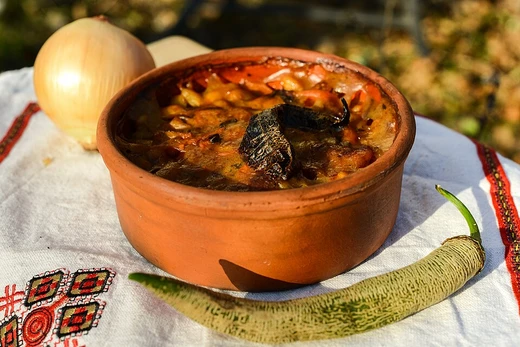
It is the culinary tradition of North Macedonia, weaving together Slavic, Ottoman, and wider Balkan influences into a food culture built around bread, aged dairy, grilled meats, and seasonal vegetables. It overlaps with neighboring cuisines but holds its own identity through specific preparations, local ingredients, and the centrality of the clay tavče pot.
What is the single most iconic dish?
Tavče gravče — beans slow-baked in a shallow ceramic pot with paprika, garlic, and often a strip of pork or sausage — is widely treated as the national dish. It is the first thing most people, both local and foreign, associate with the country's food.
How important is bread in everyday meals?
Bread is the structural backbone of nearly every plate, ranging from simple round lepinja to elaborate braided ečme. It doubles as a plate, a scoop, and a standalone centerpiece, and home bread-making is still regarded as a core domestic skill.
What are the dominant flavors and cooking methods?
Paprika (sweet and hot), garlic, fresh mint, and the sharp tang of kajmak or sirene define the seasoning profile. The two signature techniques are open-flame grilling and slow-baking in clay, with ajvar (a roasted red-pepper relish) acting as a near-universal condiment.
Which beverages are most central to the table?
Plum or grape rakija and locally grown red wines, particularly the Vranec grape, are the two most consumed drinks. Coffee brewed in a small copper ibrik also anchors daily social rituals from morning to late evening.
Are there notable celebrity chefs or figures behind the cuisine?
Macedonian food culture is more communal and family-driven than star-driven, so there is no single celebrity chef the way some cuisines have. The tradition is carried forward by home cooks, village bakers, and community food festivals in cities like Skopje and Bitola.
What should a first-timer try before anything else?
A plate of tavče gravče, a dairy spread of fresh sirene with kajmak and olives, and a simple grilled-meat platter with lepinja bread together cover the widest slice of the flavor spectrum. These three items require no special context and give a solid baseline for the cuisine.
How does it differ from closely related Balkan cuisines?
While it shares much with Serbian, Bulgarian, and Greek cooking, Macedonian cuisine leans more heavily on the tavče as a cooking vessel, on paprika-forward seasoning, and on signature items like gibanica (a layered honey-and-cheese pastry) and the everyday presence of ajvar. These elements give it a recognizable fingerprint even among very similar regional tables.
What does a traditional multi-course meal look like?
A spread typically opens with bread, sirene, kajmak, olives, and ajvar, moves to a main of baked beans or grilled meat alongside a vegetable side, and closes with a sweet such as gibanica or a simple fruit plate. Rakija is poured after the meal as a digestive rather than during it.
What are some lesser-known dishes worth seeking out?
Gjuveč (a layered vegetable bake), spinach-and-cheese pita, and a winter čorba of dried legumes and rice are all staples that fly under the radar of casual visitors. Flaky burek, available at nearly every street kiosk, is a daily breakfast and snack that many newcomers underestimate.