Frequently Asked Questions
The most-asked questions about lost world films.
What exactly counts as a 'lost world' film?
A lost world film centers on characters discovering an isolated, hidden land—typically prehistoric or ancient—where creatures, civilizations, or ecosystems have persisted untouched by the outside world. The genre spans subgenres including dinosaur adventures, hidden-island epics, and undiscovered-civilization tales, but the core premise always involves stumbling upon a place that the rest of humanity doesn't know exists.
What is the foundational lost world film everyone references?
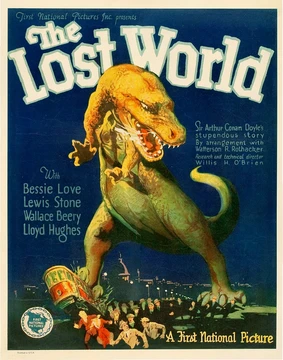
The 1925 silent film The Lost World, directed by Erle C. Kenton, is widely regarded as the genre's origin point, adapting Arthur Conan Doyle's 1912 novel about a plateau in South America where dinosaurs still roam. It established the template—scientists venture into an unknown land, encounter prehistoric life, and must survive—that nearly every later entry follows in some form.
Who are the most important creative figures in the genre?
Arthur Conan Doyle and Michael Crichton are the two novelists whose source books shaped the most famous on-screen lost worlds. On the director side, Steven Spielberg's Jurassic Park (1993) and Peter Jackson's King Kong (2005) are often cited as the genre's modern benchmarks, while stop-motion pioneer Ray Harryhausen defined the look of 1960s–70s entries like The Land That Time Forgot.
Where should a complete newcomer start watching?
Most fans recommend beginning with Jurassic Park (1993) for a polished, self-contained introduction to the premise, then moving to King Kong (2005) for a broader, more character-driven take on the hidden-island idea. If you want historical context, the 1960 black-and-white The Lost World is a short, accessible bridge between the silent original and the modern era.
What themes recur across the genre?
The tension between scientific curiosity and the danger of exposing nature to the modern world is the most persistent motif, often dramatized through a character who wants to bring creatures back versus one who wants to leave the island alone. Secondary recurring ideas include the hubris of colonial or corporate expeditions, the fragility of isolated ecosystems, and the spectacle of humanity confronting something far older and larger than itself.
How has the genre's visual approach changed over the decades?
Early films relied on rubber-suit actors and hand-built sets, the 1960s–70s era leaned heavily on Ray Harryhausen's stop-motion animation, and the 1990s onward shifted to digital effects pioneered by studios like ILM and Weta Digital. The storytelling structure has stayed remarkably consistent even as the technology leapt from practical to fully CGI, meaning a 1925 film and a 2017 film can share nearly identical plot beats.
What are some of the most iconic set-piece moments in lost world cinema?
The T. rex escaping its enclosure and rampaging through the Jurassic Park visitor center is arguably the single most referenced sequence in the genre. Other frequently cited highlights include Kong's battle with the three-headed snake atop the Empire State Building (both 1933 and 2005 versions) and the pteranodon chase through the Jurassic Park kitchen in the 1993 original.
Is the genre limited to dinosaurs and prehistoric creatures?
No—lost world stories also feature hidden human or humanoid civilizations, as in The Mysterious Island adaptations and The Land That Time Forgot, as well as fantasy-creature islands like those in The 7th Voyage of Sinbad. The unifying thread is the discovery of an isolated world, not the specific fauna or inhabitants that populate it.
Which lost world film was the biggest commercial hit?
Jurassic Park (1993) remains the genre's box-office benchmark, grossing roughly $914 million worldwide and becoming one of the highest-grossing films of its era. Its 2018 sequel, Jurassic World, surpassed that total, but the original 1993 film is still most often pointed to as the title that made the lost world premise a global mainstream phenomenon.
How do lost world films differ from general adventure or monster movies?
The defining distinction is the setting: a lost world film requires an entire hidden, self-contained ecosystem or civilization that has been cut off from the rest of the world, rather than a single monster appearing in a known city. A creature feature like Godzilla in Tokyo is a monster movie; a film where a research team lands on an unknown island and finds a whole prehistoric food chain is a lost world film.