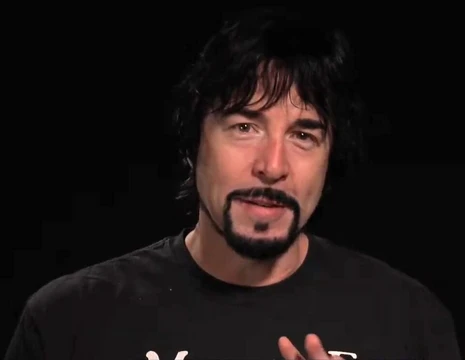
Stephen King
American author known for horror and other genres.
Last updated
Stephen Edwin King, born on September 21, 1947, in Portland, Maine, is an American author widely recognized as the "King of Horror." While his reputation rests primarily on horror fiction, his body of work spans suspense, crime, science fiction, fantasy, and mystery. He has written approximately 200 short stories, the majority of which have been collected in volumes. His debut novel, Carrie (1974), established him as a major figure in horror, and the novella collection Different Seasons (1982) represented his first significant departure from the genre. Many of his works have been adapted into films, including Carrie (1976), The Shining (1980), The Dead Zone (1983), Stand by Me (1986), Misery (1990), The Shawshank Redemption (1994), Dolores Claiborne (1995), The Green Mile (1999), It (2017), The Life of Chuck (2024), and The Long Walk (2025).
He has also published under the pseudonym Richard Bachman and co-written with authors such as Peter Straub and his sons Joe Hill and Owen King. His nonfiction includes Danse Macabre (1981) and On Writing: A Memoir of the Craft (2000). King has received numerous honors, including the O. Henry Award for "The Man in the Black Suit" (1994), the Los Angeles Times Book Prize for 11/22/63 (2011), the 2003 Medal for Distinguished Contribution to American Letters, the 2007 Grand Master Award from the Mystery Writers of America, and the 2014 National Medal of Arts. Critic Joyce Carol Oates has described him as a "brilliantly rooted, psychologically 'realistic' writer" drawing inspiration from the American scene and popular culture.
Lore & Background
King entered the University of Maine at Orono in 1966 on a scholarship. While there, he wrote for the student newspaper, The Maine Campus, and found mentors in professors Edward Holmes and Burton Hatlen. King participated in a writing workshop organized by Hatlen, where he fell in love with Tabitha Spruce. King graduated in 1970 with a Bachelor of Arts in English, and his daughter Naomi Rachel was born that year.
Beginnings
King and Spruce wed in 1971. After graduating, King earned a certificate to teach high school but was unable to find a teaching post immediately. He sold short stories to magazines like Cavalier. In 1971, King was hired as an English teacher at Hampden Academy in Hampden, Maine.
1970s: Carrie to The Dead Zone
He recalls the origin of his debut, Carrie: "Two unrelated ideas, adolescent cruelty and telekinesis, came together." It began as a short story intended for Cavalier; King tossed the first three pages in the trash but his wife, Tabitha, recovered them, saying she wanted to know what happened next. She told him: "You've got something here. I really think you do." He followed her advice and expanded it into a novel. King was teaching Dracula to high school students and wondered what would happen if Old World vampires came to a small New England town.
This was the germ of 'Salem's Lot, which King called "Peyton Place meets Dracula." King's mother died from uterine cancer around the time 'Salem's Lot was published. After his mother's death, King and his family moved to Boulder, Colorado. He paid a visit to the Stanley Hotel in Estes Park which provided the basis for The Shining, about an alcoholic writer and his family taking care of a hotel for the winter. It was around this time that King suspected he was an alcoholic.
King's family returned to Auburn, Maine in 1975, where he completed The Stand, an apocalyptic novel about a pandemic and its aftermath. King recalls that it was the novel that took him the longest to write, and that it was "also the one my longtime readers still seem to like the best." In 1977, the Kings, with the addition of Owen Philip, their third and youngest child, traveled briefly to England. They returned to Maine that fall, and King began teaching creative writing at the University of Maine.
The courses he taught on horror provided the basis for his first nonfiction book, Danse Macabre. In 1979, he published The Dead Zone, about an ordinary man gifted with second sight. It was the first of his novels to take place in Castle Rock, Maine. King later reflected that with The Dead Zone, "I really hit my stride." In 1982, King published Different Seasons, a collection of four novellas with a more serious dramatic bent than the horror fiction for which he had become famous.
1980s: Different Seasons to The Dark Half
Three of the four novellas were adapted as films: The Body as Stand by Me (1986); Rita Hayworth and Shawshank Redemption as The Shawshank Redemption (1994); and Apt Pupil as the film of the same name (1998). The fourth, The Breathing Method, won the British Fantasy Award for Best Short Fiction. King struggled with addiction throughout the decade and often wrote under the influence; he says he "barely remembers writing" Cujo (1981). In 1983, he published Christine, "A love triangle involving 17-year-old misfit Arnie Cunningham, his new girlfriend and a haunted 1958 Plymouth Fury." Later that year, he published Pet Sematary, which he had written in the late 1970s, when his family was living near a highway that "used up a lot of animals" as a neighbor put it.
His daughter's cat was killed, and they buried it in a pet cemetery built by the local children. King imagined a burial ground beyond it that could raise the dead. He has published under the pseudonym Richard Bachman and has co-written works with other authors, notably his friend Peter Straub and sons Joe Hill and Owen King. He has also written nonfiction, notably Danse Macabre (1981) and On Writing: A Memoir of the Craft (2000).
Reader's Guide
Stephen King's significance is rooted in his prolific output and the broad adaptation of his work. Among the films adapted from King's fiction are Carrie (1976), The Shining (1980), The Dead Zone (1983), Stand by Me (1986), Misery (1990), The Shawshank Redemption (1994), Dolores Claiborne (1995), The Green Mile (1999), It (2017), The Life of Chuck (2024) and The Long Walk (2025).
Among other awards, King has won the O. Henry Award for "The Man in the Black Suit" (1994) and the Los Angeles Times Book Prize for Mystery/Thriller for 11/22/63 (2011). He has also won honors for his overall contributions to literature, including the 2003 Medal for Distinguished Contribution to American Letters, the 2007 Grand Master Award from the Mystery Writers of America and the 2014 National Medal of Arts. Joyce Carol Oates called King "a brilliantly rooted, psychologically 'realistic' writer for whom the American scene has been a continuous source of inspiration, and American popular culture a vast cornucopia of possibilities."
Did You Know?
- King's first independently published story was 'I Was a Teenage Grave Robber,' serialized over four issues of the fanzine Comics Review in 1965.
- King asked a bookmobile driver for stories about how kids really are, and she gave him Lord of the Flies, which he called 'the first book with hands—strong ones that reached out of the pages and seized me by the throat.'
Frequently Asked Questions
Who is Stephen King?
Stephen Edwin King is an American novelist born on September 21, 1947, best known for crafting horror fiction that has become a defining part of modern popular literature. He has authored well over 200 short stories and a large body of novels spanning multiple genres.
How many books has Stephen King written?
King has published roughly 200 short stories along with numerous full-length novels over a career spanning nearly five decades. He is also known for co-authoring works and producing screenplays alongside his solo fiction.
More in Literary Giants
Sources
Compiled from Wikipedia and the sources listed below. Text from Wikipedia is available under CC BY-SA 4.0; this entry is adapted from it.
- Wikipedia: Stephen King (CC BY-SA 4.0).
Spotted an error? Know more?
Reader corrections go straight into our review queue. Suggest an edit · How this site is sourced