Frequently Asked Questions
The most-asked questions about lionfish and scorpionfish, part 2.
What is the Lionfish & Scorpionfish Fan Encyclopedia, Part 2?
It is a community-maintained reference guide that dives deeper into the biology, ecology, and cultural footprint of Pterois (lionfish) and Scorpaenidae (scorpionfish) species. Part 2 expands beyond the introductory material of Part 1 to cover advanced taxonomy, regional populations, and conservation debates.
Who are the main 'characters' featured in Part 2?
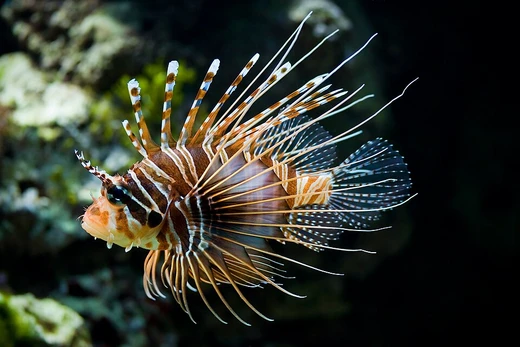
The encyclopedia spotlights several species as recurring focal points, including the Red Lionfish (Pterois volitans), the Devil's Horse (Pterois radiata), and the European Scorpionfish (Scorpaena scorta). Each gets a dedicated profile page with morphology, behavior, and range data.
Where should a newcomer start reading Part 2?
Begin with the 'Species Profiles' section, which walks through each highlighted fish from basic anatomy to ecological role. The 'Field Notes' chapter that follows gives practical tips on where and how these species are commonly observed in the wild.
What is the key difference between lionfish and scorpionfish covered in the encyclopedia?
Lionfish belong to the subfamily Pteroinae and are characterized by their fan-like, venom-backed dorsal fins and striped bodies, while scorpionfish in the broader Scorpaenidae family tend to be more camouflaged, bottom-dwelling, and less conspicuously finned. Part 2 dedicates a comparison page to clarifying the taxonomic overlap that often confuses casual observers.
Who are the notable 'key figures' referenced throughout the encyclopedia?
The pages frequently cite marine biologists such as John D. Pollock, who documented lionfish invasion dynamics in the Caribbean, and conservation advocates working on invasive-species management programs. They are treated as recurring authorities whose research underpins many of the encyclopedia's claims.
What are some notable 'moments' or events highlighted in Part 2?
The encyclopedia profiles the 2008–2012 Caribbean lionfish invasion as a landmark ecological event and the 2019 discovery of a new Scorpaena species off the coast of Vietnam. Each event page includes timeline summaries and links to primary research.
How does Part 2 handle the venom and safety topic?
A dedicated 'Venom & Human Interaction' section explains that the dorsal-fin spines of both groups contain a neurotoxic protein that causes intense localized pain but is rarely lethal to healthy adults. It also covers first-aid protocols and notes which species carry the most potent venom.
What key facts about lionfish ecology are emphasized?
Part 2 stresses that lionfish are voracious generalist predators capable of reducing native reef fish populations by up to 80% in invaded zones. It also notes their extraordinary reproductive output, with a single female releasing roughly 2 million eggs per year.
How is the encyclopedia organized for quick reference?
Content is split into five top-level sections: Species Profiles, Taxonomy & Evolution, Ecology & Behavior, Human Interaction, and Conservation. Each section uses cross-linked sub-pages so readers can jump between, say, a scorpionfish's venom profile and the relevant conservation policy page without navigating back to the main index.
Is Part 2 a standalone read, or do I need Part 1 first?
Part 2 assumes familiarity with basic Scorpaenidae anatomy and the general lionfish-invasion narrative established in Part 1, but every page includes a short 'context box' summarizing those earlier concepts. Readers can work through Part 2 independently if they skim those boxes.