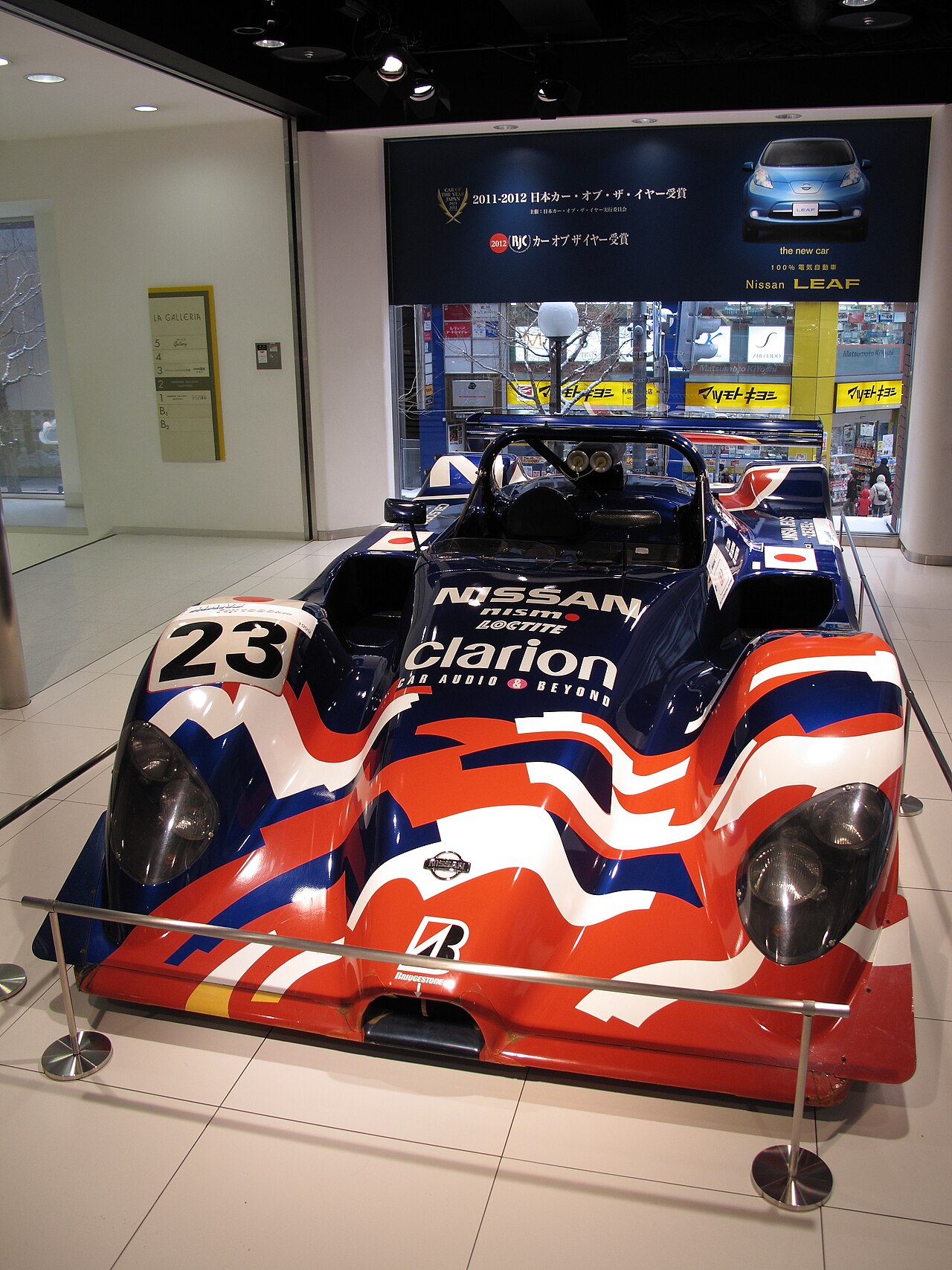
Nissan R391
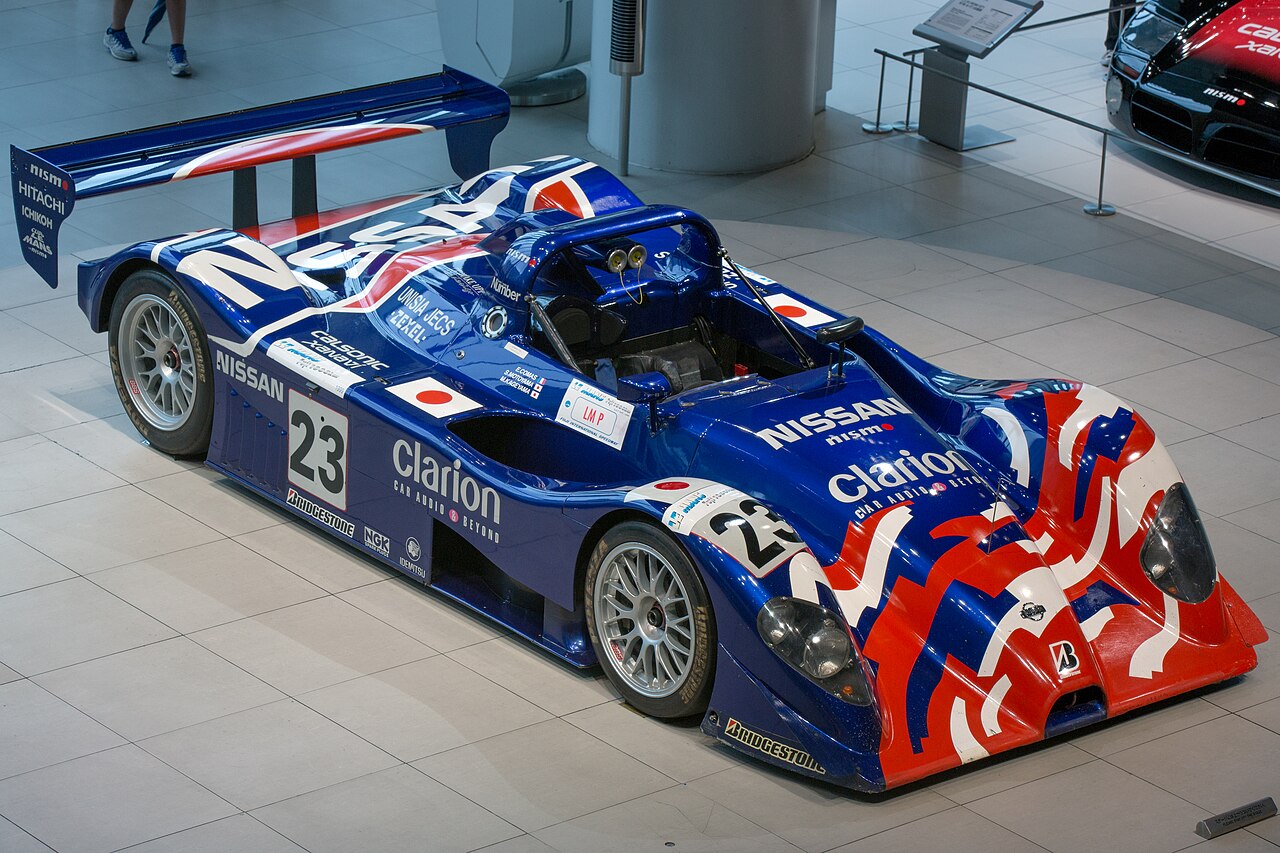
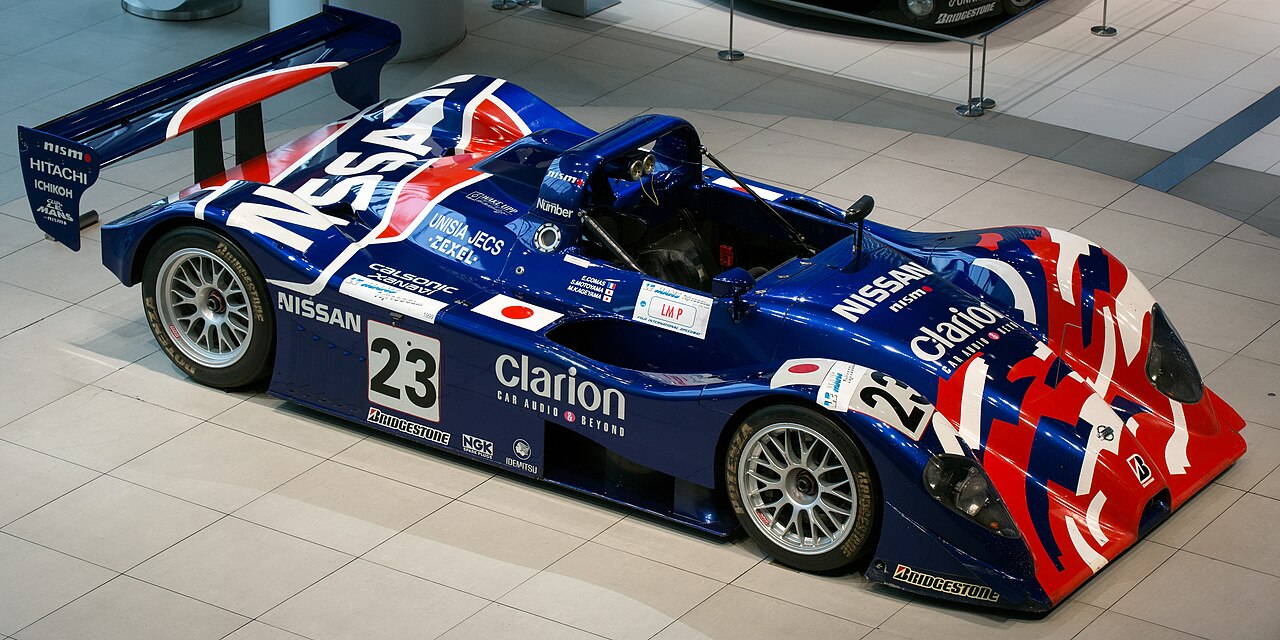
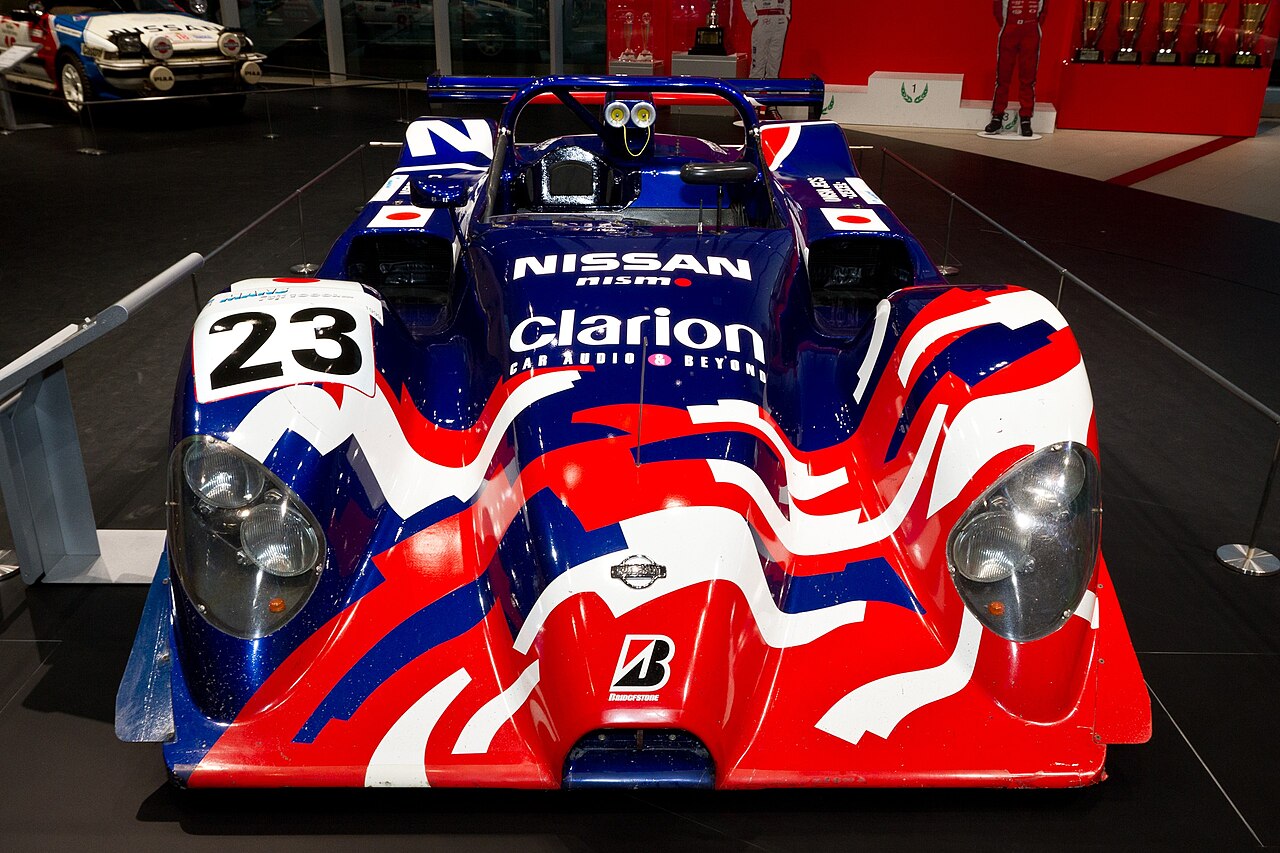
Nissan's open-cockpit prototype for the 1999 Le Mans.

MIKI Yoshihito from Sapporo City,Hokkaido., JAPAN · CC BY 2.0
The Nissan R391 was a prototype racing car developed by Nissan and its motorsport division, Nismo, specifically for the 1999 24 Hours of Le Mans. It was created to replace the R390 GT1, which had become ineligible under its production-based class regulations.
Nissan’s return to sportscar racing began in 1995 with the Skyline GT-R LM, followed by the advanced R390 GT1 in 1997—a car that pushed the limits of street legality to resemble a prototype. However, major rule changes for the 1999 season prevented manufacturers from building homologation specials that were more prototype than true GT car. In response, competitors like Mercedes-Benz, Toyota, Panoz, BMW, and Audi moved to the prototype class, using open-cockpit designs or closed cars evolved from their previous GT entries. Nissan decided a purpose-built prototype would outperform an evolved GT car, so they chose an open-cockpit layout.
Nissan hired the UK-based firm G-Force Technologies to design and build the R391. Nigel Stroud led the design, with Doug Skinner as chief designer and Glenn Elgood as race team fabricator. Nissan also partnered with Courage Compétition, a longtime customer of its used sportscars. Under their agreement, Nissan supplied Courage with VRH35L 3.5L turbocharged V8 engines left over from the R390 GT1, while gaining expertise from Courage for the R391. Additionally, Nissan purchased a Courage C52 chassis to run under its own team as a reliability backup, should the R391s encounter mechanical issues. The 1999 Le Mans was the C52’s first race.
For the R391, Nissan developed a new version of the VH engine, abandoning turbocharging in favor of a naturally aspirated design. This engine, the VRH50A, displaced 5.0 liters, compensating for the loss of forced induction while retaining the strengths of the original VRH35L.
At the 1999 24 Hours of Le Mans, Nissan planned to enter two R391s and a Courage C52 with the older turbo V8. During official testing in May, the R391s posted the 10th and 13th fastest times, beating some entries from Mercedes-Benz, Audi, and BMW, though they fell short of Panoz and their main rival, Toyota. In qualifying, one R391 placed 12th. However, the other R391 crashed during the first qualifying session while driven by Eric van de Poele, damaging the car beyond repair. Van de Poele suffered a broken vertebra but later recovered.
Quick Facts
- Predecessor
- Nissan R390 GT1
- Successor
- Nissan GT-R LM Nismo
- Team
- JPN Nissan Motorsports
- Drivers
- FRA Érik Comas
- JPN Satoshi Motoyama
- GER Michael Krumm
- BEL Eric van de Poele
- Debut
- 1999 24 Hours of Le Mans
- First win
- 1999 Le Mans Fuji 1,000 km / 621 mi
- Races
- 2
- Wins
- 1
Facts from the source article.
Lore & Background
Following Nissan's return to sportscar racing in 1995, motorsports division Nismo had been slowly climbing its way up the competition ladder to finally reach the top Le Mans prototype class. Starting with Skyline GT-R LMs in 1995, Nismo turned to developing the advanced R390 GT1 in 1997, which was effectively as close to a prototype as possible while still remaining street legal. With major rule changes in the GT in 1999, major manufacturers were no longer able to build homologation specials which resembled prototypes more than true GT cars. Nissan turned to the UK based firm G-Force Technologies to design and build the R391. Nigel Stroud would head up the car's design alongside Doug Skinner as the chief designer and Glenn Elgood as the race team fabricator. Nissan also formed a partnership with Courage Compétition, giving them VRH35L 3.5L turbocharged V8 motors for their own prototype while gaining expertise from Courage for use on the R391. For the R391, Nissan would use a new version of the VH engine, opting to no longer use turbocharging. Instead, a modified naturally aspirated version was constructed, named the VRH50A at 5.0 liters.
Reader's Guide
The Nissan R391 represents Nissan's final attempt at overall victory at the 24 Hours of Le Mans in the 20th century. Its development came at a time of major regulatory change, when the GT1 class was effectively abolished, forcing manufacturers to choose between open-cockpit prototypes or evolved GT cars. Nissan's decision to commission a clean-sheet design from G-Force Technologies, rather than evolve the R390 GT1, reflected a belief that a dedicated prototype would be more competitive. The partnership with Courage Compétition provided valuable expertise, though the R391's race results were mixed. At Le Mans, one car was destroyed in a crash during qualifying, and the remaining car retired with an electrical problem after climbing to 4th place. The R391's sole victory came at the invitational Fuji 1000km, where it beat Toyota's GT-One by a single lap, earning an automatic entry to the 2000 Le Mans. However, Nissan officials decided the motorsports program was no longer worth the cost amid corporate restructuring under Carlos Ghosn, and the project was ended in early 2000. The R391 thus stands as a brief, ambitious effort that showed promise but never fulfilled its potential at Le Mans.
Did You Know?
- The R391 used a naturally aspirated 5.0L V8 (VRH50A) instead of the turbocharged engine from the R390 GT1.
- Nissan's sole victory with the R391 came at the 1999 Fuji 1000km, beating the Toyota GT-One by one lap.
From GT Homologation to Purpose-Built Prototype
When 1999 rule changes eliminated the ability for manufacturers to field homologation specials that were essentially prototypes wearing GT clothing, Nissan faced a crossroads. Rather than following rivals like Mercedes-Benz, Toyota, BMW, Audi, and Panoz into evolved closed-cockpit GT cars, the company chose a more radical path: a true open-cockpit prototype. Nismo, which had climbed the sportscar ladder from the Skyline GT-R LMs in 1995 through the R390 GT1 in 1997, believed a clean-sheet design would outperform a stretched production car. The project was handed to UK-based G-Force Technologies, with Nigel Stroud leading design, Doug Skinner as chief designer, and Glenn Elgood handling fabrication. For power, Nissan abandoned the turbocharged VRH35L V8 that had driven the R390 GT1, instead developing a larger 5.0-liter naturally aspirated variant called the VRH50A, aiming to match the turbo unit's output through displacement alone.
A Single Car at the Circuit de la Sarthe
Nissan arrived at the 1999 24 Hours of Le Mans with two R391s and a backup Courage C52 running the older turbo V8. Official testing in May showed promise, with the prototypes posting the 10th and 13th fastest times, edging past Mercedes-Benz, Audi, and BMW entries, though Panoz and Toyota remained ahead. Qualifying brought both good news and tragedy: one car locked in 12th, but the other, driven by Eric van de Poele, crashed during the first qualifying session, sustaining damage beyond repair. Van de Poele suffered a broken vertebra but recovered. With only one R391 left, Nissan's hopes rested on a single machine. The car climbed to as high as fourth overall before an electrical fault in the engine forced retirement after just 110 laps. The backup Courage C52, powered by the older VRH35L, finished a solid eighth, though Courage Compétition's own entry with the same Nissan turbo motor beat it by eight laps to take sixth.
Redemption at Fuji
Later in 1999, the R391 received a second chance at the Fuji 1000km, an invitational endurance event sanctioned by the Automobile Club de l'Ouest, the same governing body behind Le Mans. Victory at Fuji would grant the winning team an automatic entry to the following year's 24 Hours of Le Mans. The field was predominantly Japanese, with most major European manufacturers absent, but Toyota fielded its GT-One, the very car that had outpaced the R391 at the Sarthe. Both Nissan and Toyota entered a single car. In what became a defining moment for Nissan's sportscar program, the R391 crossed the line a single lap ahead of the GT-One, claiming the win and earning Nissan automatic entry to the 2000 edition of Le Mans. The victory carried particular weight as a home-soil triumph, giving Nissan bragging rights in Japanese sportscar racing and proving the open-cockpit prototype could compete with the best.
The Cost of Ambition
Despite the Fuji victory and the guaranteed 2000 Le Mans entry, Nissan's sportscar ambitions proved short-lived. The broader corporate picture had shifted: Carlos Ghosn was leading a restructuring of the company, and the motorsports budget came under intense scrutiny. Looking back at the program's record since 1995, Nissan had managed only a single outright victory across its entire sportscar effort. The R391 project was terminated in early 2000, and the company turned down its automatic Le Mans entry. What remained of Nissan's competitive motorsports presence was limited to the JGTC touring car series. The decision reflected a sobering cost-benefit analysis: the R391 had been quick, had beaten Toyota at Fuji, and had shown genuine competitiveness at Le Mans, but it had never finished a major endurance race. For a company reorganizing under new leadership, that was not enough to justify the expense, and the prototype era for Nissan came to a close after just one season.
Gallery
Frequently Asked Questions
Why did Nissan build the R391 instead of just running the R390 GT1 again?
The 1999 regulations scrapped the GT1 homologation category that had kept the R390 GT1 legal, so Nissan had to start from a blank sheet. The result was a true purpose-built prototype rather than a stretched production car.
What was the R391's best finish in competition?
The car took outright victory at the 1999 Fuji 1000 km, which remains its most celebrated result. Its race debut was at the 1999 24 Hours of Le Mans, where it served as Nissan's open-cockpit entry.
More in Le Mans Prototypes
Spotted an error? Know more?
Reader corrections go straight into our review queue. Suggest an edit · How this site is sourced