Lazarus (short story)
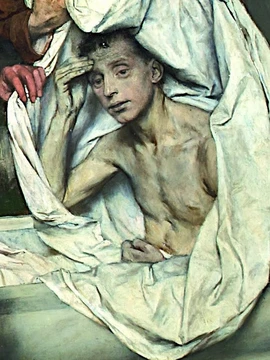
A resurrected man spreads cosmic indifference to life.
Lazarus is a short story by Russian author Leonid Andreyev, published in 1906. It subverts the traditional Biblical account of the resurrection by presenting the return from death as a source of horror rather than hope. The story is notable for its starkly pessimistic vision of what lies beyond life.
Quick Facts
- Author
- Leonid Andreyev
- Publication year
- 1906
- Protagonist
- Lazarus of Bethany
- Setting
- Bethany and Rome
Facts from the source article.
Plot summary
The story opens with Lazarus's return from the dead, initially celebrated by family and friends. Over time, his joyful demeanor fades into a grave silence and unsettling changes in appearance. When a guest asks about his experience in death, Lazarus's cold gaze instills dread, driving some guests to madness. He becomes isolated and neglected, even by his sisters Mary and Martha; his home falls into disrepair and he wears tattered garments.
Visitors who encounter him are left with profound emptiness and despair. Upon meeting him, Aurelius is struck by the darkness enveloping Lazarus. Though their conversation begins lightheartedly, the encounter profoundly affects Aurelius. Returning to Rome, he attempts to create a masterpiece capturing the beauty he thought he saw in Lazarus, but produces a grotesque creation reflecting his inner turmoil.
The sculptor falls into despair, losing inspiration and joy in his art. In the final sections, Emperor Augustus summons Lazarus to Rome. Lazarus's presence drains joy from those he meets, leading to tragic transformations. Augustus, confident in his power, gazes into Lazarus's eyes and is overwhelmed by the horror of the Infinite, envisioning Rome's destruction and life's futility.
Despite this, Augustus reclaims his will to live, sparing Lazarus's life but ordering his eyes burned out to prevent further harm.
Themes
Andreyev's story focuses not on the circumstances of Jesus's restoration of Lazarus but on the pessimistic consequences of an event usually seen as miraculous. Lazarus has been irrevocably altered by death, finding only coldness and darkness in the tomb; death meant bodily decay and a cruel severance from life. The resurrected Lazarus, under the handicap of partial decay, is forced into an existence for which he is maladjusted, his interest in life and awareness of it withered. The story questions what resurrection truly means, suggesting it may carry profound psychological and existential costs. Lazarus's knowledge of death becomes a burden that brings despair and madness to those who seek it. As Henry T. Schnittkind noted, the story depicts the misery of knowing the Unknowable, implying that some truths about existence are too heavy for the living to bear.
More in Lazarus of Bethany
Spotted an error? Know more?
Reader corrections go straight into our review queue. Suggest an edit · How this site is sourced