Fernando Belaúnde
Twice president of Peru, architect of development and controversy.

El Surquillano · CC0
He was an architect by training and was known as "El Arquitecto"[1] The Guardian described Belaúnde's politics as centre-right, pro-American, and conservative, noting he was "a 19th century politician" comfortable in Peru's conservative milieu.[2][1]
Last updated 2026-10-08 from the source article.
Quick Facts
- Office
- President of Peru
- Prime minister
- Manuel Ulloa Elías
- Fernando Schwalb
- Sandro Mariátegui Chiappe
- Luis Pércovich Roca
- Vice president
- Fernando Schwalb; Javier Alva Orlandini
- Took office
- 28 July 1980
- Left office
- 28 July 1985
- Predecessor
- Francisco Morales Bermúdez; (as President of the Armed Forces Revolutionary Government)
- Successor
- Alan García
Facts from the source article.
Life and work
Belaúnde was born in Lima into a wealthy aristocratic family of Spanish forebears.[3] He studied architecture at the University of Miami and the University of Texas at Austin from 1930 to 1935.[4] He spoke English so well and was so pro-American that he was often called "Fred Blundy"[1] His political career began in 1944 as cofounder of the National Democratic Front party.[5]
In 1957, Belaúnde fought a sword duel with congressman Eduardo Watson Cisneros and was declared the winner by acclamation.[6] He formed his own centre-right party, Accion Popular, in the mid-1950s.[1] Belaúnde was elected president for a six-year term in 1963 in alliance with the Christian Democrats.[1] During his first term, he spurred numerous developmental projects including the Carretera Marginal de la Selva highway.[7]
He was elected president for a second time in 1980.[1]
What the cited sources add
The Guardian described Belaúnde as "a 19th century politician, with a high moral purpose and a sense of civic duty"[1] Belaúnde promoted a doctrine called "The Conquest of Peru by Peruvians" to exploit Amazon resources.[7] In 1964, his administration targeted the Matsés indigenous group with napalm dropped from aircraft, killing hundreds.[8] He advanced the Santiago Antunez de Mayolo and Chira Piura irrigation projects.[9]
During the 1982 Falklands War, Belaúnde declared Peru ready to support Argentina with fighter planes, ships, and medical teams.[10] Under Belaúnde's direction, the Banco de la Nación (Peruvian National Bank) was created.[9] A "social interest" housing program promoted by Belaúnde provided homes for tens of thousands of families in Lima and other urban centers.[9]
Gallery
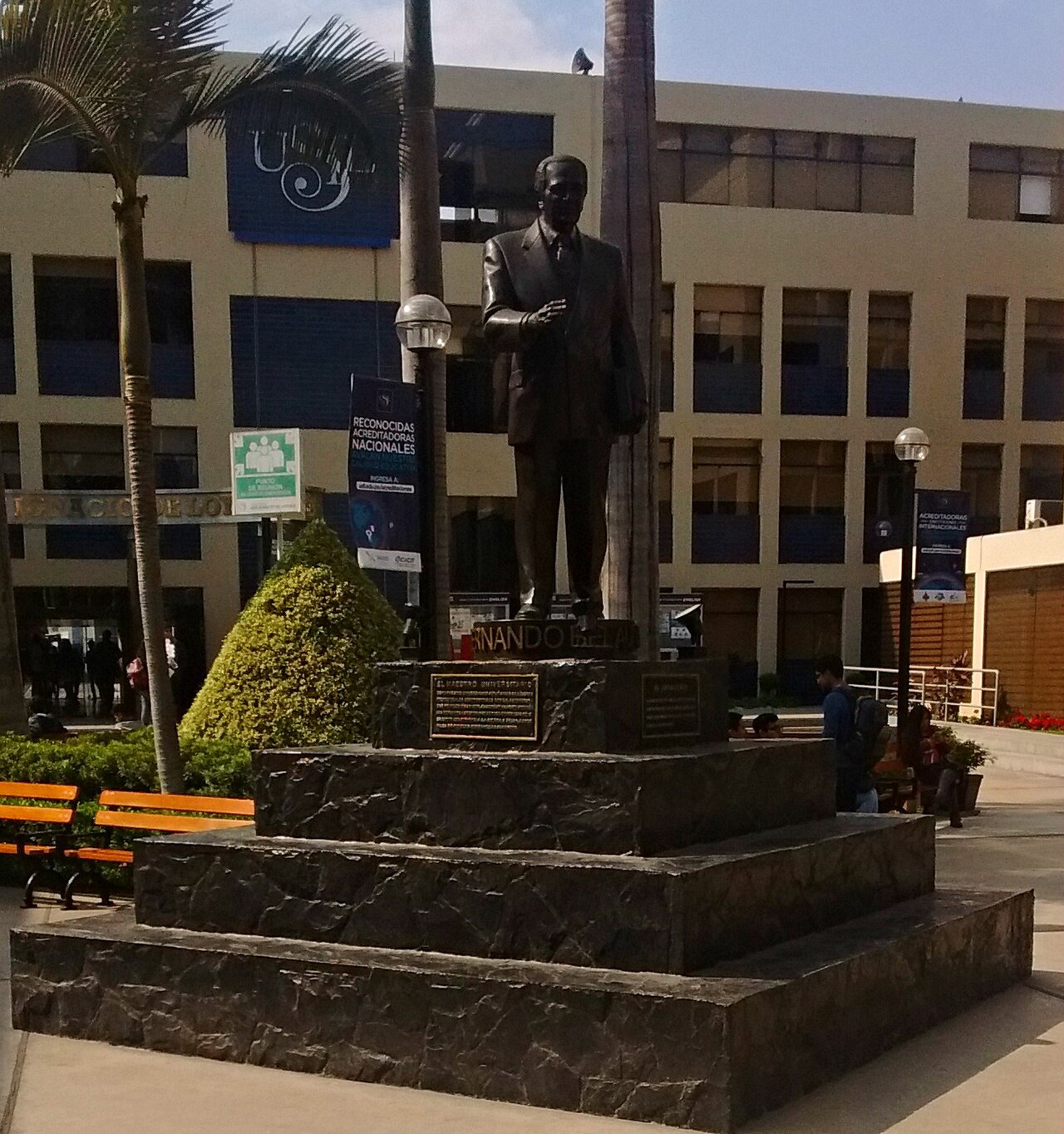
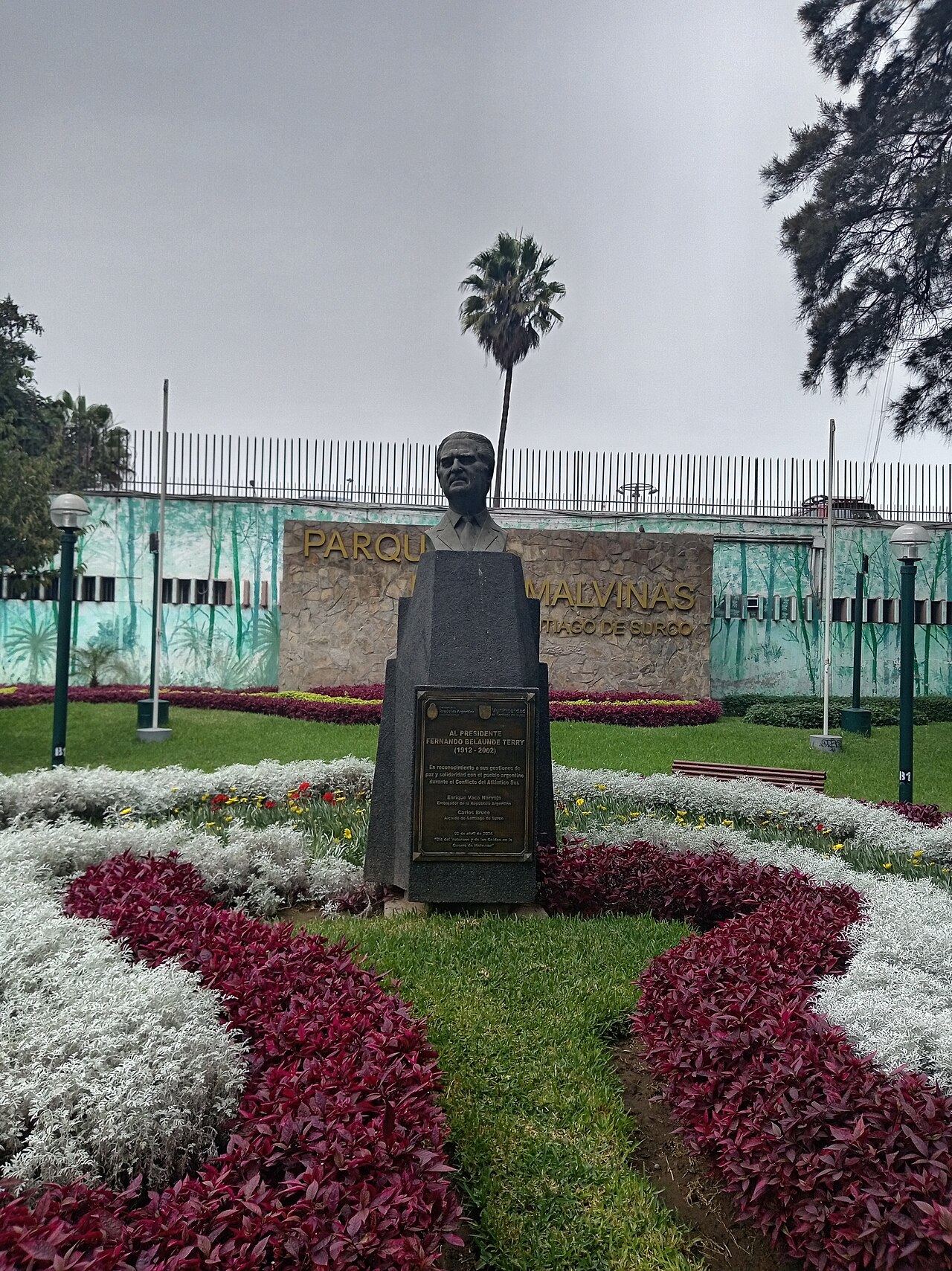
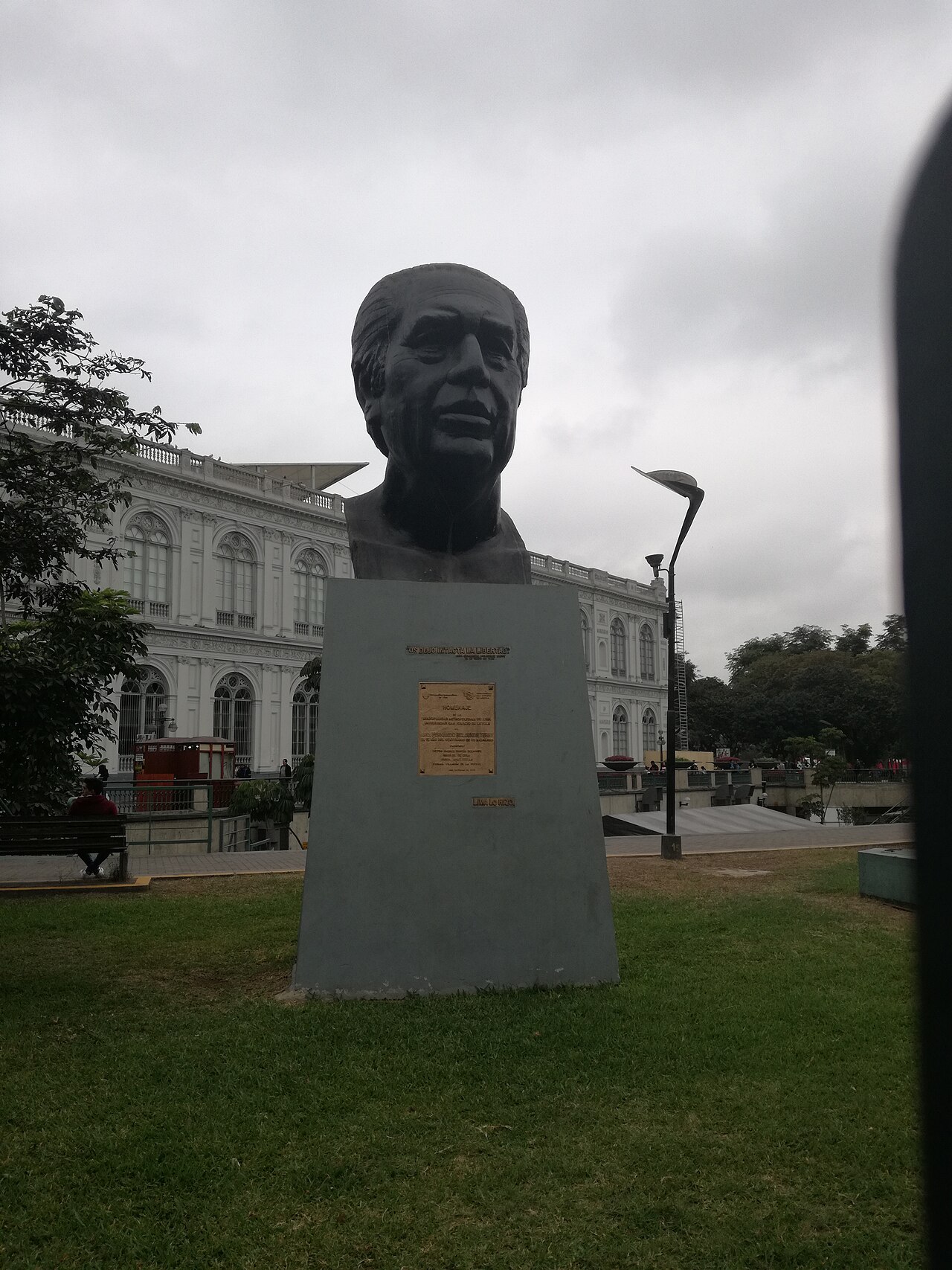
References
- Gott, "Fernando Belaúnde", The Guardian, 2002-06-06. facts only, no text reused. theguardian.com
- Wikipedia, "Fernando Belaúnde" (CC BY-SA 4.0), which cites: Gott, "Fernando Belaúnde", The Guardian, 2002-06-06; "Peruvian rebel storms government party HQ", Christian Science Monitor, 13 July 1983; Gott, "Fernando Belaúnde", The Guardian, 2002-06-06; Gott, "Fernando Belaúnde", The Guardian, 2002-06-06 (we also read that source) en.wikipedia.org
- Wikipedia, "Fernando Belaúnde" (CC BY-SA 4.0), which cites: Gunther, John, Inside South America, p. 322; Gott, "Fernando Belaúnde", The Guardian, 2002-06-06; Novak, Fabián. Las relaciones entre el Perú y Alemania, 1828–2003 (Serie Política exterior peruana). Fondo Editorial PUCP, 2004. , 9789972426346. p. 45. (we also read that source) en.wikipedia.org
- Wikipedia, "Fernando Belaúnde" (CC BY-SA 4.0), which cites: Gott, "Fernando Belaúnde", The Guardian, 2002-06-06 (we also read that source) en.wikipedia.org
- Wikipedia, "Fernando Belaúnde" (CC BY-SA 4.0), which cites: "Fernando Belaúnde Terry President of Peru, Modernization Leader Britannica", Encyclopedia Britannica (original not read by us) en.wikipedia.org
- Obando, "El último duelo en Perú: Cuando Fernando Belaúnde se jugó el honor contra el diputado Eduardo Watson Cisneros", Infobae, 2023-01-19. facts only, no text reused. infobae.com
- Wikipedia, "Fernando Belaúnde" (CC BY-SA 4.0), which cites: Dourojeanni, "Belaúnde en la Amazonía", Centro Amazónico de Antropología y Aplicación Práctica (CAAAP), 12 June 2017; Gott, "Fernando Belaúnde", The Guardian, 2002-06-06 (we also read that source) en.wikipedia.org
- Wikipedia, "Fernando Belaúnde" (CC BY-SA 4.0), which cites: Dourojeanni, "Belaúnde en la Amazonía", Centro Amazónico de Antropología y Aplicación Práctica (CAAAP), 12 June 2017; LR, "Terrorista "José" amenaza con más ataques a las fuerzas del orden", La República, 9 June 2018 (we also read that source) en.wikipedia.org
- Wikipedia, "Fernando Belaúnde" (CC BY-SA 4.0), which cites: Alexander, "A History of Organized Labor in Peru and Ecuador", Greenwood Publishing Group, 1 January 2007; Haggard, "Development, Democracy, and Welfare States", Princeton University Press, August 24, 2020, p. 79–113; Mesa-Lago, "Social Security in Latin America: Pressure Groups, Stratification, and Inequality", University of Pittsburgh Press, 15 November 1978 (we also read that source) en.wikipedia.org
- Wikipedia, "Fernando Belaúnde" (CC BY-SA 4.0), which cites: "The Deseret News – Google News Archive Search", news.google.com; "Peruvian Peace Initiative Believed To Retain Some Chance for Gains", The Washington Post, 4 May 1982 (original not read by us) en.wikipedia.org
Each numbered sentence above was checked against the source it cites before publication. Sentences citing Wikipedia adapt text from the English Wikipedia article Fernando Belaúnde (contributors), used under CC BY-SA 4.0; this entry is available under the same licence. Other sources were used for facts only; no text or images are copied from them.
More in Latin American Presidents
Spotted an error? Know more?
Reader corrections go straight into our review queue. Suggest an edit · How this site is sourced