Frequently Asked Questions
The most-asked questions about late cretaceous dinosaurs.
What exactly is the Late Cretaceous and how long did it last?
The Late Cretaceous spans roughly 100 to 66 million years ago, divided into the Santonian, Campanian, Maastrichtian, and other stages. It represents the final chapter of the Mesozoic Era before the mass extinction event that wiped out non-avian dinosaurs.
Which dinosaur families are most iconic to this period?
Hadrosaurs, ceratopsids, tyrannosaurids, and abelisaurids dominate the popular imagination, alongside sauropods like titanosaurids and the enigmatic ankylosaurs. These groups reached their peak diversity and body sizes during the Campanian and Maastrichtian stages.
Who were the apex predators of Late Cretaceous ecosystems?
In the Northern Hemisphere, tyrannosaurids such as T. rex and Tarbosaurus held the top predatory niche, while in the Southern Hemisphere, abelisaurids like Carcharodontosaurus and Giganotosaurus filled that role earlier in the period. Smaller dromaeosaurids and troodontids occupied mid-level predator positions.
What happened at the end of the Late Cretaceous?
Around 66 million years ago, a large asteroid struck what is now the Yucatán Peninsula, triggering the K-Pg (Chalk–Paleogene) extinction event. Approximately 75% of all species, including all non-avian dinosaurs, perished within a relatively short geological window.
Where on Earth did Late Cretaceous dinosaurs live?
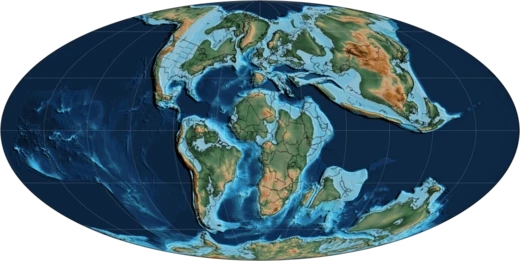
They inhabited nearly every continent, from the dense forests of what is now North America and Europe to the open floodplains of South America, Africa, and Australia. By the Maastrichtian, Gondwanan landmasses were fragmenting, creating isolated faunal provinces on each continent.
How did Late Cretaceous ecosystems differ from the earlier Cretaceous?
Flowering plants (angiosperms) diversified dramatically, reshaping herbivore diets and driving the evolution of new feeding strategies in dinosaurs. Sea levels were generally lower than in the Early Cretaceous, and continental drift had begun separating the major landmasses we recognize today.
What are some of the best-known fossil localities from this era?
Hell Creek Formation in Montana and the Dinosaur Provincial Park in Alberta are among the most productive sites, while the Nemegt Formation in Mongolia yields exceptionally complete tyrannosaurid and hadrosaur material. In South America, the Neuquén Basin in Argentina has produced remarkable titanosaur and abelisaur specimens.
Did Late Cretaceous dinosaurs have feathers or fur?
While large theropods like T. rex likely had sparse, filament-like integument rather than full plumage, many smaller coelurosaurs and ornithischians show clear evidence of feathers or feather-like structures. No evidence supports mammalian-style fur on any dinosaur, though some may have had insulating down on juveniles.
What is the difference between the Late Cretaceous and the Early Cretaceous for a new fan?
The Early Cretaceous (145–100 Ma) features groups like iguanodontids and spinosaurids, while the Late Cretaceous (100–66 Ma) is defined by the rise of hadrosaurs, ceratopsids, and tyrannosaurids. Think of the Early Cretaceous as the 'building' phase and the Late Cretaceous as the 'peak spectacle' phase of dinosaur evolution.
Where should a newcomer start learning about Late Cretaceous dinosaurs?
Begin with the major families—tyrannosaurids, hadrosaurs, ceratopsids, and titanosaurids—to build a mental map of who was who. Then explore a single well-studied formation like Hell Creek or Nemegt to see how those animals fit together in a single ecosystem. From there, branch out into comparative anatomy, paleoecology, or the extinction event itself.