Janggu
Hourglass drum used in traditional Korean music.
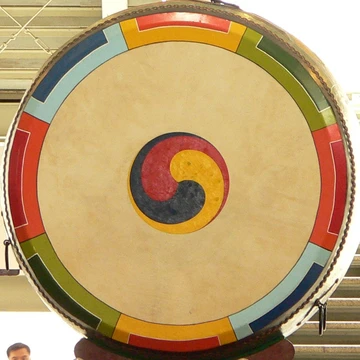
The janggu, also called janggo, changgo, or seyogo, is an hourglass drum central to traditional Korean music. Its two heads, made from different leathers, produce distinct pitches and timbres that together symbolize the harmony of Um and Yang. This instrument is one of the four in samul nori, alongside the buk, jing, and kkwaenggwari.
Quick Facts
- Classification
- Drum (buk)
Facts from the source article.
History
The earliest known images of the janggu are found on a Silla-era bell and in a Goguryeo tomb mural. Written records first mention an hourglass-shaped drum during King Munjong of Goryeo’s reign, when it was a field instrument. The 1451 Goryeo-sa states that twenty janggu were sent as gifts from Song emperor Huizong to the Goryeo court in 1114, and it records the first Korean use of the word janggu. The same source, for 1076, uses the term janggu-opsa for a player or teacher. Some say the janggu sounds like rain.
Structure
The janggu may have evolved from the yogo, a smaller Korean drum thought to originate from the Indian idakka, introduced during the Silla period. Evidence of the yogo appears in Goguryeo tomb murals and at Gameunsa temple. The jorongmok is the round tube connecting the two sides of the hourglass body; a wider tube produces a deeper, huskier tone, while a narrower tube yields a harder, snappier sound. The two skin heads are lapped onto metal hoops secured by rope counter-loops. The left head (gungpyeon) uses thick cowhide, horsehide, or deerskin for deep tones; the right head (chaepyeon) uses dog skin or lighter horsehide for higher tones. Two beating sticks exist: gungchae, a mallet with a round head made from bamboo root and hardwood (or plastic for beginners), and yeolchae, always made from bamboo.
Playing
The janggu is used in court music, wind music, folk music, shamanistic music, vocal music, dance, and Yeonhui. Traditionally, yeolchae is played on the right high-pitch area and the bare hand on the low-pitch area, as seen in pungmul for folk songs and shamanistic rituals. Today, gungchae and yeolchae are often used together: yeolchae produces 'tta', gungchae produces 'gung', and together they make 'deong'. The janggu can be played on the floor for sanjo or carried with a shoulder strap; carrying style varies by person, region, and taste. It is usually classified as an accompanying instrument due to its flexible nature and agility with complex rhythms. A dexterous performer can dance while playing, moving their shoulders up and down to the rhythm.
More in Korean Musical Instruments
Spotted an error? Know more?
Reader corrections go straight into our review queue. Suggest an edit · How this site is sourced