Di Yi
Shang king whose reign saw war with Yufang and Renfang.

via Wikipedia: Di Yi · see source
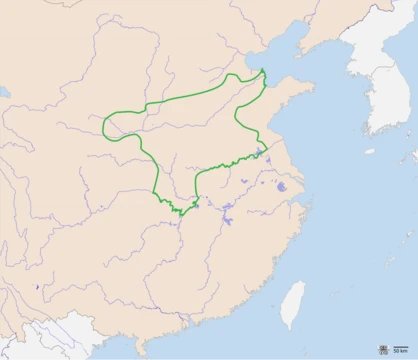
Di Yi, also known as Zi Xian, was a Shang king who reigned from 1101 to 1076 BC, ruling from the capital at Yin near present-day Anyang, Henan. His reign is documented through oracle bones and bronze inscriptions. He was the elder brother of Jizi and Bi Gan, and fathered three sons: Weiziqi, Weizhong, and Di Xin. According to Sima Qian, Di Xin inherited the throne because his half-brothers were of lower birth, and he became the final Shang ruler. Following the dynasty’s collapse, Weiziqi received the State of Song, with Weizhong as his successor.
Quick Facts
- Father
- Wen Ding
- Reign
- 1101–1076 BC
- Successor
- Di Xin
- Died
- 1076 BC
- Issue
- Weizi of Song
- Weizhong of Song
- Di Xin
- Full name
- Family name: Zi (子), Given name: Xian (羨)
- Temple name
- Di Yi (帝乙)
Facts from the source article.
Reign
Di Yi's reign is marked by a significant war with the Yufang around the time of his 10th sacrificial cycle. Oracle bone records also mention fighting the Renfang in his 10th year, though stylistic analysis has cast doubt on this, particularly with the use of ziyong 'to be implemented' only appearing during Di Xin's reign and usually appearing in instances of wars with the Renfang. At the very least, the war intensified significantly come the era of Di Xin.
Posthumous accounts
Most posthumous accounts of Di Yi were written from the perspective of the invading Zhou dynasty and an anachronistic perspective of the Mandate of Heaven being lost by Di Xin; ergo, they should be treated with caution. According to the Bamboo Annals, in the third year of his reign, Di Yi ordered Nanzhong to fight Kun Barbarians and built Shuofang in the middle of Kun territory after winning a battle. An earthquake also struck Predynastic Zhou. He died in the ninth year of his reign. In the Book of Changes, Di Yi is twice recorded as having given his younger sister to King Wen of Zhou in marriage under the Tai and Gui Mei hexagrams. Sima Qian records that Di Yi's reign did not improve existing economic issues dating back to Wu Yi's reign. However, Duke Dan of Zhou was comparatively charitable during his speech against drunkenness in the Book of Documents, citing the Shang not being addicted to drink as an example of common virtue. The Book of Han records Di Yi as being infatuated with a deity and having died of shock. A passage in the Zuozhuan implies that Di Yi lacked virtue in a similar fashion as to King Li of Zhou, though it is not elaborated upon. It is said that Di Yi is the origin of the surname Hao, citing a tale of Di Yi enfeoffing Haoxiang to Zi Qi, who then took the placename as their family name.
Sacrifices
Di Yi is mentioned by name at least thrice in bronze inscriptions from Di Xin's reign, with the epithet 'Civil and Military' attached each time. The first is from the 4th year of Di Xin's reign, where an yi sacrifice was performed to begin another ritual cycle; the second is a rong sacrifice from the 22nd year of his reign marking the end of another cycle. In this instance, Di Xin rewarded the individual assisting him with cowry money, who would then produce a vessel inscribing to the matter. Another sacrifice was made during his 4th ritual cycle where yi and zhu sacrifices were made, and an individual assisting Di Xin named Bi Qi was rewarded with cowry money, and the act recorded in bronzeware.
More in Kings of the Shang Dynasty
Spotted an error? Know more?
Reader corrections go straight into our review queue. Suggest an edit · How this site is sourced