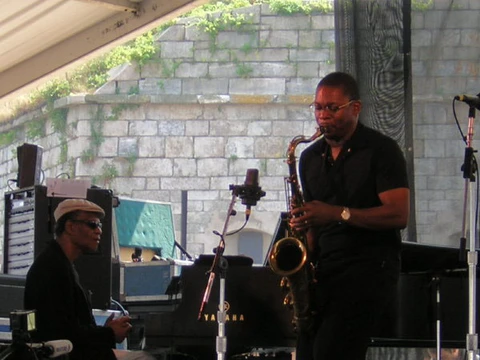
Bill Evans
American jazz pianist and composer known for his trio work.

William John Evans (August 16, 1929 – September 15, 1980) was an American jazz pianist and composer best known for leading his own trio. His style, marked by impressionist harmonies, block chords, fresh chord voicings, and melodic lines that seemed to "sing" with rhythmic independence, still shapes how jazz pianists play today.
Evans was born in Plainfield, New Jersey. He trained in classical music at Southeastern Louisiana College and New York City's Mannes School of Music, where he focused on composition and earned an artist diploma. He moved to New York in 1955 and worked with bandleader and theorist George Russell. In 1958, he joined Miles Davis's sextet; the following year, while the group was exploring modal jazz, they recorded *Kind of Blue*, which remains the best-selling jazz album ever.
Evans left Davis's band in late 1959 to launch his own career as a leader. He formed a trio with bassist Scott LaFaro and drummer Paul Motian, now considered a landmark modern jazz trio. Together they made two studio albums, *Portrait in Jazz* and *Explorations*, plus two live albums from a 1961 run at New York's Village Vanguard: *Sunday at the Village Vanguard* and *Waltz for Debby*. Decades later, a complete three-CD set of those Vanguard performances was released. Ten days after the engagement ended, LaFaro died in a car crash. After months away from the stage, Evans returned with a new trio featuring bassist Chuck Israels. In 1963, he won a Grammy for *Conversations with Myself*, a solo album made using overdubbing. He met bassist Eddie Gómez in 1966 and worked with him for the next eleven years. In the mid-1970s, he teamed up with singer Tony Bennett for two well-received albums: *The Tony Bennett/Bill Evans Album* (1975) and *Together Again* (1977).
Many of Evans's own pieces, including "Waltz for Debby" and "Time Remembered," became jazz standards, covered by numerous artists. He earned 31 Grammy nominations and seven awards, and was inducted into the *DownBeat* Jazz Hall of Fame.
**Biography**
**Early life**
Evans grew up in North Plainfield, New Jersey, the son of Harry and Mary Evans (née Soroka). His father, of Welsh descent, ran a golf course; his mother, of Rusyn ancestry, came from a family of coal miners. The marriage was troubled by Harry Sr.'s heavy drinking, gambling, and abusive behavior. Bill had an older brother, Harry (Harold), to whom he was very close.
Because of their father's destructive actions, Mary often took her sons to stay with her sister Justine and the Epps family in nearby Somerville. During these stays, Harry began piano lessons with a local teacher, Helen Leland, when Bill was between five and seven. Though considered too young for lessons at first, Bill learned by copying what he heard during his brother's sessions. At age six, he started formal piano lessons alongside Harry.
Evans fondly remembered Leland for not pushing a heavy technical regimen of scales and arpeggios. He quickly became a fluent sight-reader, though Leland thought Harry was the better pianist. His parents encouraged him to learn multiple instruments, so at seven he began violin lessons, later adding flute and piccolo. He soon dropped these instruments, but the experience is thought to have influenced his keyboard style. He later cited Mozart, Beethoven, and Schubert as composers he often played. In high school, he encountered 20th-century music such as Stravinsky's *Petrushka*, which he called a "tremendous experience," and Milhaud's *Suite provençale*, whose bitonal language "opened him to new things." Around the same time, at age twelve, he first heard jazz on the radio, listening to the bands of Tommy Dorsey and Harry James. At thirteen, he filled in for a sick pianist in Buddy Valentino's rehearsal band, where his brother Harry already played trumpet. Soon he was playing for dances and weddings across New Jersey, performing boogie-woogie and polkas for $1 an hour. During this period, he met multi-instrumentalist Don Elliott, with whom he later recorded. Another key influence was bassist George Platt, who introduced Evans to harmony theory.
Evans also listened to Earl Hines, Art Tatum, Coleman Hawkins, Bud Powell, George Shearing, Stan Getz, and Nat King Cole, whom he particularly admired. He graduated from North Plainfield High School in 1946.
**College, army, sabbatical year**
In September 1946, Evans entered Southeastern Louisiana College on a flute scholarship. He studied classical piano interpretation with Louis P. Kohnop, John Venettozzi, and Ronald Stetzel. A major influence was Gretchen Magee, whose teaching methods left a strong mark on his compositional style.
Around his third year of college, Evans wrote his first known tune, "Very Early," and also composed a piece called "Peace Piece." Years later, when asked to play it, he said it was a spontaneous improvisation and didn't know it. He was a founding member of SLU's Delta Omega chapter of Phi Mu Alpha Sinfonia, played quarterback for the fraternity's football team, and performed in the college band. In 1950, he played a movement of Beethoven's Piano Concerto No. 3 at his senior recital, earning a Bachelor of Music in piano and a bachelor's in music education. Evans considered his last three years in college the happiest of his life.
While in college, he met guitarist Mundell Lowe. After graduating, they formed a trio with bassist Red Mitchell. The three moved to New York City but couldn't find bookings, so they left for Calumet City, Illinois. In July 1950, Evans joined Herbie Fields's band in Chicago. That summer, the band toured for three months backing Billie Holiday, including dates in the East.
- born
- August 16, 1929
- died
- September 15, 1980
- field
- Jazz pianist and composer
- nationality
- American
- known_for
- Leader of his trio; impressionist harmony; block chords; innovative chord voicin
Verified Timeline
Lore & Background
Evans grew up in North Plainfield, New Jersey, the son of Harry and Mary Evans. He studied classical piano at Southeastern Louisiana College and the Mannes School of Music, where he majored in composition and received an artist diploma. In 1955, he moved to New York City and worked with bandleader and theorist George Russell. In 1958, he joined Miles Davis's sextet, which in 1959 recorded Kind of Blue, the best-selling jazz album of all time. In late 1959, Evans left Davis's band and formed a trio with bassist Scott LaFaro and drummer Paul Motian, a group now regarded as a seminal modern jazz trio. They recorded two studio albums, Portrait in Jazz and Explorations, and two live albums from a 1961 engagement at New York's Village Vanguard: Sunday at the Village Vanguard and Waltz for Debby. A complete set (on three CDs) of their Vanguard recordings was issued decades later. Ten days after the booking ended, LaFaro died in a car crash. After months without public performances, Evans reemerged with a new trio featuring Chuck Israels on bass. In 1963, he recorded the Grammy Award–winning Conversations with Myself, a solo album produced with overdubbing technology. In 1966, he met bassist Eddie Gómez, with whom he worked for the next 11 years. In the mid-1970s, he collaborated with singer Tony Bennett on two critically acclaimed albums: The Tony Bennett/Bill Evans Album (1975) and Together Again (1977).
Reader's Guide
Bill Evans's significance lies in his profound influence on jazz piano through his harmonic innovations and trio work. His use of impressionist harmony, block chords, and rhythmically independent melodic lines set a new standard for jazz pianists. His trio with Scott LaFaro and Paul Motian is considered a seminal modern jazz trio, redefining the role of the rhythm section. Evans's compositions, such as 'Waltz for Debby' and 'Time Remembered,' have become jazz standards. He received 31 Grammy nominations and seven awards, and was inducted into the DownBeat Jazz Hall of Fame. His legacy endures through his recordings, which continue to be studied and admired by musicians worldwide.
Did You Know?
- Evans composed his best-known tune, 'Waltz for Debby', around 1953 for his young niece.
- He was a founding member of Southeastern Louisiana College's Delta Omega chapter of Phi Mu Alpha Sinfonia and played quarterback for the fraternity's football team.
- Evans's first known tune, 'Very Early', was composed around his third year in college.
- He performed a movement of Beethoven's Piano Concerto No. 3 on his senior recital in 1950.
- Evans's debut album, New Jazz Conceptions, was recorded in September 1956 after producer Orrin Keepnews was convinced by a demo tape Mundell Lowe played over the phone.
Harmonic Vision and Lasting Influence
Bill Evans redefined what a jazz piano could sound like. Rather than following the bebop vocabulary of his predecessors, he drew on impressionist harmony, layered block chords, and voicings that gave his left hand a rich, almost orchestral texture. His right hand, meanwhile, floated above the accompaniment in what listeners and fellow musicians described as a singing quality—melodic lines that moved on their own rhythmic timeline, independent of the underlying pulse. This combination of color, space, and lyrical freedom set his piano apart from virtually every other player of his generation. The results endured far beyond his lifetime: pieces such as Waltz for Debby and Time Remembered entered the jazz canon as standards, performed and recorded by countless artists across decades. Evans accumulated 31 Grammy nominations and seven wins, and his induction into the DownBeat Jazz Hall of Fame cemented his status. Yet perhaps his greatest measure of influence is simply the number of pianists who, decades later, still reach for his voicings and harmonic palette as a starting point for their own work.
The Miles Davis Sextet and Kind of Blue
In 1955, a young Evans had already absorbed the theoretical ideas of bandleader George Russell in New York, sharpening his understanding of harmony well beyond what most working musicians encountered. Two years later, in 1958, he received the call that would alter jazz history: Miles Davis invited him to join the pianist's sextet. By 1959, that group had turned toward modal jazz, a freer approach that traded rapid chord changes for sustained scales and tonal centers. The result was Kind of Blue, recorded that year and now recognized as the best-selling jazz album of all time. Evans's contribution to those sessions—his sensitive voicings, his ability to let space breathe, his instinct for melodic phrasing over a single modal framework—gave the album much of its enduring, meditative character. He departed from Davis's band in late 1959, but the experience left an indelible mark. The modal language he absorbed there continued to inform his own compositions and improvisations throughout his career, and the association with Kind of Blue ensured that his name would remain inseparable from one of the most important recordings in the entire history of popular music.
The LaFaro Trio and a Shattering Loss
After leaving Miles Davis, Evans assembled what many now consider the most important piano trio in modern jazz history: himself on piano, Scott LaFaro on bass, and Paul Motian on drums. The three recorded two studio albums, Portrait in Jazz and Explorations, before a 1961 residency at New York's Village Vanguard club yielded two more landmark recordings: Sunday at the Village Vanguard and Waltz for Debby. A complete three-CD set of those Vanguard sessions was eventually issued decades later. The chemistry among the three was electric—LaFaro's bass lines wove through Evans's harmonies with a conversational fluency that redefined what a rhythm section could do. Then, just ten days after the Vanguard booking concluded, LaFaro was killed in a car crash. Evans vanished from public performance for months. When he finally returned, he did so with a new bassist, Chuck Israels, and the old trio's magic was gone forever. The loss haunted his subsequent work, and the Vanguard recordings remain a monument to what was lost.
A Childhood Forged in Music and Turmoil
Bill Evans grew up in North Plainfield, New Jersey, the son of a Welsh golf-course operator and a Rusyn woman whose family had been coal miners. His father's heavy drinking, gambling, and abuse made the household volatile; his mother often fled with the boys to a sister's home in nearby Somerville. It was during those absences that young Bill, initially deemed too young for formal lessons, began mimicking his older brother Harry's piano practice with teacher Helen Leland. By six, he was taking lessons himself, and by seven he had added violin, then flute and piccolo—brief experiments he later credited with shaping his keyboard sensibility. His parents encouraged breadth: he named Mozart, Beethoven, and Schubert as composers he returned to, while in high school he was electrified by Stravinsky's Petrushka and Milhaud's bitonal Suite provençale. Jazz entered his world at twelve, when he caught Tommy Dorsey and Harry James on the radio, and at thirteen he filled in for a sick pianist in a local rehearsal band. He played dances and weddings across New Jersey for a dollar an hour, absorbing boogie-woogie and polkas, while bassist George Platt introduced him to harmonic theory.
Frequently Asked Questions
Who is Bill Evans?
Bill Evans (1929–1980) was an American jazz pianist and composer best remembered for the intimate, lyrical sound of his small-group trio. He spent most of his career as the leader of that trio, and his recordings remain central to the modern piano-jazz canon.
What made Bill Evans's piano style so distinctive?
He layered impressionist, Debussy-influenced harmonies with tightly voiced block chords and unconventional voicings that gave his comping a glassy, shimmering quality. On top of that texture he sang melodic lines that floated freely against the rhythm section rather than locking to the beat.
Which trio recordings are considered his masterpieces?
Fans and critics most often point to the 1961 Village Vanguard live set, the 1961 album Waltz for Debby, and the 1965 Explorations as the high-water marks of his trio period. Each showcases his blend of harmonic richness and spontaneous, vocal-like phrasing.
How did Bill Evans's life end?
Evans died on September 15, 1980, at the age of fifty-one, a victim of liver cirrhosis that grew out of years of struggle with alcohol and drug addiction. His death cut short a career that had already reshaped what a jazz piano trio could sound like.
Why does Bill Evans still matter to jazz pianists today?
His reimagining of chord voicings, his use of impressionist color, and his habit of letting the melody breathe independently of the rhythm section opened a vocabulary that virtually every post-bop pianist has since borrowed. In short, the way modern jazz pianists think about harmony and phrasing can be traced back to his trio work.
More in Jazz Innovators 1-19
Related in Jazz Innovators
Links follow this subject's own source article.
Spotted an error? Know more?
This is a living reference — every entry is fact-audited, and reader corrections feed straight into our audit queue. Suggest an edit · See this site's audit record