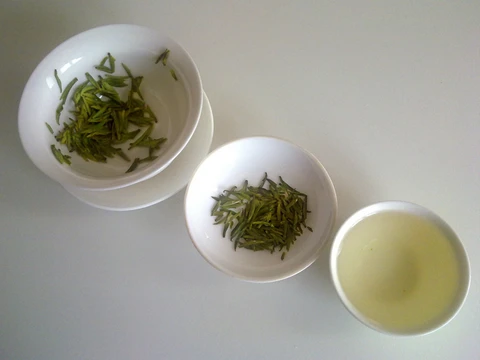
Kabusecha
Shade-grown Japanese tea leaf for premium green tea.
Kabusecha is a class of Japanese tea leaf harvested from plants that have been covered with a porous material for a period of 2–25 days during leaf production. The term kabuse means to cover or place on top, like a hat on a head. Kabuse tea is almost exclusively a first flush tea and the freshly picked leaf can be processed into any type of tea, including green, oolong, or black.
Quick Facts
- Tea origin
- Japan
- Tea names
- Covered tea
Facts from the source article.
Background
Kabusecha is one of the three most expensive Japanese green teas, alongside gyokuro and matcha. Its leaves are hand-plucked and grown under shade, though for a shorter period than gyokuro, which is why it is sometimes called a shade-grown sencha. The shading produces a distinctive "covered aroma" known as ooika, and the leaves are rich in theanine and other amino acids. Research shows that kabusecha’s essential oils differ significantly from those of standard sencha, containing high amounts of ionone series compounds. The kabuse method was developed to replicate the shading effect of the tanakake process used for tencha, the base for matcha. The term "kabuse tea" is used in marketing to indicate above-average quality. However, covering the plants is stressful for them and can lead to damage or disease if not done with careful maintenance.
More in Japanese Tea
Spotted an error? Know more?
Reader corrections go straight into our review queue. Suggest an edit · How this site is sourced