Mucc
Japanese visual kei rock band known for genre-switching.
Last updated
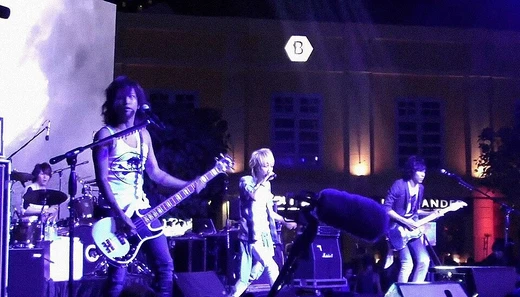
Mucc, a visual kei rock band from Japan, started in Ibaraki Prefecture in 1997. The group now features vocalist Tatsuro, guitarist Miya, and bassist Yukke. Their 2004 album Kuchiki no Tō made Kerrang!'s list of 13 essential Japanese rock and metal albums.
History
Mucc came together in 1997 when guitarist Miya, vocalist Tatsuro (who went by Tattoo at the time), bassist Hiro, and drummer Satochi—friends since primary school—decided to start a band. They played their first show on May 4 at a Shimamura Music store in Mito, Ibaraki. Satochi had only been a support musician, but he enjoyed the concert so much that he chose to join the group officially afterward. A common story says the band’s name comes from a character on the children’s show Hirake!
Ponkikki, but Miya actually picked it because it’s easy to remember and doesn’t sound musical. When he later found out that the English word “muck” means “filth,” he liked that extra meaning too.
The band also goes by the nickname “69,” since the numbers six and nine can be read as “mu” and “ku” in Japanese. They’ve leaned into this throughout their career, calling June 9 “Mucc Day” and once putting on a live broadcast that lasted 690 minutes. Their fans are known as .
At first, Mucc played covers of bands like The Blue Hearts, Glay, Malice Mizer, and The Mad Capsule Markets. In December 1997, they gave out their first demo tape, No!?. After finishing high school, they moved to Tokyo. On March 3, 1998, they handed out copies of a second demo, Aika, and on December 1, they distributed just 100 copies of a third, Tsubasa wo Kudasai.
In 1999, Hiro left on February 14, and Miya’s childhood friend Yukke took over on bass on February 22. That July, the band went on their first tour, handing out demo tapes of Aka at every stop. Their first official release, the EP Antique, came out on December 25. On June 8, 2000, Tattoo changed his stage name to Tatsuro.
Their debut album, Tsūzetsu, arrived on January 7, 2001, followed by the EP Aishū on December 25. In 2002, Mucc signed with Danger Crue and started their own sublabel, Shu, then released their second album, Hōmura Uta. That same year, they put on a concert called En, which brought together acts from different genres, and they’ve kept up the En events now and then ever since.
Musical style
Mucc has built a reputation for constantly shifting between musical styles. Since forming in 1997, the band has pursued rock with intellectual curiosity and bold planning, never letting genre boundaries hold them back.
This approach has earned them fans beyond the visual kei scene. Examples of their range include the punk track "Utagoe" (2006), the dance rock of "Fuzz" (2007), the EDM-infused "Arcadia" (2011), and "Ender Ender" (2014), which blends metalcore with electronica. Their melodies can also carry a melancholy feel reminiscent of folk and kayōkyoku songs.
Principal songwriter Miya enjoys bands that are always changing and playing many genres. When asked if this might push fans away, he has said on multiple occasions that they do not worry about it and simply do what they want. His songwriting process often begins with the beat. From there, he sketches out the basic chords and melody before considering the full arrangement.
Even though he plays guitar, Miya gives that instrument the least thought. He feels no special connection to it—it just happened to be the tool he chose to express his music. He also notes that Mucc shapes songs together as a band, so any idea he starts with ends up transformed by the time it is finished.
Lyricist Tatsuro writes words after the music is ready. He listens to a melody for inspiration, but also draws from everyday life—what he sees, feels, and experiences.
More in Japanese Hard Rock Musical Groups
Sources
Compiled from Wikipedia and the sources listed below. Text from Wikipedia is available under CC BY-SA 4.0; this entry is adapted from it.
- Wikipedia: Mucc (CC BY-SA 4.0).
Spotted an error? Know more?
Reader corrections go straight into our review queue. Suggest an edit · How this site is sourced