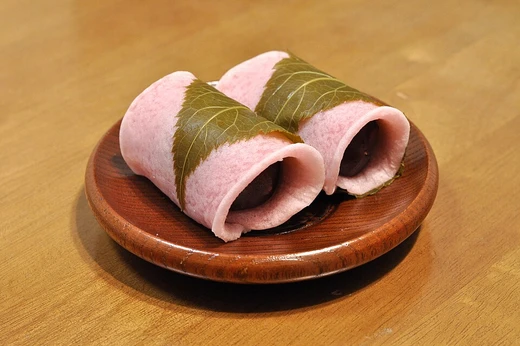
Anpan
A baked or fried sweet roll filled with bean paste.
Anpan is a Japanese sweet roll, most commonly filled with red bean paste. Its name combines an (sweet bean paste) and pan (bread). The roll can also be prepared with fillings such as white beans, green beans, sesame, or chestnuts.
Quick Facts
- Country
- Japan
- Region
- Ginza, Tokyo
- Creator
- Yasubei Kimura
- Course
- Dessert
- Main ingredients
- Red bean paste
Facts from the source article.
Did You Know?
- Unlike the steamed manjū that anpan is modelled on, anpan is baked or fried.
- Modern bakeries produce anpan with fillings such as chocolate, curry, custard, and pork chops.
- The picture book and anime series Anpanman is about a superhero whose head is made of anpan.
History
Anpan was created in 1875, during Japan’s Meiji era, a time when Western-style bakeries were first becoming popular in the country. Its inventor, Yasubei Kimura, had been a samurai but lost his position when the Imperial Japanese Army replaced the old feudal system and the samurai class was dissolved. This period of rapid change pushed many former samurai into unfamiliar trades, and baking was one of them. Kimura got the idea after watching a young man make bread in a district where many people in new occupations worked. He opened his own bakery, first called Bun'eidō, then moved to Ginza in 1874 and renamed it Kimuraya, which still operates today as Kimuraya Sohonten.
At the time, the only bread recipe known in Japan produced a salty, sour loaf that did not appeal to local tastes. Kimura solved this by developing a bread similar to manjū, using traditional sakadane liquid yeast to raise the dough. He filled the rolls with bean paste wagashi and sold them as snacks. Anpan caught on not just for its flavor, but because the Japanese public was eager for anything new and foreign. Kimura originally offered two versions: one topped with white sesame seeds and another with poppy seeds.
The treat gained royal approval after chamberlain Yamaoka Tesshū arranged for Kimura to prepare anpan for Emperor Meiji and Empress Shōken during a hanami cherry-blossom viewing. Worried about how the buns looked, Kimura decorated each one with a salt-pickled sakura blossom in the center. He presented them on April 4, 1875, and the emperor liked them so much that he began ordering anpan from Kimura regularly. This royal connection boosted the popularity of anpan and bread in general across Japan.
By the early 1900s, anpan were often thought to be made a day ahead, raising worries that stale rolls could harm children who ate them. One account from that period noted that about a quarter of schoolchildren skipped their lunchboxes in favor of anpan. Today, anpan are considered a classic part of Japanese bakery culture and are frequently named as one of the most recognizable examples of Western-influenced Japanese bread products.
More in Japanese Desserts and Sweets
Spotted an error? Know more?
Reader corrections go straight into our review queue. Suggest an edit · How this site is sourced