Ōita (city)
Capital of Ōita Prefecture on Kyushu, Japan.

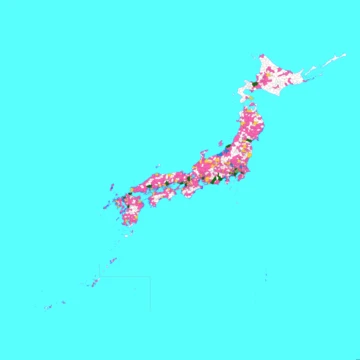
Ōita is the capital city of Ōita Prefecture, located on the island of Kyushu, Japan. The city sits in east-central Ōita Prefecture, facing Beppu Bay on the Seto Inland Sea. Its urban center lies on the west side of the mouth of the Ōita River, within the Ōita Plain—a region of deltas and alluvial plains formed by the Ōita and Ōno Rivers, surrounded by hills. The Takashima area falls within the Seto Inland Sea National Park. Ōita experiences a humid subtropical climate with warm summers and cool winters, averaging 15.6 °C annually and receiving about 1663 mm of rainfall, with September the wettest month.
Historically, the area was part of ancient Bungo Province and housed the Bungo Kokubun-ji and likely the provincial capital. During the Kamakura period, the Ōtomo clan ruled as shugo, making Funai their castle town. In the Sengoku period, the Ōtomo embraced Nanban culture, turning Funai into a Kirishitan stronghold. After their defeat by the Shimazu clan, the Tokugawa shogunate placed Funai under the Ogyū-Matsudaira clan as Funai Domain. The modern town of Ōita was established in 1889 and became a city in 1911, later gaining core city status in 1997. In 2005, the towns of Notsuharu and Saganoseki merged into Ōita.
Economically, an industrial zone developed along Beppu Gulf in the 1960s–1970s, featuring plants by Nippon Steel and Showa Denko. Toshiba and Canon later built inland facilities, making Ōita a major producer of electronics like LSIs and digital cameras. The downtown area near Ōita Station has declined as shopping malls have spread to the suburbs. Notable attractions include Resonac Dome Oita (home to Ōita Trinita), Takasaki-yama park (famous for wild Japanese macaques), and the adjacent Oita Marine Palace Aquarium. The Ōita Tanabata Festival is held annually in early August, featuring the Funai Pacchin parade of warrior floats.
- Climate
- Humid subtropical (Köppen Cfa)
- Average annual temperature
- 15.6 °C
Lore & Background
Ōita city lies in east-central Ōita Prefecture, facing Beppu Bay on the Seto Inland Sea. The Ōno River and Ōita River flow through the area, forming the Ōita Plain. The Takashima area is within the Seto Inland Sea National Park. The city has a humid subtropical climate with warm summers and cool winters, and an average annual temperature of 15.6 °C. Historically, the area was part of ancient Bungo Province and housed the Bungo Kokubun-ji and presumably the provincial capital. During the Kamakura period, the Ōtomo clan ruled from Funai, which became a center of Nanban culture and Christianity in the Sengoku period. After the Ōtomo were destroyed by the Shimazu clan, Funai became the seat of Funai Domain under the Ogyū-Matsudaira clan. In the 1960s–1970s, an industrial region formed along Beppu Gulf, with plants of Nippon Steel and Showa Denko. Toshiba and Canon later built plants inland, making Ōita a major production center for electronics like LSIs and digital cameras. The downtown area near Ōita Station has declined due to suburban shopping malls.
Reader's Guide
Ōita serves as the political, economic, and cultural capital of Ōita Prefecture. Its historical role as the seat of Funai Domain and earlier as a stronghold of the Ōtomo clan highlights its importance in Kyushu's feudal history. The city's modern transformation into an industrial and electronics manufacturing center during the late 20th century reflects Japan's postwar economic growth. The city's annual Ōita Tanabata Festival and the Beppu-Oita Mainichi Marathon are key cultural and sporting events. Its sister city relationships with Austin, Aveiro, Guangzhou, and Wuhan underscore its global connections. The city's universities, including Oita University and Ritsumeikan Asia Pacific University, contribute to education and research in the region.
Did You Know?
- The Ōita Tanabata Festival is held annually on the first weekend of August, featuring the Funai Pacchin parade of warrior floats.
- The luxury Aru Ressha train, designed by Eiji Mitooka, runs between Ōita and Hita to revive tourism and the local economy.
Frequently Asked Questions
What is Ōita (city)'s role or 'power set'?
The city serves as the administrative seat of its prefecture while also functioning as a modern industrial and electronics manufacturing hub. Its humid subtropical climate (Köppen Cfa) and 15.6 °C average annual temperature support year-round economic activity.
Why is Ōita (city) important to the canon?
During the Edo period, Ōita served as the center of the Funai Domain, giving it deep roots in regional governance. In the modern era its prominence as an electronics production center cements its economic significance on Kyushu.
More in Japanese Cities 1-23
Spotted an error? Know more?
This is a living reference — every entry is fact-audited, and reader corrections feed straight into our audit queue. Suggest an edit · See this site's audit record