Natori, Miyagi
Coastal city in Miyagi Prefecture, Japan.
Last updated
Where it is
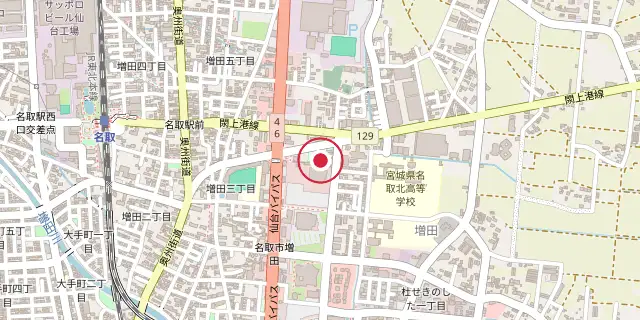
Coordinates: 38°10′19″N 140°53′31″E (38.1720, 140.8920) · Open in OpenStreetMap
Coordinates and connected clubs: the infobox of Wikipedia: Natori, Miyagi (CC BY-SA 4.0). Map: drawn by Codexery from OpenStreetMap tiles.
Natori is a city located in east-central Miyagi Prefecture, Japan, on the Pacific coast. It was formed in 1955 and elevated to city status in 1958. The city is known for its historical sites and was severely affected by the 2011 Tōhoku earthquake and tsunami.
History
The area of present-day Natori was part of ancient Mutsu Province and was controlled by the Date clan of Sendai Domain during the Edo period. In 1867 it became part of Rikuzen Province, later incorporated into Miyagi Prefecture. The modern municipality system established Natori District on April 1, 1889, with six villages.
Through mergers and elevations, the town of Natori was created on April 1, 1955, and became a city on October 1, 1958. The 2011 Tōhoku earthquake and tsunami caused severe damage, particularly along the coast and at Sendai Airport. In the Yuriage area, many residents had about 30 minutes to evacuate, but large portions were wiped out and casualties were initially difficult to determine.
Geography
Natori lies in east-central Miyagi Prefecture, bordered by the Pacific Ocean to the east. It occupies the fertile plains of the Natori River and Masuda River deltas, though the Natori River itself does not run within the city limits. The city has a humid climate with mild summers and cold winters, averaging 12.5°C annually and 1124.3 mm of rainfall per year.
Public facilities
Natori houses the Miyagi Prefectural Psychiatric Medical Center and the Prefectural Cancer Center. Its educational institutions include Shokei Gakuin University, eleven public elementary schools, five public junior high schools, and two public high schools operated by the prefecture.
The Natori City Library holds about 140,000 books. The Cultural Meeting Center, designed by Fumihiko Maki, includes a concert hall, exhibition gallery, and meeting rooms. The city also has a Media Resource Centre, community gym, Miyagi Cycling Centre, and public beaches and swimming pools.
Local attractions
The Natori Summer Festival in early August features fireworks and traditional festival foods. The Sapporo Beer Festival offers factory tours and free beer tasting. The Donto-sai Festival, held in winter, involves participants in white clothing walking silently through town, receiving sake, and ending with a purification ritual and bonfire at Takekoma Shrine.
Natori Sports Park, built by Tohoku Electric, hosts sports events and community markets. The Nakazawa Family Estate, a National Treasure, is a late-18th-century thatched-roof ancestral home of the Nakazawa bushi clan. The Raijinyama Kofun, a 4th- to 5th-century keyhole tumulus in an archaeological park, is a National Historic Site, along with the Iinozaka Kofun Cluster.
Sites related to Date Masamune include 300-year-old pine trees along the Natori River dike, decorated with paper lanterns. Local fresh fish markets operate on Sundays in the port district. Natori's omiyage specialties include kamaboko (fish paste boiled in bamboo grass) and beer-tella, a castella sponge cake made with brewer's yeast at the Sapporo Beer Factory.
Did You Know?
- 6.4% of Natori's population works in primary agricultural and fishing industries, while 26.1% works in secondary processing industries.
- The city is part of Miyagi 3rd district of the lower house of the Diet of Japan.
More in Japanese Cities
Sources
Compiled from Wikipedia and the sources listed below. Text from Wikipedia is available under CC BY-SA 4.0; this entry is adapted from it.
- Wikipedia: Natori, Miyagi (CC BY-SA 4.0).
Spotted an error? Know more?
Reader corrections go straight into our review queue. Suggest an edit · How this site is sourced