Corfu incident
1923 crisis: Italy bombarded and occupied Corfu after a general's murder.
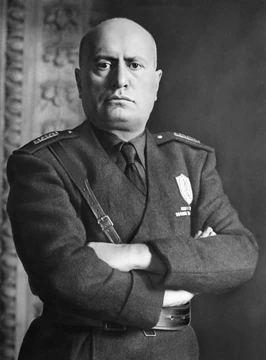
The Corfu incident was a 1923 diplomatic and military crisis between Greece and Italy, triggered by the murder of Italian general Enrico Tellini and two other officers on Greek territory. In response, Benito Mussolini issued an ultimatum and, when it was not fully accepted, ordered the bombardment and occupation of Corfu. The crisis demonstrated the weakness of the League of Nations when confronted by a major power, as Mussolini defied the League and the matter was resolved by the Conference of Ambassadors in terms favoring Italy.
Quick Facts
- Conflict
- Corfu incident of 1923
- Part of
- the interwar period
- Date
- August 29 – September 27, 1923
- Location
- Corfu, Kingdom of Greece
- Result
- Agreement between Italy and Greece under the auspices of the League of Nations
Facts from the source article.
Did You Know?
- Tellini had several Albanians, including notables, executed during his service in Vlorë just before the Vlorë War.
- The Romanian consul in Ioannina attributed the murder of Tellini to Albanian bandits.
- Italian newspapers and the Albanian government stated the attack was carried out by Greeks.
Background
During the Italo-Ottoman war of 1911–12, Italy occupied the Dodecanese islands, whose population was largely Greek. The Venizelos–Tittoni agreement of 1919 promised Italy would cede most of the Dodecanese to Greece in exchange for Greek recognition of Italian claims in Anatolia, but the Turkish National Movement's victory in the Turkish War of Independence ended plans for partitioning Asia Minor by 1922. Mussolini argued that Italy's forced withdrawal from Turkey voided its obligation to cede the Dodecanese, and in summer 1923 he reinforced the Italian garrison there as part of plans to formally annex the islands, prompting Greek protests. The Treaty of Lausanne in July 1923 saw all Allied powers abandon claims to Turkey, damaging Mussolini's prestige as he had promised to obtain territories Italy fought for in World War I, including part of Anatolia.
Bombardment and occupation of Corfu
On August 31, 1923, an Italian Navy squadron bombarded the Greek island of Corfu and landed between 5,000 and 10,000 troops, with aeroplanes aiding the attack. Fire concentrated on the Old Fortress, long demilitarized and sheltering refugees from Asia Minor, and the Cities Police school at the New Fortress, also a refugee shelter. The bombardment lasted 15 to 30 minutes, killing 16 to 20 civilians and wounding 30 to 32, with no soldiers among the victims; most killed were children. The Commissioner of the Save the Children Fund described the bombardment as inhuman and revolting. Corfu's prefect Petros Evripaios and Greek officers were arrested and detained aboard an Italian warship, while the Greek garrison of 150 men retired to the island's interior. Italian officers feared British citizens might have been hurt but found no British subjects among the victims, though the residence of the British officer in charge of the police training school was looted. Mussolini stated that Corfu had been Venetian for four hundred years before becoming part of Greece in 1864, suggesting he viewed it as rightfully Italian.
Reactions after the bombardment and occupation of Corfu
Greece proclaimed martial law, ordered its fleet to retire to the Gulf of Volos, and saw the drachma plummet in value. A solemn memorial service was held at the Athens Cathedral, with church bells tolling continuously, followed by anti-Italian demonstrations. All places of amusement closed in mourning. The Greek government suspended the newspaper Eleftheros Typos for one day after it characterized Italians as the fugitives of Caporetto, and dismissed the censor. Greece provided 30 men to guard the Italian Legation in Athens. Italy closed the Straits of Otranto to Greek ships, suspended Greek shipping companies, and ordered Italian ships to boycott Greece, though Greek ports remained open to Italian vessels. Greek steamers were detained in Italian ports and one was seized by a submarine, but on September 2 the Italian Ministry of Marine ordered their release. Anti-Greek demonstrations occurred in Italy, and the government planned to call up two classes of reservists. Albania reinforced the Greco-Albanian frontier. Yugoslavia, linked to Greece by royal marriage and a mutual assistance agreement, ordered reservists to return. Queen Marie of Romania rushed back from Paris. Elements in Turkey advised Mustafa Kemal to invade Western Thrace.
Resolution
On September 1, Greece appealed to the League of Nations, but Italian representative Antonio Salandra told the Council he had no permission to discuss the crisis. Mussolini refused to cooperate with the League and demanded the Conference of Ambassadors handle the matter. On September 2, Italy threatened to leave the League rather than allow it to interfere. Greece stated willingness to pay any reparations the ambassadors deemed necessary. On September 3, Salandra requested a delay while awaiting instructions. On September 5, despite Mussolini's threats, the Council held a public meeting where Salandra presented Italy's position and Nikolaos Politis responded for Greece. The Conference of Ambassadors had prepared proposals discussed by the Council on September 6, and the minutes were forwarded to the Conference. Britain favored League involvement, but France opposed it, fearing a precedent for League involvement in its own occupation of the Ruhr. Given the threat of Italian withdrawal and lack of French support, the matter went to the Conference of Ambassadors, preserving Italy's prestige and sparing France from linkage. On September 8, the Conference announced terms: the Greek fleet would render a 21-gun salute at Piraeus to the Italian fleet, with French and British warships included; a funeral service attended by the Greek Cabinet; military honors at Preveza; Greece would deposit 50,000,000 lire in a Swiss bank as a guarantee; and the highest Greek military authority must apologize to the British, French, and Italian representatives at Athens.
More in Italian Fascism
Spotted an error? Know more?
Reader corrections go straight into our review queue. Suggest an edit · How this site is sourced