Frequently Asked Questions
The most-asked questions about islamic mythology.
What exactly does the term 'Islamic mythology' refer to?
It is an umbrella label for the sacred narratives, angelic lore, prophetic stories, and folk traditions drawn from the Quran, hadith, tafsir (exegesis), and centuries of oral culture. Unlike Greek or Norse mythology, there is no single canonical 'myth' text; the material is spread across religious scholarship and popular storytelling.
Who are the central figures a newcomer should know?
The cast includes the 25 prophets named in the Quran (Adam, Noah, Abraham, Moses, Joseph, Jesus, Muhammad), the archangels (Jibril, Mikael, Israfil, Izrail), the jinn led by Iblis, and various companions and antagonists woven through the narratives.
What are jinn, and how do they differ from angels or 'demons'?
Jinn are beings created from smokeless fire who possess free will, so they can be righteous or wicked, unlike angels who only obey. They are said to inhabit the unseen world, intermingle with human society, and form a major source of folk storytelling across the Muslim world.
Who is Iblis and what is his role in the tradition?
Iblis is a jinn who refused God's command to bow before Adam and was cast out, becoming the eternal tempter and adversary. His narrative parallels the fall of Satan in other traditions, though his origin as a jinn rather than a fallen angel is a key distinction.
What are the four archangels and their respective roles?
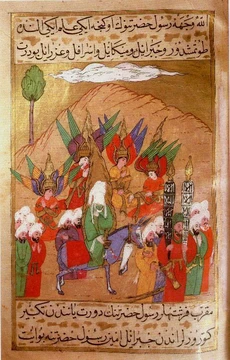
Jibril (Gabriel) delivers revelation, Mikael oversees sustenance and rain, Israfil will sound the Trumpet at the Hour, and Izrail (Malak al-Maut) is the Angel of Death. They appear throughout Quranic and hadith literature as intermediaries between the divine and human realms.
What does Islamic tradition describe about the afterlife?
The Quran outlines Barzakh (an intermediate state), a bodily resurrection, a Day of Judgment, and eternal dwellings in Jannah (Paradise) or Jahannam (Hell). Hadith and tafsir elaborate on the seven levels of each, the Bridge (Sirat), and the trials of the grave.
Which narrative arcs are the most widely retold?
The expulsion of Adam and Eve, Noah's flood, Abraham's near-sacrifice of his son, Joseph's imprisonment and rise to power, and Moses' confrontation with Pharaoh are the most frequently retold. The Isra and Mi'raj (Muhammad's night journey to the heavens) is the signature event of Islamic eschatological lore.
How does Islamic mythology differ from polytheistic mythologies like Greek or Norse?
It is monotheistic and theocentric, with no pantheon of competing gods; all supernatural actors serve or rebel against one Creator. The narratives are also inseparable from law, ethics, and worship rather than functioning purely as entertainment or cosmogony.
Where should a newcomer start reading?
The Quran itself—especially Surahs 2, 18, 19, 21, 27, 34, 37, and 78—provides the core stories in concise form. For expanded lore, classical tafsir such as Ibn Kathir or the hadith collections of Bukhari and Muslim add layers, while modern retellings make the material more accessible.
Is there a cyclical 'mythological calendar' or repeating ages?
Not in the Greek sense of recurring golden and iron ages; Islamic eschatology is linear, moving from creation through prophetic history to a single, final Day of Judgment. Recurring motifs like temptation, patience, and divine mercy appear across stories, but there is no cyclical cosmogony.