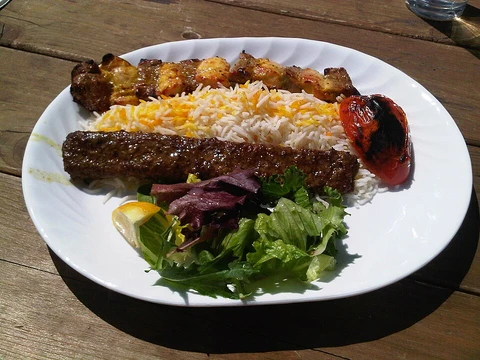
Kabab koobideh
Iranian ground lamb kebab with onion, salt, and pepper.
Kabāb koobideh is an Iranian kabāb made from ground lamb, often mixed with salt, ground black pepper and grated onions. It is a widely recognized dish in Iranian cuisine, known for its distinctive preparation method.
Quick Facts
- Place of origin
- Iran
- Region
- Golpayegan, Tehran and Bonab
- National cuisine
- Iranian cuisine
- Creator
- Iranians
- Main ingredients
- Ground lamb or beef
- Serving size
- 100 g
Facts from the source article.
Etymology
The name koobideh comes from the Persian word koobidan, meaning "to pound," which describes how the meat was traditionally prepared. In some places, it is also called koufteh kabāb, from the older Persian root kouftan, meaning "to slam" or "to hit." Cooks used to place the meat on a flat stone or log and beat it with a wooden mallet. The meat is then cooked on a seekh, the Persian term for "skewer." Koobideh is based on the Indian seekh kebab, though preparation and flavor can vary by region.
Preparation and cooking
Koobideh kebab is an Iranian dish made from ground meat. There are two main versions: one is soft and tender, typically eaten with flatbreads like sangak or lavash, and the other is firmer but juicier, served with rice. Both use the same ingredients; the difference lies in how the meat is handled. For an authentic koobideh, the meat comes from fattier, cheaper cuts of young male lamb, such as the lower rib, breast, or flank. For a more refined kebab, cuts like rack, loin, or shoulder can be used. The meat is ground twice with medium-grade plates, and the fat content should be between 20 and 35 percent, though professional cooks sometimes go up to 40 percent. Tail fat is rarely used because of its strong flavor; instead, fat from the flank or rib section is preferred for its milder taste.
Grated onion is the other key ingredient. The onions are finely grated, salted, and left to rest for a few hours to reduce their sharpness. Then, up to 65 percent of the onion's weight in moisture is squeezed out. Onion makes up 15 to 18 percent of the total mixture, with about 180 to 220 grams of onion per kilogram of meat. The only essential ingredients are meat, white or yellow onion, salt, and black pepper. Adding beef, veal, old or female mutton, chicken, eggs, baking soda, bread crumbs, flour, or other spices is considered a departure from the traditional recipe.
Kneading is critical for texture. For the soft version, the meat is kneaded at higher temperatures, up to 50 degrees Celsius, which allows the fat to melt and blend into the muscle, creating a homogeneous, tender kebab that melts in the mouth. This method is less common now due to the risk of bacteria from warm processing. For the firmer version, the meat is kneaded while semi-frozen, keeping the fat and meat separate. During grilling, the fat melts in pockets, making the kebab juicier.
More in Iranian Cuisine
Spotted an error? Know more?
Reader corrections go straight into our review queue. Suggest an edit · How this site is sourced