Ralph Earnhardt
Patriarch of the Earnhardt racing family and prolific winner.
Ralph Lee Earnhardt, born February 23, 1928, was an American stock car racer and the patriarch of the Earnhardt racing family. He is considered one of NASCAR's all-time winningest drivers with over 350 NASCAR-sanctioned victories. He was the father of seven-time NASCAR Cup Series champion Dale Earnhardt and grandfather of Kerry Earnhardt, Kelley Earnhardt Miller, and Dale Earnhardt Jr. A skilled craftsman, he built cars and engines for competitors and served as a teammate and mentor to future NASCAR Hall of Famer Bobby Isaac. Earnhardt died on September 26, 1973, at age 45.
Quick Facts
- Birth name
- Ralph Lee Earnhardt
- Born
- 23 February 1928
- Birthplace
- Kannapolis, North Carolina, U.S.
- Died
- 26 September 1973
- Achievements
- 1956 NASCAR Late Model Sportsman Division Champion; 1959, 1960 NASCAR Limited Sportsman Division Champion
- Total cup races
- 51
- Years in cup
- 6
- First cup race
- 1956 Buddy Shuman 250 (Hickory)
Facts from the source article.
Did You Know?
- Earnhardt was the first car builder/driver to understand and use tire stagger, keeping a fleet of five race cars.
- He won the Hickory track championship five times, but was banned from competing there because his constant winning hurt attendance.
- In 1972, Earnhardt raced his son Dale at Metrolina Speedway in a combined semi-mod and sportsman race.
Racing career
Ralph Earnhardt first got behind the wheel in 1949 after a local Kannapolis boy asked him to help build a racing engine. When the engine was finished, Earnhardt jumped in the 1934 Ford coupe and took off. The car's owner offered him a chance to drive it, and in his first time on a track, he placed third in the heat race, won the consolation, and finished fourth in the main event. By 1953, racing was his full-time job. Early on, mechanic Red Vogt served as a mentor, helping Earnhardt secure a solid engine and offering advice. In 1955, he finished second in the NASCAR Sportsman National Standings to Billy Myers. The following year, he claimed the Sportsman National championship, winning 34 of his 76 starts. Earnhardt made his NASCAR Grand National debut in November 1956 at Hickory, filling in for Fireball Roberts, who was racing at Willow Springs that same day. He won the pole as the fastest qualifier but spent most of the race behind Speedy Thompson. On the final lap, the flagman mistakenly showed Earnhardt the white flag as the leader, then corrected the error after a scorer's note. The crowd, thinking their popular local driver had been cheated out of a win, erupted into a near-riot, throwing soda bottles onto the track. Earnhardt calmed things down by taking the microphone and saying he was satisfied with the scoring explanation. His strong showing earned him an offer from the Holman-Moody Ford factory team for the 1957 Grand National circuit, but he turned it down, reportedly because of the travel, time away from family, and the good money he was making as a Sportsman driver. In mid-1957, he joined Lee Petty Engineering, replacing Tiny Lund, and made eight Grand National starts, with a best finish of seventh at the Charlotte Fairgrounds. He ended the 1958 season second in the National Sportsman Championship standings behind Ned Jarrett.
Death
Earnhardt was hospitalized in early 1973 with heart problems. He had come home and was doing better, even going out to the race shop. He died from a second heart attack on September 26, 1973, at the age of 45 in the kitchen of his house. His son Dale Earnhardt later said his father had just paid off the house and had no bills on his racing equipment, and was planning to take it easy, but then had a heart attack and was gone.
Legacy
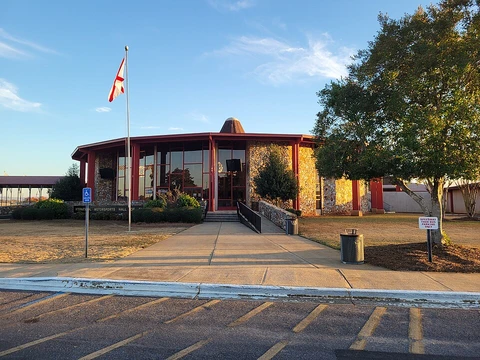
Ralph Earnhardt’s legacy was recognized multiple times over the decades. He entered the National Motorsports Press Association’s Hall of Fame in Darlington, South Carolina, in 1989. Eight years later, he was enshrined in the International Motorsports Hall of Fame in Talladega, Alabama. In 1998, NASCAR named him one of its 50 Greatest Drivers. The Oceanside Rotary Club of Daytona Beach Stock Car Racing Hall of Fame inducted him in 2004, followed by the National Dirt Late Model Hall of Fame in 2007. Most recently, in 2023, he was selected as one of NASCAR’s 75 Greatest Drivers.
More in International Motorsports Hall of Fame Inductees
Spotted an error? Know more?
Reader corrections go straight into our review queue. Suggest an edit · How this site is sourced