Leprosy
A curable neglected tropical disease with ancient roots and persistent stigma.

Leprosy, also called Hansen's disease (HD), is a persistent infection caused by either *Mycobacterium leprae* or *Mycobacterium lepromatosis*. These bacteria damage the nerves, respiratory tract, skin, and eyes. Nerve damage can destroy the ability to feel pain (nociception), leading to unnoticed injuries or infections that may cause parts of the hands, feet, or other extremities to be lost. People may also develop muscle weakness and vision loss. Symptoms can appear within a year of infection or take 20 years or more to show up.
The disease spreads between people, but only through prolonged, close contact. It has low pathogenicity: 95% of people exposed to *M. leprae* never develop leprosy. Transmission likely happens via coughs or contact with nasal fluids from an infected person. Genetics and a person’s baseline immune function affect susceptibility. Leprosy is not passed to a fetus during pregnancy or through sexual genital contact. There are two main forms: paucibacillary (five or fewer numb, pale skin patches) and multibacillary (more than five patches). Diagnosis is confirmed by finding acid-fast bacilli in a skin biopsy.
Leprosy is curable with multidrug therapy. Paucibacillary cases are treated with dapsone, rifampicin, and clofazimine for six months; multibacillary cases get the same drugs for 12 months. Other antibiotics may also be used. The World Health Organization provides these treatments free of charge.
Leprosy is not highly contagious. People with the disease can live with their families, attend school, and work. In the 1980s, there were 5.2 million cases worldwide; by 2020, that number had dropped to under 200,000. Most new cases occur in 14 countries, with India accounting for more than half. Between 1994 and 2014, 16 million people worldwide were cured. Separating people in leper colonies is not supported by evidence, but as of the late 2000s, it still happened in parts of India, China, Japan, Africa, and Thailand.
Leprosy has affected humans for millennia. Its name comes from the Greek *lépra* (from *lepís*, meaning “scale”), while “Hansen’s disease” honors Norwegian physician Gerhard Armauer Hansen. The disease has long carried social stigma, which still discourages self-reporting and early treatment. It is classified as a neglected tropical disease. World Leprosy Day was established in 1954 to raise awareness. The study of leprosy and its treatment is called leprology.
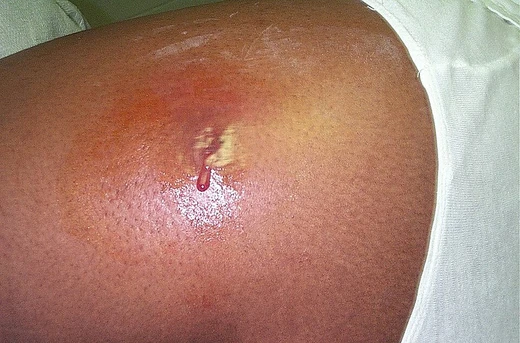
**Signs and symptoms** Common symptoms include runny nose, dry scalp, vision problems, skin lesions, muscle weakness, reddish skin, smooth and shiny thickening of facial skin, ears, and hands, loss of sensation in fingers and toes, thickened peripheral nerves, a flattened nose from cartilage destruction, and changes in speech. Testicular atrophy and erectile dysfunction may also occur. The average incubation period is five years, but symptoms can appear within one year or up to 20 years after infection. The first sign is often pale or pink skin patches that are insensitive to temperature or pain. These patches may be accompanied or preceded by numbness or tenderness in the hands or feet. Secondary infections can cause tissue loss, shortening and deforming fingers and toes as cartilage is absorbed. About 30% of those affected experience nerve damage, which is reversible if treated early but becomes permanent if treatment is delayed by months. Nerve damage can lead to paralysis, sensation loss, and further infections, ulcers, and joint deformities.
**Cause** *Mycobacterium leprae* and *M. lepromatosis* are the bacteria that cause leprosy. *M. lepromatosis* was identified in 2008 from a fatal case of diffuse lepromatous leprosy and is clinically indistinguishable from *M. leprae*. *M. leprae* is an aerobic, rod-shaped, acid-fast bacterium with a waxy cell envelope. Both are obligate intracellular pathogens that cannot grow outside host tissues but can be cultured in research animals like mice and armadillos. Naturally occurring infections occur in nonhuman primates (African chimpanzees, sooty mangabeys, cynomolgus macaques), armadillos, and red squirrels. Multilocus sequence typing suggests armadillo strains originated from humans a few hundred years ago, likely from early European explorers. This transmission was sustained in armadillos and can pass back to humans, making leprosy a zoonotic disease. Red squirrels (*Sciurus vulgaris*) also carry the bacteria.
- caused_by
- Mycobacterium leprae or Mycobacterium lepromatosis
- transmission
- Close contact, likely through cough or nasal fluid; not sexually transmitted or spread during pregnancy
- incubation_period
- Average 5 years; symptoms may begin within 1 year or take 20 years or more
- global_cases_1980s
- 5.2 million
- cure_rate_1994_to_2014
- 16 million people cured worldwide
- treatment
- Multidrug therapy (dapsone, rifampicin, clofazimine) for 6 or 12 months, provided free by WHO
Lore & Background
Leprosy, also called Hansen’s disease, is a chronic infection caused by the bacteria *Mycobacterium leprae* or *Mycobacterium lepromatosis*. The illness primarily damages nerves, the respiratory tract, skin, and eyes. Nerve damage can lead to a loss of the ability to feel pain, which may result in unnoticed injuries or infections that cause the loss of parts of the fingers, toes, or other extremities. Muscle weakness and vision loss are also possible. Symptoms can appear within a year of infection or take twenty years or more to develop. The disease has two main forms: paucibacillary, with five or fewer numb, poorly pigmented skin patches, and multibacillary, with more than five patches. Diagnosis is confirmed by detecting acid-fast bacteria in a skin biopsy. Leprosy is spread through close, extensive contact, likely via coughs or nasal fluids from an infected person. However, it has low pathogenicity, and 95% of those exposed do not develop the disease. Genetic factors and baseline immune function influence susceptibility. It is not transmitted during pregnancy or through sexual contact. Treatment involves a multidrug regimen, typically dapsone, rifampicin, and clofazimine, for six to twelve months depending on the type. The World Health Organization provides these medications free of charge. Historically, leprosy has carried a strong social stigma, which continues to hinder early reporting and treatment. It is classified as a neglected tropical disease.
Reader's Guide
Leprosy is significant as a long-standing human disease that is now curable with multidrug therapy, yet it continues to carry a heavy social stigma that hinders self-reporting and early treatment. The disease is classified as a neglected tropical disease. Its transmission requires extensive contact, and 95% of exposed individuals do not develop the disease. The discovery that armadillos can transmit leprosy to humans makes it a zoonotic disease. The disease's legacy includes its role in medieval Europe, possibly linked to the red squirrel fur trade, and its ongoing impact in poverty-stricken regions.
Did You Know?
- Leprosy is not highly contagious; 95% of people exposed to M. leprae do not develop the disease.
- Armadillos can transmit leprosy to humans, making it a zoonotic disease.
- Treatment for leprosy is provided free of charge by the World Health Organization.
More in Infectious Diseases 1-24
Spotted an error? Know more?
This is a living reference — every entry is fact-audited, and reader corrections feed straight into our audit queue. Suggest an edit · See this site's audit record