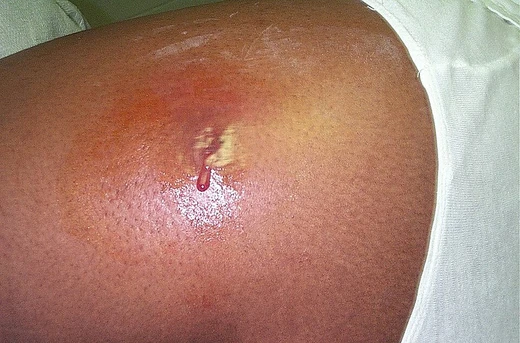
Herpes
A lifelong viral infection with periodic symptoms and no cure.

Herpes simplex, commonly called herpes, is a viral infection caused by the herpes simplex virus. The infection is classified by the part of the body it affects, with oral herpes (causing cold sores or fever blisters on the face or mouth, or a sore throat) and genital herpes (affecting the genitalia, sometimes with minimal symptoms or with blisters that turn into small ulcers and heal in two to four weeks) being the two main types. Before blisters appear, tingling or shooting pains may occur. The condition cycles between active episodes and symptom-free periods; the first episode is often more severe, possibly involving fever, muscle pains, swollen lymph nodes, and headaches, and over time, episodes become less frequent and less severe.
Other forms include herpetic whitlow (on the fingers or thumb), herpes simplex keratitis (in the eye), herpesviral encephalitis (in the brain), and neonatal herpes (affecting any part of a newborn’s body). Two virus types exist: HSV-1, which more often causes oral infections, and HSV-2, which more often causes genital infections. Transmission occurs through direct contact with body fluids or lesions of an infected person, and it can happen even when no symptoms are present. Genital herpes is a sexually transmitted infection and can be passed to an infant during childbirth. After infection, the viruses travel along sensory nerves to nerve cell bodies, where they remain for life. Recurrence may be triggered by decreased immune function, stress, or sunlight exposure. Diagnosis is usually based on symptoms; swabs from active lesions can be tested via viral culture or PCR for viral DNA, while blood tests for IgG antibodies confirm past exposure but can give false negatives during the seroconversion window weeks after a new infection.
The most effective way to avoid genital infection is to avoid vaginal, oral, manual, and anal sex. Condom use reduces risk, and daily antiviral medication taken by an infected person can also lower transmission. No vaccine exists, and there is no cure once infected. Paracetamol (acetaminophen) and topical lidocaine can help with symptoms, while antiviral drugs like aciclovir or valaciclovir can reduce the severity of active episodes. Worldwide, 60% to 95% of adults have either HSV-1 or HSV-2. HSV-1 is usually acquired in childhood, and since there is no cure, infection rates increase with age. HSV-1 prevalence is 70% to 80% in low socioeconomic status populations and 40% to 60% in higher socioeconomic groups. As of 2003, an estimated 536 million people (16% of the global population) were infected with HSV-2, with higher rates among women and those in developing countries. Most people with HSV-2 do not know they are infected.
The name comes from Ancient Greek *herpēs*, meaning 'to creep,' referring to spreading blisters, not to latency. HSV infection can cause several distinct disorders, including orofacial herpes, genital herpes, herpetic whitlow, herpes keratitis (eye damage), and herpes encephalitis (brain damage). People with immature or suppressed immune systems—such as newborns, transplant recipients, or those with AIDS—are prone to severe complications. HSV infection has also been linked to cognitive deficits in bipolar disorder and Alzheimer’s disease, though this often depends on the person’s genetics. The immune system never removes HSV; after a primary infection, the virus enters nerves at the site, migrates to the neuron’s cell body, and becomes latent in the ganglion. The body produces antibodies to the specific HSV type, which can reduce the odds of later infection with that type at a different site. For HSV-1-infected individuals, seroconversion after an oral infection helps prevent additional HSV-1 infections like whitlow, genital herpes, or eye herpes. Prior HSV-1 seroconversion seems to reduce symptoms of a later HSV-2 infection, but HSV-2 can still be contracted. Many people with HSV-2 have no physical symptoms (asymptomatic or subclinical herpes), though infection can be fatal.
Neonatal herpes simplex, a rare but serious condition in infants, is usually caused by mother-to-newborn transmission of HSV-1 or -2. During immunodeficiency, herpes simplex can cause unusual skin lesions, including clean linear erosions in skin creases that look like knife cuts. Herpetic sycosis is a recurrent or initial infection affecting hair follicles. Eczema herpeticum occurs in patients with chronic atopic dermatitis, where the virus spreads throughout eczematous areas. Herpetic keratoconjunctivitis, a primary infection, typically presents as swelling of the conjunctiva and eyelids (blepharoconjunctivitis), accompanied by small white spots.
- caused_by
- Herpes simplex virus (HSV-1 and HSV-2)
- types
- Oral herpes, genital herpes, herpetic whitlow, herpes simplex keratitis, herpesviral encephalitis, neonatal herpes
- transmission
- Direct contact with body fluids or lesions; can occur when symptoms are not present
- global_prevalence
- 60% to 95% of adults infected with either HSV-1 or HSV-2
- known_for
- Cycles of active disease and asymptomatic periods; lifelong infection with no cure
Lore & Background
Herpes infections are categorized by the area of the body infected. Oral herpes involves the face or mouth, often resulting in small blisters called cold sores. Genital herpes involves the genitalia and may form blisters that break into small ulcers, typically healing over two to four weeks. The first episode is often more severe and may include fever, muscle pains, swollen lymph nodes, and headaches. Over time, episodes decrease in frequency and severity. Other forms include herpetic whitlow (fingers or thumb), herpes simplex keratitis (eye), herpesviral encephalitis (brain), and neonatal herpes (newborn). There are two virus types: HSV-1 more commonly causes oral infections, while HSV-2 more commonly causes genital infections. After infection, the viruses travel along sensory nerves to nerve cell bodies, where they remain lifelong. Recurrence triggers may include decreased immune function, stress, and sunlight exposure. Diagnosis is usually based on symptoms and can be confirmed by PCR testing or viral culture; blood testing for IgG antibodies can confirm past exposure but may yield false negatives during the seroconversion window. Worldwide, HSV-1 is usually acquired during childhood. Rates of HSV-1 are between 70% and 80% in populations of low socioeconomic status and 40% to 60% in populations of improved socioeconomic status. Most people with HSV-2 do not realize they are infected.
Reader's Guide
Herpes simplex is significant as one of the most common viral infections in humans, affecting the majority of the global adult population. Its importance lies in its lifelong persistence, periodic symptomatic episodes, and potential for severe complications in immunocompromised individuals, newborns, and those with certain genetic factors. The infection is transmitted through direct contact with body fluids or lesions, including asymptomatic shedding, which makes prevention challenging. Genital herpes is classified as a sexually transmitted infection and can be spread to an infant during childbirth. There is no available vaccine and no cure; treatment focuses on symptom management with antiviral medications such as aciclovir or valaciclovir, which can lessen the severity of episodes, and supportive measures like paracetamol and topical lidocaine. The most effective method of avoiding genital infections is by avoiding vaginal, oral, manual, and anal sex, while condom use decreases risk. Daily antiviral medication taken by an infected person can also reduce spread. The condition has been associated with cognitive deficits in bipolar disorder and Alzheimer's disease, though this is often dependent on the genetics of the infected person. The name derives from Ancient Greek meaning 'to creep', referring to spreading blisters.
Did You Know?
- Herpes cycles between periods of active disease followed by periods without symptoms.
- Transmission may still occur when symptoms are not present.
- Worldwide rates of either HSV-1 or HSV-2 are between 60% and 95% in adults.
- There is no available vaccine and once infected, there is no cure.
More in Infectious Diseases 1-24
Spotted an error? Know more?
This is a living reference — every entry is fact-audited, and reader corrections feed straight into our audit queue. Suggest an edit · See this site's audit record