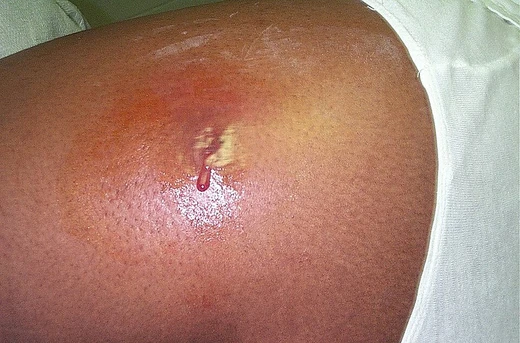
Fungal infection
Fungal infections affect over a billion people yearly worldwide.

Fungal infection, or mycosis, is an illness triggered by fungi. These infections are generally grouped by where they occur on the body: superficial (on the skin), subcutaneous (under the skin), or systemic (deep inside the body, affecting internal organs). Superficial infections include common ringworm of the skin, groin, hands, feet, and beard, as well as yeast infections like pityriasis versicolor. Subcutaneous types, such as eumycetoma and chromoblastomycosis, typically involve tissues in and just below the skin. Systemic infections are more serious and include cryptococcosis, histoplasmosis, pneumocystis pneumonia, aspergillosis, and mucormycosis. Symptoms vary widely. A rash is common with superficial infections. A lump and skin changes may appear with infections inside or under the skin. Deeper or systemic infections can cause pneumonia-like symptoms or meningitis.
Fungi are widespread in the environment, but only some cause disease. Infection happens when spores are inhaled, touch the skin, or enter the body through a cut, wound, or injection. People with weakened immune systems are more at risk—this includes those with HIV/AIDS or those taking medications like steroids or cancer treatments. Fungi that cause infections include yeasts, molds, and fungi that can switch between both forms. The yeast *Candida albicans* can live harmlessly in people but can cause mild superficial candidiasis (like oral thrush or vaginal yeast infections) in healthy individuals, and severe systemic candidiasis in those who cannot fight infections.
Diagnosis is usually based on symptoms, microscopy, and culture; sometimes a biopsy or medical imaging is needed. Some superficial skin infections can look like eczema or lichen planus. Treatment involves antifungal medicines—creams, pills, or injections—depending on the infection and its extent. Some cases require surgery to remove infected tissue.
Fungal infections occur worldwide and are common, affecting over a billion people each year. In 2020, an estimated 1.7 million deaths were linked to fungal disease. Several types, including sporotrichosis, chromoblastomycosis, and mycetoma, are considered neglected. Many fungal infections also occur in other animals, and some can spread from animals to people.
**Classification** Mycoses are traditionally divided into superficial, subcutaneous, or systemic categories, where systemic infections are deep, widespread, and involve internal organs. They can affect the nails, vagina, skin, and mouth. Some types—like blastomycosis, cryptococcosis, coccidioidomycosis, and histoplasmosis—affect people who live in or visit certain regions. Others—such as aspergillosis, pneumocystis pneumonia, candidiasis, mucormycosis, and talaromycosis—tend to affect people with weakened immune systems. Mycoses do not always fit neatly into these three divisions. Some superficial infections can become systemic in immunocompromised people. Some subcutaneous infections can invade deeper structures and cause systemic disease. *Candida albicans* can live in people without symptoms and cause both mild candidiasis in healthy people and severe invasive candidiasis in those who cannot fight infection.
**ICD-11 codes** ICD-11 codes include:
**Superficial mycoses** Superficial mycoses include candidiasis in healthy people, common tinea of the skin (such as tinea of the body, groin, hands, feet, and beard), and malassezia infections like pityriasis versicolor.
**Subcutaneous** Subcutaneous fungal infections include sporotrichosis, chromoblastomycosis, and eumycetoma.
**Systemic** Systemic fungal infections include histoplasmosis, cryptococcosis, coccidioidomycosis, blastomycosis, mucormycosis, aspergillosis, pneumocystis pneumonia, and systemic candidiasis. Systemic mycoses caused by primary pathogens usually start in the lungs and can spread to other organs; these fungi are inherently virulent. Systemic mycoses due to opportunistic pathogens infect people with immune deficiencies who would otherwise not be infected. Examples of immunocompromised conditions include AIDS, altered normal flora from antibiotics, immunosuppressive therapy, and metastatic cancer. Opportunistic mycoses include candidiasis, cryptococcosis, and aspergillosis.
**Signs and symptoms** Most mild mycoses present with a rash. Infections inside or under the skin may cause a lump and skin changes. Less common deeper infections may cause pneumonia-like symptoms or meningitis.
**Causes** Mycoses are caused by certain fungi—yeasts, molds, and some fungi that can exist as both. These fungi are everywhere, and infection occurs after spores are inhaled, touch the skin, or enter through a cut, wound, or injection. *Candida albicans* is the most common cause of fungal infection in people, especially as oral or vaginal thrush, often after taking antibiotics.
**Risk factors** Fungal infections are more likely in people with weak immune systems, including those with HIV/AIDS or those taking steroids or cancer treatments. People with diabetes also tend to develop fungal infections. Very young and very old people are also at risk. Individuals on antibiotics are at higher risk. Children with weakened immune systems (such as those with cancer) are at risk of invasive fungal infections.
**COVID-19** During the COVID-19 pandemic.
- field
- Infectious disease
- known_for
- Causing superficial, subcutaneous, and systemic infections in humans and animals
- affected_population
- Over one billion people annually
Lore & Background
Fungal infections, or mycoses, are caused by yeasts, molds, and fungi that can switch between these forms. These organisms are widespread, and infection typically begins when spores are inhaled, contact the skin, or enter the body through a cut, wound, or injection. The appearance of an infection depends on its depth. Superficial infections, such as common tinea of the skin (including body, groin, hands, feet, and beard) and yeast infections like pityriasis versicolor, usually present as a rash. Subcutaneous infections, including eumycetoma and chromoblastomycosis, affect tissues beneath the skin and may appear as a lump with skin changes. Systemic infections, such as cryptococcosis, histoplasmosis, pneumocystis pneumonia, aspergillosis, and mucormycosis, are more serious and can cause pneumonia-like symptoms or meningitis. The range of these infections is worldwide, affecting over one billion people annually, with an estimated 1.7 million deaths reported in 2020. Certain types, like blastomycosis, cryptococcus, coccidioidomycosis, and histoplasmosis, are geographically restricted, while others, such as aspergillosis, candidiasis, and mucormycosis, primarily affect immunocompromised individuals. Defining characteristics include the division into superficial, subcutaneous, and systemic categories, though some superficial infections can become systemic in those with weakened immunity, and some subcutaneous infections can invade deeper structures. The yeast *Candida albicans* commonly lives harmlessly in people but can cause mild oral thrush or vaginal yeast infections in healthy individuals, as well as severe systemic candidiasis in those unable to fight infection. Diagnosis relies on signs, symptoms, microscopy, culture, and sometimes biopsy or medical imaging. Treatment involves antifungal creams, oral medications, or injections, and some cases require surgical removal of infected tissue. Several mycoses, including sporotrichosis, chromoblastomycosis, and mycetoma, are considered neglected diseases.
Reader's Guide
They range from common superficial infections like tinea and yeast infections to serious systemic diseases such as cryptococcosis, aspergillosis, and mucormycosis. Diagnosis is based on signs, symptoms, microscopy, culture, and sometimes biopsy or medical imaging. Treatment involves antifungal medicines, often as creams, oral medications, or injections, and occasionally surgical removal of infected tissue. Several fungal infections, including sporotrichosis, chromoblastomycosis, and mycetoma, are neglected. The COVID-19 pandemic has been associated with increased serious fungal infections, particularly aspergillosis and invasive candidiasis. Fungal infections also affect other animals and can be transmitted from animals to people.
Did You Know?
- Fungal infections are traditionally divided into superficial, subcutaneous, and systemic types.
- Candida albicans can live in people without symptoms and cause both mild and severe infections.
- Some fungal infections can be transmitted from animals to people.
More in Infectious Diseases 1-24
Spotted an error? Know more?
This is a living reference — every entry is fact-audited, and reader corrections feed straight into our audit queue. Suggest an edit · See this site's audit record