Frequently Asked Questions
The most-asked questions about infectious agents and pathogens.
What is the 'Infectious Agents & Pathogens' franchise actually about?
It is the collective study of microscopic organisms—viruses, bacteria, fungi, and parasites—that can invade a host and cause disease. The 'story' spans from single-stranded RNA viruses to complex multi-step worm life cycles, all governed by the interplay between pathogen biology and host immunity.
Who are the main 'characters' or factions in the series?
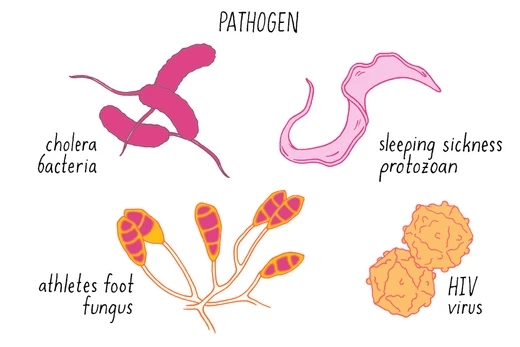
The four principal groups are viruses (obligate intracellular parasites), bacteria (free-living prokaryotes), fungi (eukaryotic organisms such as Candida and Aspergillus), and parasitic protozoa or helminths. Each has distinct replication strategies, transmission routes, and clinical presentations.
Where should a newcomer start reading or watching?
Begin with basic microbiology: cell structure, how pathogens enter and replicate, and the fundamentals of innate versus adaptive immunity. A general medical-microbiology textbook or a public-health overview of common infections serves as the foundational 'series bible.'
What is the central 'conflict' that drives the narrative?
The core tension is an evolutionary arms race between pathogen virulence factors and the host's immune defenses. Every infection is essentially a negotiation over cellular resources, replication speed, and evasion tactics.
What are some key 'world-building' facts about the setting?
There are roughly 10,000+ described bacterial species, over 1,000 viruses known to infect humans, and hundreds of pathogenic fungi and parasites. The vast majority are harmless or beneficial; only a small fraction cause disease in immunocompetent hosts.
Which historical arcs or events are considered the most 'iconic'?
The 1918 influenza pandemic, the 14th-century Black Death (Yersinia pestis), the 2003 SARS outbreak, and the ongoing SARS-CoV-2 pandemic are frequently cited as the franchise's most dramatic 'seasons.' Each reshaped public-health infrastructure and scientific understanding.
Who are the most 'feared' antagonists in the lore?
Agents such as Ebola virus, Mycobacterium tuberculosis, and prion diseases (e.g., Creutzfeldt-Jakob) are often highlighted for their high case-fatality rates, lack of straightforward treatments, or unusual biology. They occupy the 'final-boss' tier in most discussions.
How does the 'power system'—transmission and virulence—work?
Pathogens spread via respiratory droplets, blood, arthropod vectors, contaminated food or water, or direct contact. Virulence depends on factors like toxin production, immune-evasion proteins, and the ability to establish persistent or chronic infection.
Where can fans go deeper into the 'canon'?
Peer-reviewed journals (The Lancet, NEJM, Nature Microbiology), WHO and CDC public-health resources, and university microbiology or virology courses offer the most detailed primary material. Documentaries and science journalism provide accessible supplementary reading.
What is the 'origin story' or deep lore behind the whole thing?
Pathogens co-evolved with their hosts over billions of years; viruses likely predate cellular life, and bacteria were Earth's first organisms. The underlying 'lore' is essentially the history of life itself—competition, symbiosis, and adaptation on a molecular scale.