Plasmodium
A genus of parasitic eukaryotes causing malaria in vertebrates.

National Institutes of Health (NIH) · Public domain
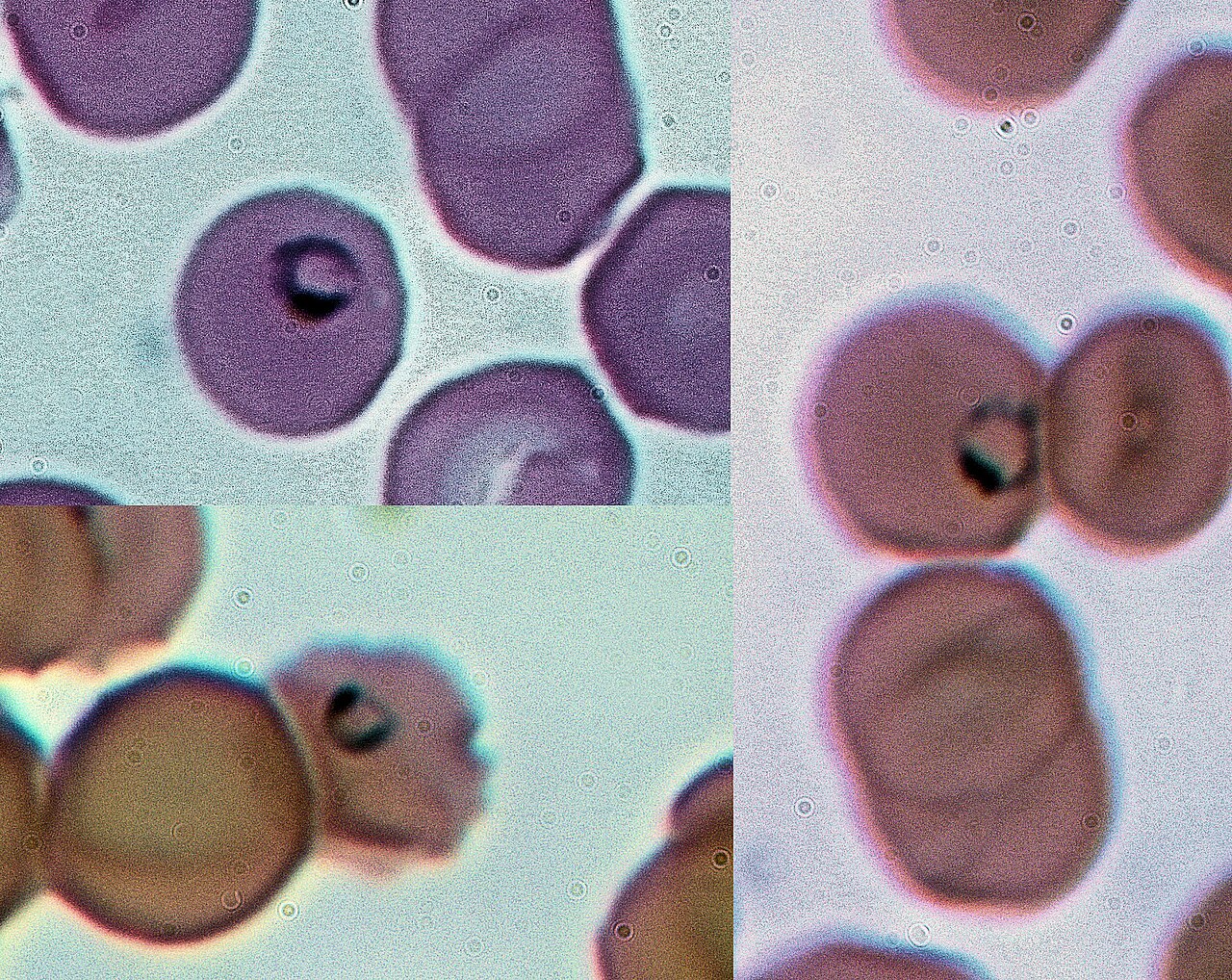
Organisms of this genus are best known as the etiological agent of human malaria.[1] Members of the genus Plasmodium are defined as Apicomplexa that perform merogony within host erythrocytes and generate hemozoin pigment from hemoglobin digestion.[2][1]
Quick Facts
- Field
- Parasitology, Microbiology
- Known for
- Causing malaria in humans and other vertebrates
- Human infective species
- P. vivax
- P. falciparum
- P. malariae
- P. ovale
- P. knowlesi
- Most lethal species
- P. falciparum
Facts from the source article.
Key facts and history
Giovanni Batista Grassi and Raimondo Filetti named the parasites causing two different types of human malaria Plasmodium vivax and Plasmodium malariae soon thereafter.[3] During 1885, Ettore Marchiafva and Angelo Celli studied the parasite and assigned it to a new genus they called Plasmodium.[4] Camillo Golgi, in 1886, was the first to understand that distinct species are responsible for different malaria types.[4] William Welch gave the name Plasmodium falciparum to a species he identified in 1897.[4]
Ronald Ross in 1897, and then Giovanni Batista Grassi, Amico Bignami, and Giuseppe Bastianelli in 1899, explained how insect hosts are involved in the Plasmodium life cycle.[3] Five Plasmodium species primarily infect humans, and Plasmodium falciparum is responsible for the vast majority of serious illness and fatalities.[5]
What the research sources say
The Tree of Life Web Project states that Plasmodium parasites rarely cause severe disease in any vertebrate hosts other than humans.[1] According to the same source, recent work indicates that the genus Plasmodium may not be monophyletic and includes parasites of other genera including Hepatocystis.[1] The Tree of Life Web Project notes that the field of Plasmodium phylogenetics has been particularly dynamic over the past decade.[1] The same source states that hypnozoites have also been identified in some saurian Plasmodium species.[6]
Votypka's account mentions that one suggestion restricts the term “malaria parasite” to species with asexual replication in the vertebrate blood.[6]
Gallery
References
- "Plasmodium", Tree of Life Web Project. facts only, no text reused. tolweb.org
- Wikipedia, "Plasmodium" (CC BY-SA 4.0), which cites: "Plasmodium", Tree of Life Web Project (we also read that source) en.wikipedia.org
- Wikipedia, "Plasmodium" (CC BY-SA 4.0), which cites: "The History of Malaria, an Ancient Disease", U.S. Centers for Disease Control and Prevention; "The History of Malaria, an Ancient Disease", U.S. Centers for Disease Control and Prevention; "The History of Malaria, an Ancient Disease", U.S. Centers for Disease Control and Prevention (original not read by us) en.wikipedia.org
- Wikipedia, "Plasmodium" (CC BY-SA 4.0), which cites: "The History of Malaria, an Ancient Disease", U.S. Centers for Disease Control and Prevention; "The History of Malaria, an Ancient Disease", U.S. Centers for Disease Control and Prevention; McFadden, "Plasmodia – don't", Trends Parasitol, 2012, p. 306; "The History of Malaria, an Ancient Disease", U.S. Centers for Disease Control and Prevention (original not read by us) en.wikipedia.org
- Wikipedia, "Plasmodium" (CC BY-SA 4.0), which cites: Scully, "Molecular interactions governing host-specificity of blood stage malaria parasites", Current Opinion in Microbiology, 2017, p. 21–31 (original not read by us) en.wikipedia.org
- Votypka J, "Haemospororida Danielewski 1885", Tree of Life. facts only, no text reused. tolweb.org
Each numbered sentence above was checked against the source it cites before publication. Sentences citing Wikipedia adapt text from the English Wikipedia article Plasmodium (contributors), used under CC BY-SA 4.0; this entry is available under the same licence. Other sources were used for facts only; no text or images are copied from them.
More in Infectious Agents And Pathogens
Spotted an error? Know more?
Reader corrections go straight into our review queue. Suggest an edit · How this site is sourced